

Source: BlockVC Industry Research Team
Preface: The Vision of Satoshi Nakamoto
A nation prospers only when it has a group of people who gaze at the stars.
— Hegel
In early 2020, amid the global COVID-19 pandemic, Elon Musk's Tesla also captured the spotlight in financial markets. Its stock price soared from a near-term low of around $190 to approximately $970 in just a few months, sparking widespread discussion. Many media outlets drew parallels between Tesla's meteoric rise and Bitcoin's 2017 bull run, noting that both founders are undisputed visionaries in their fields.
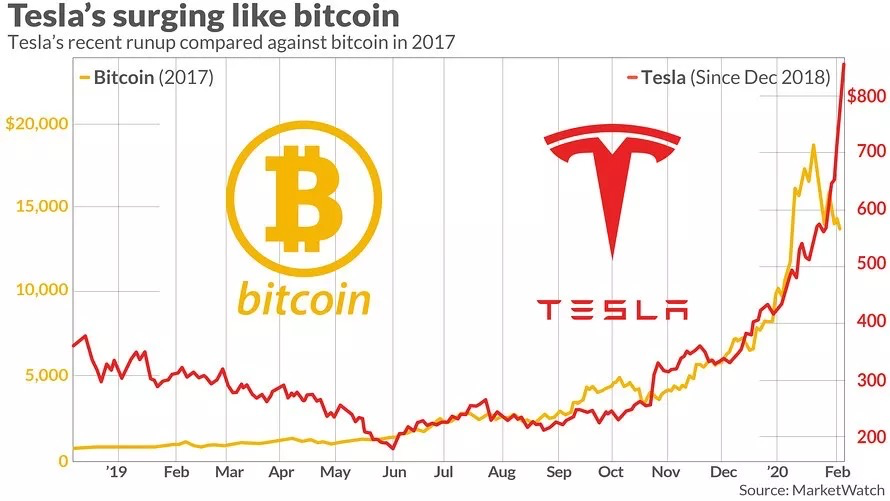
Tesla (NASDAQ: TSLA) and Bitcoin Price Trends
As some commentators put it: "Only Bitcoin can truly outpace Tesla—nothing else comes close." Elon Musk himself once joked: "Bitcoin is NOT my safe word."

Regardless of their future trajectories, the success of both Tesla and Bitcoin in capital markets is a powerful validation of their intrinsic value. Bitcoin's journey is particularly striking. Although its creator, Satoshi Nakamoto, vanished from public view shortly after launch, Bitcoin's price has skyrocketed from its first recorded purchase (two pizzas for about $0.0025 in 2008) to its 2017 peak of over $19,000—a gain exceeding 7.6 million times. Even today, its cumulative return stands at roughly 3.81 million times. Yet, despite this astronomical rise, many still fail to grasp Bitcoin's significance, dismissing it as a "new tulip bubble" or "rat poison."
With Bitcoin's third halving approaching in 2020, it continues its march toward—and potentially beyond—gold as a store of value. Looking back, Bitcoin has not only created countless wealth and freedom stories but has also evolved into something far greater than a mere wealth-generating machine. It has realized Satoshi Nakamoto's original vision of a peer-to-peer electronic cash system for global payments without intermediaries. Moreover, it has emerged as an undeniable new asset class, poised to take center stage in history and attract capital from around the world.
Behind Bitcoin's Million-Fold Surge
So what exactly is Bitcoin, after a decade of million-fold growth? Is it just another doomed "tulip bubble," or a genuinely novel phenomenon that challenges conventional wisdom and reshapes our thinking?
1. The World's First Truly Global Peer-to-Peer Electronic Cash System
Technically, Bitcoin is a distributed database organized in a chain-like structure. Its original design can be defined by three key terms: "electronic cash," "peer-to-peer," and "global payment."
● Electronic cash: Bitcoin provides a digital form of cash (BTC) and an underlying payment system. Like physical cash, it enables anonymous payments and ownership transfers. This is achieved through public-key addresses (not tied to real identities) and private-key digital signatures.
● Peer-to-peer: Bitcoin transactions occur over a network but require no intermediary financial institutions (like Alipay or banks) to complete payments or transfer ownership—hence true person-to-person (P2P) payments.
● Global payment: In theory, any two parties connected to the Bitcoin network can transact, regardless of their location on Earth. With future advancements in interstellar exploration, Bitcoin payments could even extend across planets or galaxies using relay infrastructure on celestial bodies like the Moon.
These core attributes reveal Bitcoin as a novel payment method perfectly suited for today's global internet—bridging the critical gap where the internet enables point-to-point information transfer but not yet point-to-point value transfer.
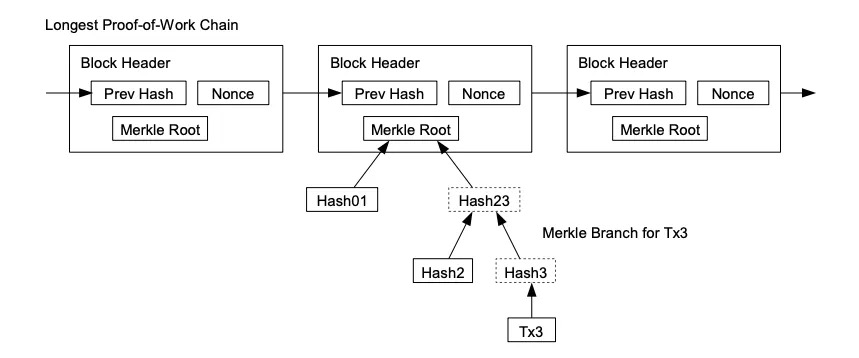
Bitcoin's Chained Block Structure | Bitcoin Whitepaper
2. An Evolving, Open-Source, Decentralized Platform
As open-source software, Bitcoin allows the community to upgrade and modify it through forks. Notable forks to date include Bitcoin Cash (BCH, forked from Bitcoin) and BSV (forked from Bitcoin Cash). This open-source, forkable nature enables rapid evolution and exploration of diverse development paths—such as reducing block data size via Segregated Witness (SegWit) or increasing transaction throughput with larger blocks. However, this mechanism also carries the risk of malicious forks, which can fragment the core community. The hard fork and hash-power war between factions led by Wu Jihan (Bitmain) and Craig Wright ("Craig S. Wright") serve as prime examples. Major Bitcoin fork events are illustrated below.
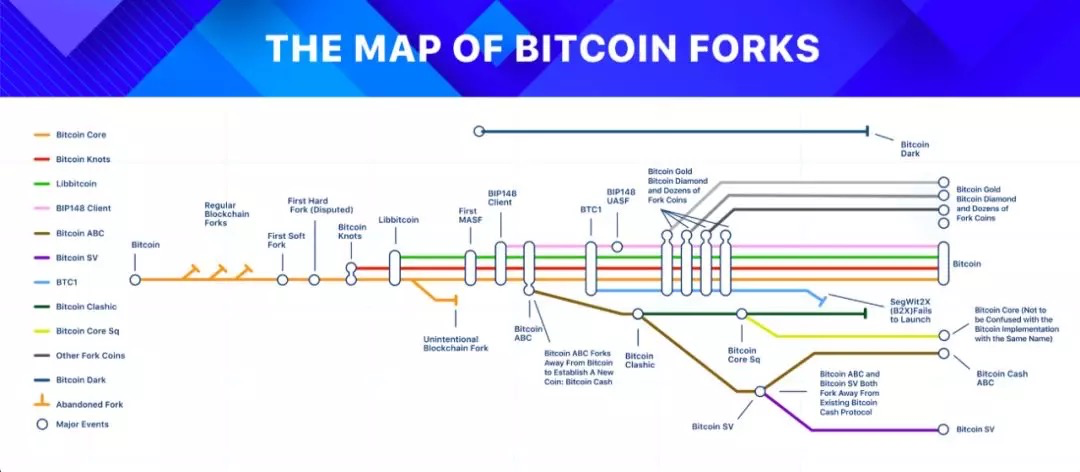
Bitcoin Fork History
3. The World's Most Successful Decentralized Economic System
Bitcoin stands as one of history's most successful truly decentralized, self-governing economic systems. Typically, as projects mature, the outsized influence of their founders hinders genuine decentralization. Bitcoin's uniqueness lies in its creator—a privacy-focused cypherpunk who, after anonymously launching and promoting Bitcoin to massive success, quietly stepped away. This voluntary dissolution of Bitcoin's most critical "super-node" allowed it to operate in a truly decentralized manner. To date, Bitcoin has run securely and reliably for over a decade—a remarkable achievement.
Today, the Bitcoin ecosystem comprises three main participant groups: miners, developers, and users.
● Miners validate, package, and broadcast transactions across the network, earning block rewards in return. Due to the centralized nature of hardware production and management, miners have formed interest groups, such as those around Bitmain.
● Developers, who mostly collaborate in a distributed manner, maintain and research Bitcoin's source code. Many core developers were early adopters and hold significant BTC reserves.
● Users leverage Bitcoin for transactions and transfers. To serve this broad user base, a full-fledged industry ecosystem has emerged—centered on exchanges and including wallets, blockchain explorers, and more.
Geographically, Bitcoin nodes are concentrated in North America, Europe, and East Asia, totaling 10,591 nodes—with over 20% located in the United States. Although Bitcoin's foundational Proof-of-Work consensus fosters a loosely coupled, decentralized organization, resource concentration over time has led to a "tripod" power structure anchored by mining pools, core development teams, and exchanges. This growing centralization trend poses potential security risks, including the threat of collusion among vested interest groups.
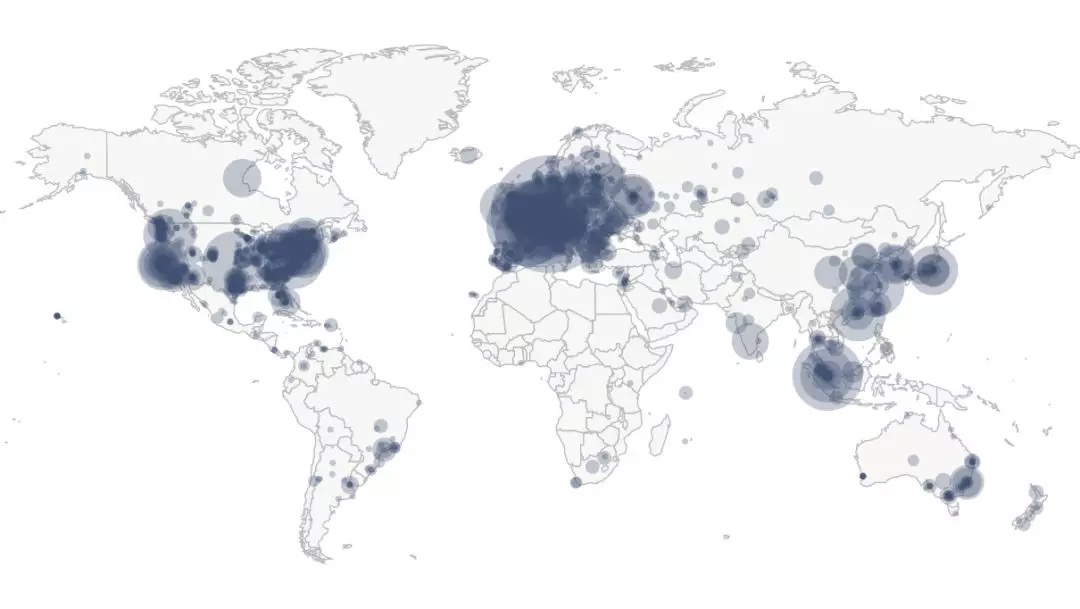
Global distribution of Bitcoin network nodes — Bitnodes
4. A New Asset Class: Cryptographic Assets
In 2017, a research report from Coinbase, a globally recognized compliant exchange, in collaboration with ARK Invest, highlighted Bitcoin's emergence as a new asset class. The report compared Bitcoin's correlation with traditional assets—including the S&P 500, U.S. bonds, gold, U.S. real estate, and crude oil—to reach this conclusion.
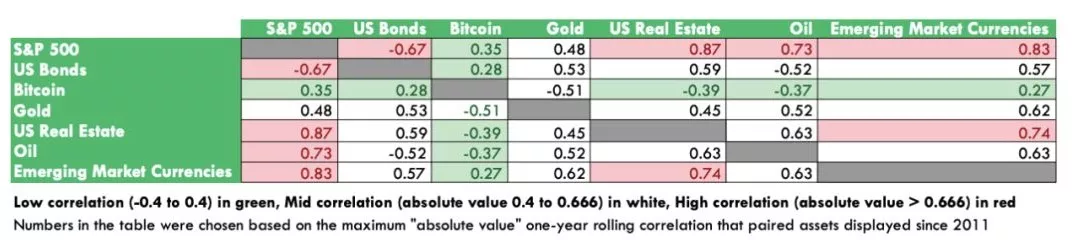
Correlation coefficients between Bitcoin and traditional assets — Coinbase & ARK Invest
The report also modeled a $1,000 investment across major asset classes over the three years from December 2013 to December 2016, using the Sharpe ratio to compare performance. It found that Bitcoin delivered significantly higher risk-adjusted returns than other assets. While U.S. equities, bonds, and real estate also performed well, Bitcoin still outperformed them over that three-year period.
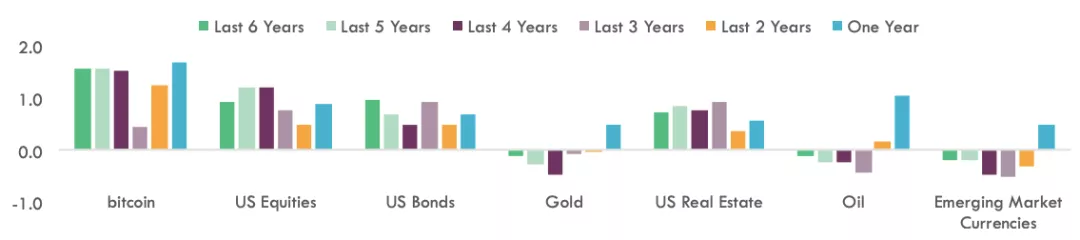
Sharpe ratios: Bitcoin vs. traditional assets — Coinbase & ARK Invest
5. A Rapidly Evolving, Adaptive Value System
In 2018, the international financial institution Morgan Stanley published a report titled “Update: Bitcoin, Cryptocurrencies and Blockchain.” It introduced the “Rapidly Morphing Thesis” framework, arguing that Bitcoin's intrinsic value proposition is not static but continuously adapts to new environments and demands. The report outlined its evolving value narratives:
● Electronic cash (2009–2016)
● Antidote to the traditional financial system (2010–2017)
● Alternative payment system (2010–2017)
● New fundraising mechanism (2015–2018)
● Store of value / Digital gold (2017–2018)
● Hedge against failing fiat currencies (Spring–Summer 2018)
● New institutional investment asset class (2017–present)
This research clearly shows that Bitcoin's functional roles and value propositions evolve organically with shifts in the global economy and regional conditions. Multiple narratives can coexist, and they shift over time or in response to specific events. For instance, during severe fiat currency devaluations in Venezuela and Turkey, Bitcoin served as a refuge, driving widespread adoption. Similarly, it has acted as a temporary safe-haven asset during localized conflicts.
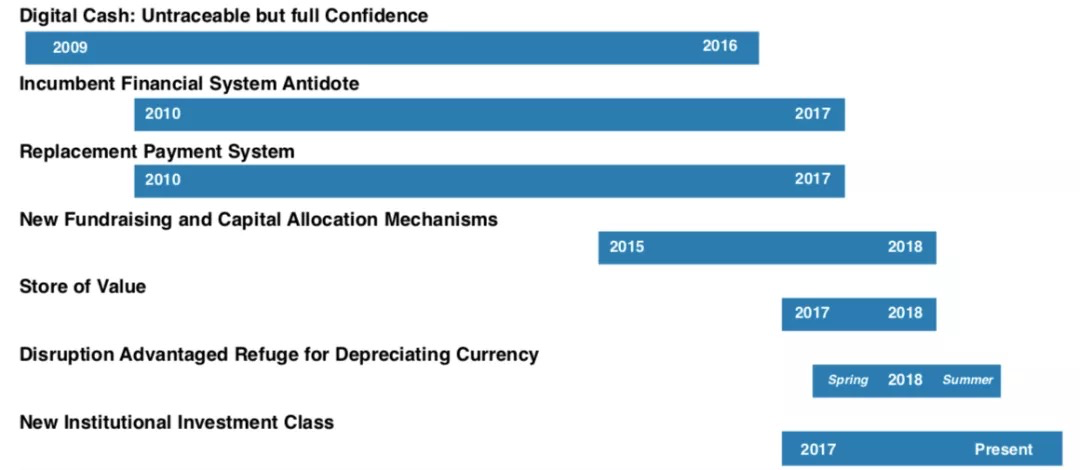
Morgan Stanley’s “Rapidly Morphing Thesis” — Morgan Stanley
Bitcoin Valuation Models / Reference Metrics
The Economic Model of Bitcoin
The Times 03/Jan/2009, Chancellor on brink of second bailout for banks.
— Embedded by Satoshi Nakamoto in Bitcoin’s Genesis Block on January 3, 2009
While Morgan Stanley's research accounts for market-driven value supports, Bitcoin's value also stems from its unique internal economic model, centered on its distinctive "halving" issuance mechanism. As Satoshi Nakamoto's genesis block message ironically highlights, global economies have become mired in long-term inflation due to excessive money printing. Central banks often respond to crises with new rounds of quantitative easing. In contrast, Satoshi designed Bitcoin with a deflationary mechanism: a fixed total supply of 21 million BTC, with block rewards halving approximately every four years. The key principles are:
● Bitcoins are generated exclusively as Proof-of-Work (PoW) mining rewards;
● Total supply is capped at 21 million; the initial block reward was 50 BTC, halving roughly every four years.
Bitcoin Valuation Models / Reference Metrics
As a novel asset class, reasonably valuing Bitcoin is a critical challenge. Since it generates no cash flows, traditional methods like Discounted Cash Flow (DCF) are inapplicable. So how can investors gauge Bitcoin's price trends to make informed decisions? In response, numerous Bitcoin valuation models and reference metrics have emerged, though most have inherent limitations and can fail under certain conditions. Below is a brief overview of several prominent ones.
● Bitcoin NVT Model
The NVT (Network Value to Transactions Ratio) model draws inspiration from the traditional P/E ratio. It is defined as Bitcoin's network value divided by its on-chain transaction volume. Grounded in Bitcoin's original design as a payment network, the NVT ratio aims to reflect its "true" value as infrastructure. A high NVT can signal either an unsustainable price bubble or extreme investor optimism leading to increased holding (HODLing). However, since Bitcoin's primary use today is trading—not payments—and most trading occurs off-chain on centralized exchanges, the NVT model is now best used as an indicator for extreme market conditions.
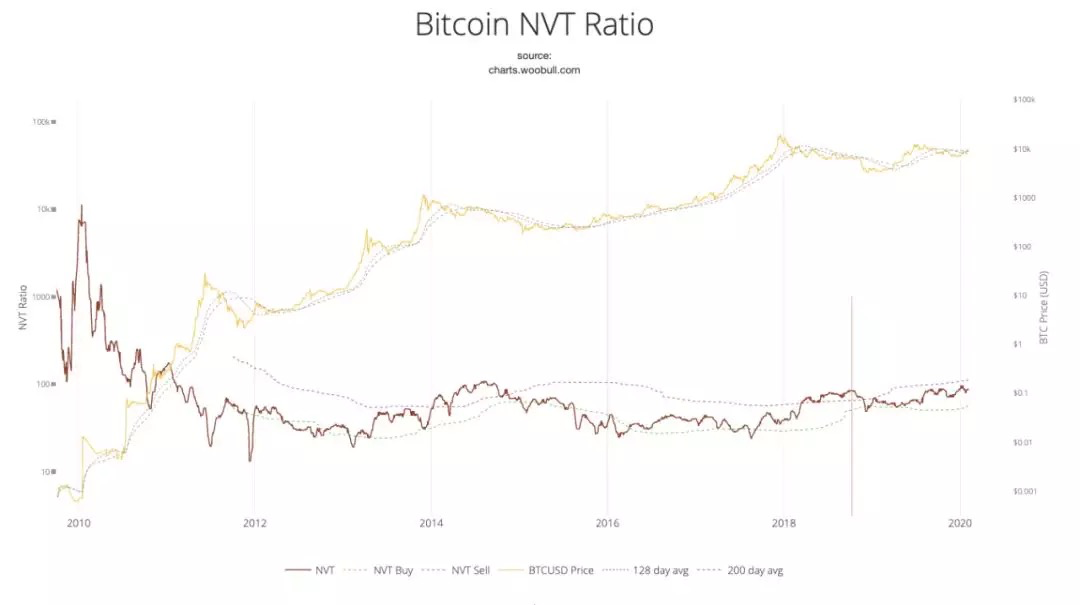
Bitcoin’s NVT Model — Woobull
● Bitcoin Network Mining Difficulty Ribbon
The Bitcoin Difficulty Ribbon is an indicator that uses simple moving averages (SMAs) of the network's mining difficulty. It helps visualize how selling pressure from miners affects Bitcoin's price. Typically, miners sell some of their newly mined BTC to cover operational costs. When the slopes of the difficulty ribbon flatten out and the ribbons start to converge, it signals that many miners have shut down—leaving only the most efficient operations running. These remaining miners are financially robust and need to sell a smaller portion of their BTC to stay afloat, which reduces overall selling pressure and can pave the way for price increases. Therefore, according to this model, periods when the difficulty ribbon compresses or overlaps are considered prime opportunities to accumulate BTC (see chart below: the blue line represents Bitcoin's market cap; the red lines are SMAs of mining difficulty over various periods; the vertical dashed red lines mark Bitcoin halving events). This convergence indicates the tail end of a mining crisis—and potentially a bear market—often preceding a price bottom and subsequent recovery.
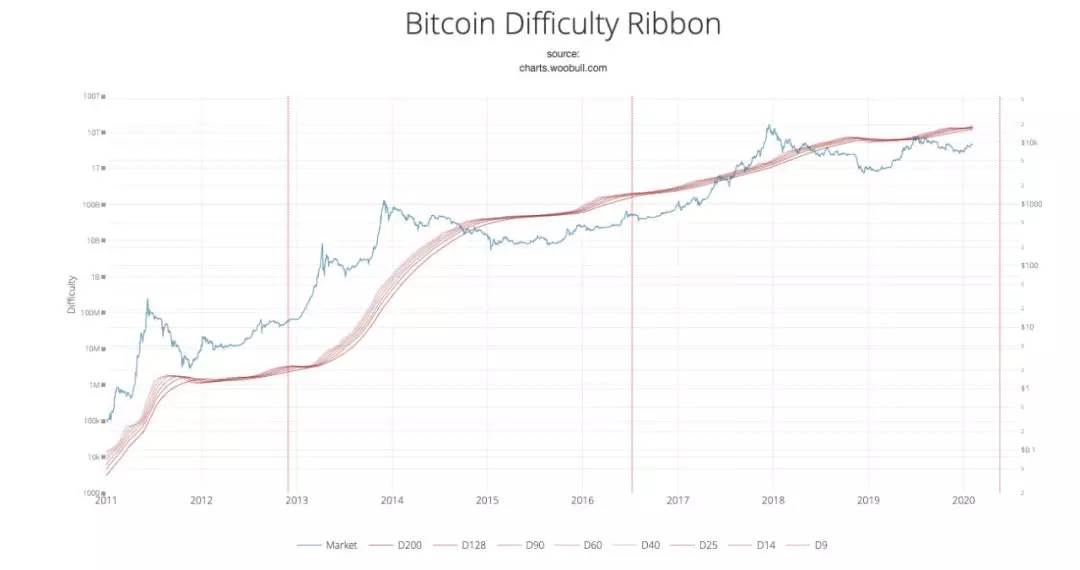
Bitcoin Mining Difficulty Ribbon — Woobull
● Stock-to-Flow (S&F) Scarcity Index
The Stock-to-Flow (S&F) index measures an asset's scarcity by comparing its existing stockpile to its annual production. Scarcity was a core principle in Satoshi Nakamoto's design of Bitcoin's economic model. Historically, gold has topped the S&F rankings. A September 2019 report from Bayern LB Research, "Megatrend Digitalisation: Is Bitcoin outshining gold?", noted that gold's S&F ratio was 58, while Bitcoin's was around 25.8. However, after Bitcoin's third halving in May 2020, its scarcity surged, pushing its S&F ratio to approximately 53. This demonstrates Bitcoin's rapid progress toward surpassing gold in terms of scarcity. The S&F model suggests that Bitcoin's halving events dramatically increase its scarcity, and history shows a strong positive correlation between an asset's scarcity and its market value: a higher S&F ratio generally corresponds to a larger market cap.
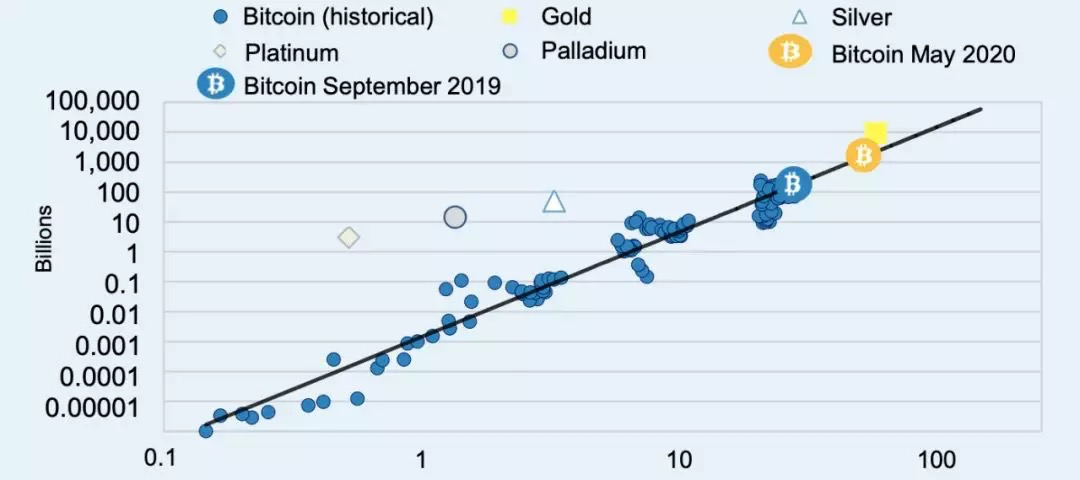
Bitcoin Stock-to-Flow (S&F) Index — Bayern LB Research
Bitcoin’s Market Cap Accelerator: The Halving
Historical data shows that Bitcoin halving events are major catalysts for surges in market capitalization, effectively acting as a "market cap accelerator." As the S&F index indicates, halvings significantly boost Bitcoin's scarcity, which strongly correlates with subsequent market cap growth. To date, Bitcoin has undergone two halvings—in November 2012 and July 2016—reducing the block reward from 50 BTC to the current 12.5 BTC. These events were followed by price increases of 7,976% and 2,902%, respectively. The third halving is expected at block height 630,000 (around May 13, 2020), after which the block reward will drop to 6.25 BTC.
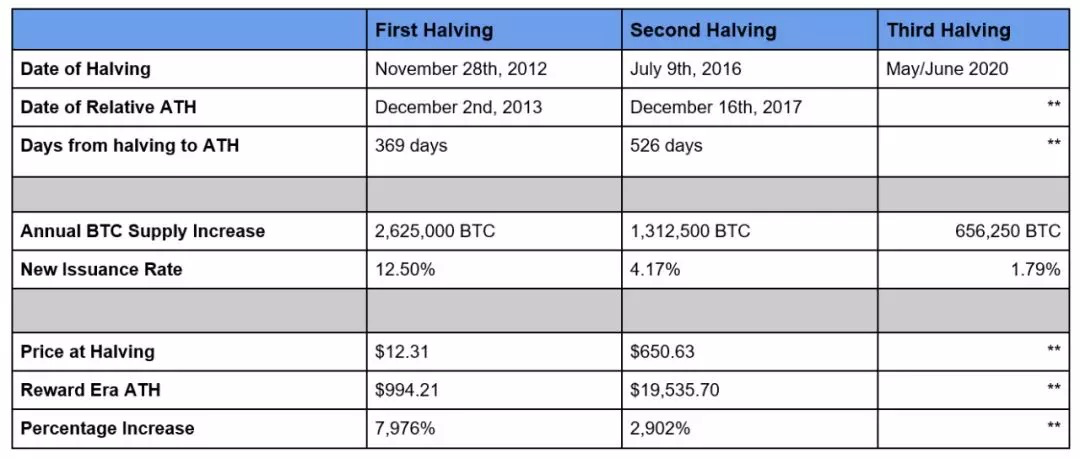
Bitcoin’s Market Performance Around Past Halvings — Fitzner Blockchain
Litecoin (LTC), often seen as Bitcoin's "testnet," saw its price surge roughly 594% during its 2019 halving, bolstering expectations for Bitcoin's upcoming cycle. Recently, prominent rating agency Weiss Crypto Ratings upgraded Bitcoin's technology and adoption grade to "A," raising its overall rating to "A−." The firm stated: "Bitcoin will easily surpass its all-time high during this halving cycle, entering historic growth territory once it breaks above $20,000."
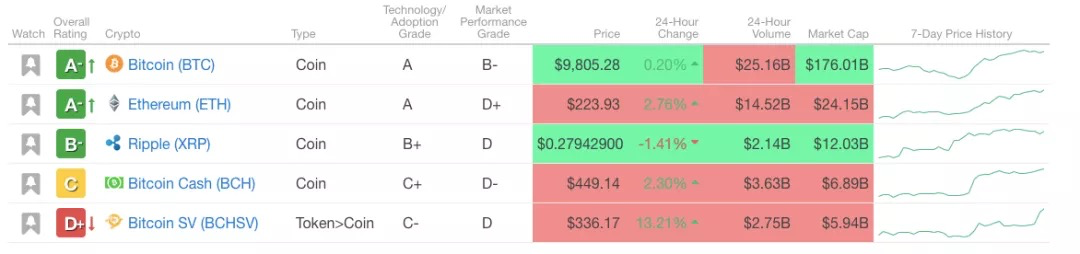
Ratings for Major Assets — Weiss Crypto Ratings
As BlockVC noted in a recent strategy report titled "Halving Rally Just Warming Up—Bullish Reversal Peaks in February":
"Bitcoin has clearly broken out of a well-defined bottom consolidation range. While Bitcoin trades sideways, halving-related 'leaders' like BCH, BSV, and ETC have simultaneously formed ascending accumulation patterns with progressively higher lows—signaling that a robust rally is imminent."
Conclusion
Bitcoin's history confirms the adage: "What doesn't kill you makes you stronger."
Today, blockchain technology, led by Bitcoin, is being actively researched and promoted worldwide, including by governments like China's.
The halving mechanism acts as both an "accelerator" and a "catalyst" for Bitcoin's scarcity and market cap growth. Much like how the width of a Roman warhorse's rump influenced the design of the Space Shuttle's boosters, Bitcoin has become the gateway through which the real world engages with blockchain technology.
Therefore, Bitcoin's significance extends far beyond that of a mere cryptocurrency. It offers not only a global payment method and a cryptographically secure, user-controlled digital asset but also opens the door to building a new global financial infrastructure. It heralds the dawn of upgrading the internet into a global value network.
References:
1. https://bitcoin.org/bitcoin.pdf
2. https://nakamotoinstitute.org/literature
3. Bitcoin Ringing the Bell for A New Asset Class — Coinbase & ARK Invest
4. Update: Bitcoin, Cryptocurrencies and Blockchain — Morgan Stanley
5. Megatrend Digitalisation: Is Bitcoin outshining gold? — Bayern LB Research
6. Will Bitcoin Become a Harder Asset Than Gold? On Value, Scarcity, and S2F — NPC Source Initiative