

The pandemic continues, keeping us at home—but life and personal growth must go on.
As a responsible WeChat public account, we encourage you to stay safe while continuing to learn. To that end, we've designed a monetary simulation game to help you understand money's real role in an economy.
Game Rules
In this game, you play the role of a guiding force—your goal is to ensure stable, long-term economic growth.
You'll steer society through different historical eras, using various forms of currency—or any tool with monetary properties—to stimulate the economy.
You can introduce one or multiple monetary systems and observe how to maintain stability over time, revealing money's crucial role as the glue that holds an economy together.
Chapter One
The Wild West Era: Commodities Reign Supreme
ROUND 1

Initial Setup: For your first round, you decide to see what happens with no monetary system at all. You let society develop organically.
Evolution: Society functions, but over time you see almost no innovation. The entire civilization becomes stagnant.
Outcome: When a pack of wild beasts attacks, the people lack the collective capacity to defend themselves.
Brief Commentary: In nature, it's survival of the fittest. Stagnation invites extinction.
ROUND 2
Initial Setup: You realize you can't just watch. This round, you launch the economy with a commodity currency. As a beginner, you choose gold.
Evolution: At first, the monetary system works smoothly. Society functions well and the economy grows. More people start mining gold to meet demand. But soon, gold extraction can't keep up with economic activity and money circulation, slowing the entire economy down.
Outcome: With no supplementary currency, exchange efficiency crashes and societal development nearly halts.
Brief Commentary: Gold is scarce and its supply is fixed—it can't adapt to a growing economy.
ROUND 3
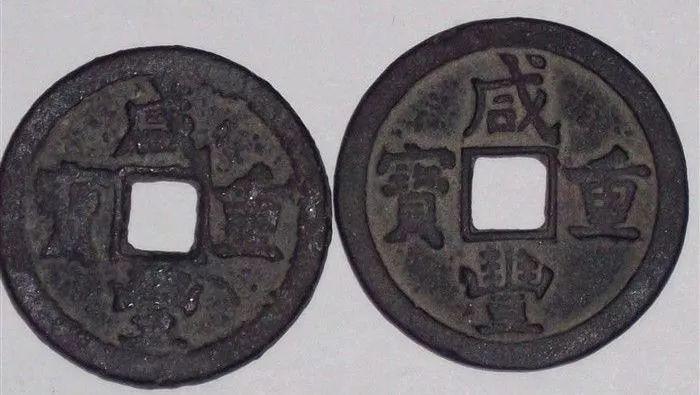
Initial Setup: After some thought, you try iron coins—a currency with a much higher potential supply.
Evolution: This time, the money supply keeps pace. Every transaction channel operates without a liquidity shortage. But then, riots erupt: a cart carrying iron coins overturns, killing civilians—all to pay for a single lavish banquet.
Outcome: The institutions managing, storing, and transporting the iron coins absorb most of the transaction costs. People gradually refuse to use them, and the economy stagnates again.
Brief Commentary: An excessive supply leads to high transaction friction (in simple terms: the money becomes impractical).
Classic Case: In the Song Dynasty, buying a single bolt of cloth meant carrying about 65 kg (130 jin) of iron coins—an enormous transportation cost.
ROUND 4
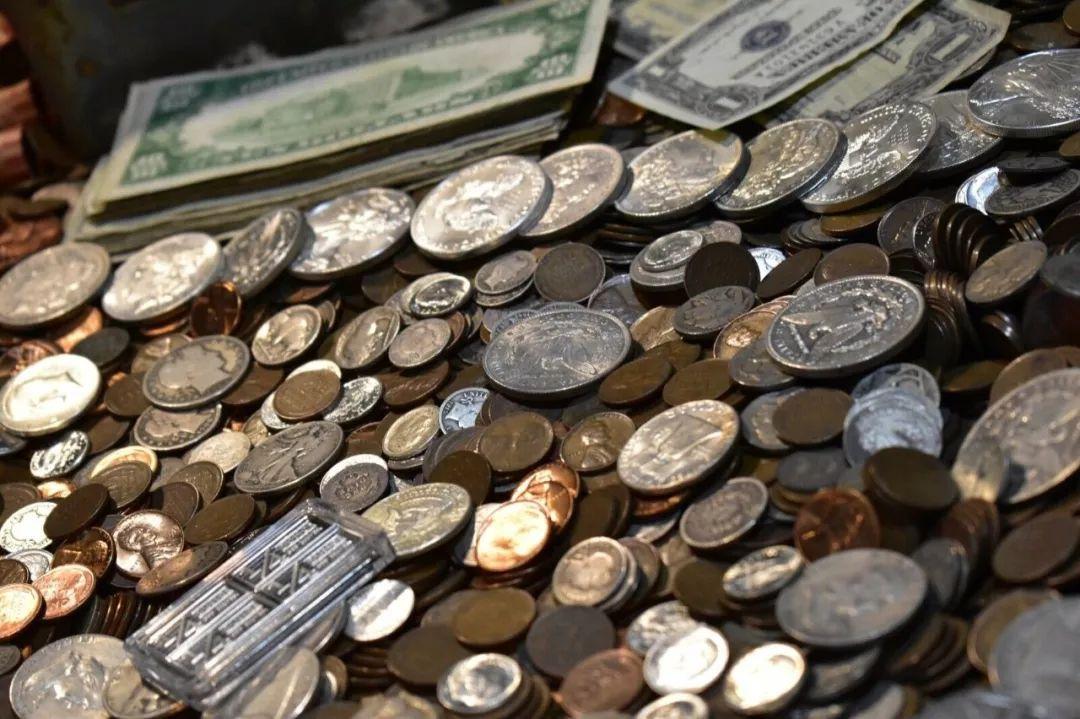
Initial Setup: You give gold another try. When the economy slows, you introduce a second currency—silver—and set a fixed exchange rate between them.
Evolution: Since silver is more abundant than gold, savvy individuals start hoarding gold and circulating silver in the markets.
Outcome: Gold is gradually driven out of circulation, returning the market to a single-currency system.
Your Reflection: For a single economy, a multi-commodity system creates pricing chaos. Arbitrage opportunities inevitably arise, undermining stability.
Classic Case: Many historical societies used multi-commodity systems. The classic example of Gresham's Law ("bad money drives out good") happened in 18th–19th century Europe, where people melted down "good" gold coins to get more "bad" silver coins for daily use.
ROUND 5
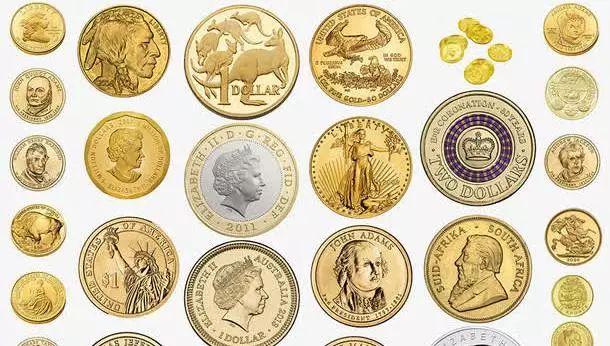
Initial Setup: This time, you try a different tactic. You start with gold again, but when shortages appear, you buy back existing gold coins, melt them down, and re-mint them with less gold—increasing the total number of coins in circulation.
Evolution: A single adjustment did ease the contraction, but only temporarily. Soon, a second adjustment was needed, then a third, a fourth, and so on.
A more practical problem emerged: each recoinage failed to withdraw all old coins from circulation. This left coins of varying purity in use, effectively creating a multi-currency system.
Outcome: Chaotic exchange rates eventually led to the collapse of the economic system.
Summary: In trying to fix a single-currency system, you accidentally created a multi-currency one. Congratulations—you've stumbled upon the precursor to the fiat-money era. As the precious metal content in coins kept decreasing, the difference was essentially credit, carved into stone.
Classic Case: England underwent nearly 20 major recoinages throughout its history. Consider just the seven years from 1688 to 1695: the silver content in one pound sterling dropped from 88% to 50%, a 44% depreciation by modern standards.
Key Concept
Multi-Currency Physical Money System:
The core challenge is keeping physical money aligned with economic growth. Whether through repeated recoinage or concurrent circulation of multiple currencies, the result is chaotic exchange rates, soaring administrative costs, and a flood of counterfeit and debased coins.
Appendix: Historically, societies have used various objects as money, including:
● Precious metal bars (e.g., ancient Mesopotamia, modern central banks)
● Salt (used across North Africa, China, and the Mediterranean for preservation and flavor—and once as currency)
● Cattle (ancient India and Africa)
● Slaves (e.g., ancient Rome, ancient Greece, and parts of modern India)
● Cocoa beans and textiles (ancient Mexico)
● Cowrie shells (ancient China, Maldives)
● Beads (used in the African slave trade)
● Feathers (Santa Cruz Islands, Solomon Islands)
● Dog teeth (Papua New Guinea)
● Whale teeth (Fiji)
● Massive, immovable stone discs (Yap Island, Pacific Ocean)
● Knives or other tools (parts of Africa)
● Iron rings and bracelets (parts of Africa)
● Copper rods (Tiv people of West Africa)
● Woodpecker scalps (Karok people of California’s interior)
● Human skulls (Sumatra)
● Shell-bead necklaces (American colonies)
● Cigarettes (POW camps, postwar Germany, modern prisons)
Chapter Two
The Fiat-Money Era: Credit Reigns Supreme
ROUND 6
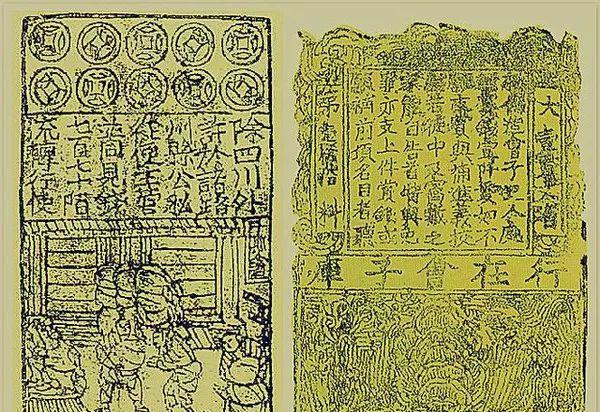
Jiaozi of the Northern Song Dynasty
Starting Point: Having seen commodity money fail, you think: why not start with paper money?
Evolution: You implement a modern paper-money system, with a central authority issuing banknotes. However, people widely view the notes as worthless, so they circulate only within very limited circles.
Outcome: Most transactions still lack a reliable medium. Societal progress remains slow.
Your Reflection: You can't skip steps. Monetary evolution doesn't happen overnight. It requires deep cultural foundations and broad economic literacy.
Classic Case: Even today—particularly across Africa—many indigenous tribes, untouched by modern civilization, continue to use various physical commodities as mediums of exchange.
ROUND 7
Starting Point: Returning to precious metals, you face the inconvenience and rigidity of physical gold. You devise a more portable solution: gold certificates fully backed by gold.
People deposit their gold with trusted institutions, which issue certificates as substitutes. After all, paper is far easier to carry. For simplicity, you allow any entity with sufficient gold reserves—official or private—to issue these certificates.
Evolution: Issuing gold certificates does seem to grease the wheels of the economy. However, the certificate-issuance process itself starts to become critically important.
The quality of issuing institutions was inconsistent. At first, each gold certificate was backed by a physical gold coin. Over time, the system drifted, and some institutions issued certificates without holding sufficient gold reserves. The number of gold certificates in circulation kept growing, while the institutions' ability to redeem them for gold steadily weakened.
Outcome: As institutional credibility deteriorated, long-simmering public distrust boiled over, triggering a bank run. The attempt to redeem certificates for gold ultimately failed.
Your reflection: The fundamental flaw of early fiat currency was its vulnerability to a single point of failure—uncontrolled credit risk. While paper money existed in form, true public trust hadn't fully transferred from precious metals to the notes themselves. People still saw the metal as the real value, insisting on a strict 1:1 backing.
Representative case: The world's earliest paper money, "Jiaozi," emerged in China's Song Dynasty to replace cumbersome iron coins. However, human nature being what it is, the assets backing these notes were eventually misappropriated. Today's banking system is inspired by those historical "Jiaozi shops," but incorporates stricter reserve requirements and financial safeguards to prevent runs.
ROUND 8
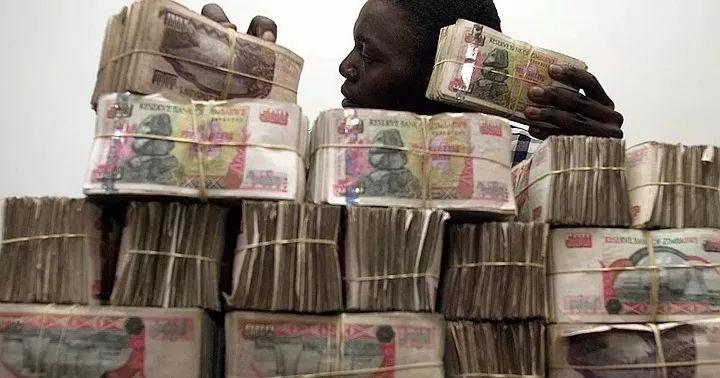
Zimbabwean Banknote Hyperinflation
Setup: You conclude the problem isn't paper money itself, but who issues it. This time, you grant a monopoly on issuance to the economy's governing authority alone. The backing is broadened to include gold, silver, copper, and other precious metals. Crucially, you mandate that all taxes must be paid with these official certificates. You feel the system is now foolproof.
Evolution: To fuel economic growth, a little extra printing seems harmless—the central authority's coffers are vast enough to avoid any immediate run. In fact, a classic "bank run" is impossible, as ordinary people can't directly access the central reserves.
The economy stabilizes for years, bolstering the authority's confidence in its ability to manage the money supply indefinitely. Soon, every economic hurdle is met with the same solution: print more money.
Outcome: A slow-acting poison takes hold. The market senses the oversupply and begins to revert to precious metals for local trade. The exchange rate between paper certificates and metal plummets continuously until the entire system collapses.
Your reflection: On the plus side, this round introduced the concept of tax authority—the critical pillar supporting modern fiat systems! On the downside, printing money feels great in the short term, and even better if you never stop. History is littered with economies destroyed by over-issuance. The pattern repeats across regions and eras, making excessive money printing arguably the number one cause of monetary collapse.
Representative case: Venezuela's bolívar is a recent example. Technical hyperinflation—defined as monthly inflation exceeding 50%—began in November 2017. By mid-2019, prices had skyrocketed more than 1.6 million times compared to 2018 levels.

ROUND 9
Setup: Scarred by past inflation, you realize that while printing money can address short-term liquidity, there's no easy way to withdraw excess currency once it's out there. Looking through your toolkit, you spot a potential solution: bonds.
Evolution: You issue bonds to select parties (like the wealthy), successfully raising funds without increasing the paper money supply—a win-win.
Of course, borrowed money requires interest, a custom millennia old. With paper money and bonds forming what seems like an unbeatable combo, a new problem soon emerges: the accumulated principal and interest balloon to an unpayable level.
Raising funds becomes increasingly difficult. As the economy teeters on the brink of another crisis, you decide to sacrifice the interests of a minority—"cutting losses to save the whole"—and announce a debt restructuring.
Outcome: Your creditors revolt, sparking a revolution that plunges society and the economy into turmoil.
Brief commentary: Congratulations—you've established the core framework of the modern monetary system. Yet execution remains tricky, primarily due to the difficulty of calibrating expansion and contraction precisely. The money supply must align with real economic demand.
Key Concepts
Single-Economy Fiat System:
Its core support is tax authority. While research suggests money is simply the most widely accepted medium of exchange, fiat money derives its dominance not from spontaneous adoption like commodity money, but from the power to tax. The system's key weakness is its overreliance on human judgment: policymakers must deploy various tools to match complex economic rhythms, but transmission lags, calibration precision, and tool effectiveness are hard to control, making monetary policy a profoundly complex endeavor.
Chapter Three
The Trade Era: Settlement Power Reigns Supreme
ROUND 10

Setup: While you're fine-tuning interest rates and managing the domestic economy, a pop-up appears: "Would you like to join an online multiplayer game?" You click YES without hesitation.
WOW! You discover countless other players—each running their own monetary system. What you need now is interaction: trade.
But as a trade novice, you export domestic resources without pricing power, forced to accept a neighboring country's currency for settlement.
Evolution: As resource exports boom, you amass large foreign currency reserves. Then, your neighbor cranks up the printing press and massively expands its money supply.
Outcome: On paper, your currency appreciates continuously—but only domestically. The foreign currency you hold—your real trade-purchasing power—shrinks dramatically, causing rapid wealth erosion.
Brief commentary: Opening your closed economy reveals a world full of new cunning and deception. Managing your own monetary mechanism isn't enough—you must also guard against exploitation by others.
Representative case: The 1985 Plaza Accord, where Japan agreed to a sharp appreciation of the yen against the U.S. dollar. The yen rose 20% within three months and appreciated another 100% over the next three years. Initially, massive dollar inflows entered Japan to buy yen; after the appreciation, those dollars exited in an orderly fashion, depleting Japan's foreign-exchange reserves and yielding enormous profits for speculators. Japan subsequently entered its "Lost Two Decades."
ROUND 11
Opening Move: Having learned from past mistakes, you refuse to cede control again. Settlement is acceptable, but not in the other party's currency. Instead, you insist on using universally accepted precious metals.
Evolution: Thanks to your thriving economy and abundant physical goods, precious metals flow in steadily to pay for your exports. Your monetary system, once based solely on paper, gradually evolves into a dual-track system where both paper currency and precious metals circulate.
With the influx of precious metals and sustained export strength, your economy appears to reach its zenith.
Outcome: But the boom is short-lived. To offset massive trade deficits, other players resort to every means—including coercion—to dump goods and erect trade barriers. Precious metals rapidly flow back out, plunging your economy into a sudden contraction and widespread hardship.
Brief Commentary: Reverting to a precious-metal standard doesn't solve the core problem. Trade wars are merely the surface; beneath lies the struggle for strategic dominance between great powers.
Classic Case: The Opium Wars. Britain sought to forcibly open China's market, using opium exports to continuously drain China's silver reserves—eroding its core foreign-exchange assets and crippling its economy.
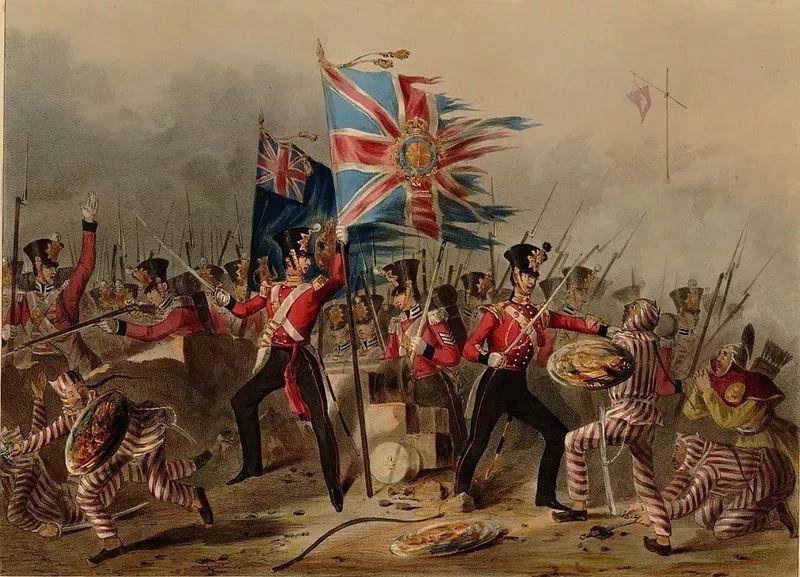
British troops engaging Qing Dynasty "Tiger Head" soldiers during the Opium Wars.
ROUND 12
Opening Move: You realize the core issue is a trade settlement system that operates outside your domestic currency. This time, as precious metals flood in, you proactively begin building a new settlement system based on your own paper currency.
Evolution: With massive precious metal reserves and strict controls to prevent outflows, you gradually establish a paper-currency-based settlement system. Your currency is directly pegged to precious metals, forcing others to peg their currencies to yours—indirectly linking them to the metal standard.
Finally, your currency gains global acceptance. But a new problem arises: while domestic demand is manageable, the aggregate demand from all other economies is unpredictable. Over time, global demand for your currency outstrips supply, forcing you to print more money—even though your underlying precious metal reserves remain largely unchanged.
Outcome: The exchange rate of your paper currency against precious metals plummets. Market participants lose faith and revert to using precious metals directly, causing your carefully constructed settlement system to collapse once more.
Brief Commentary: This illustrates the Triffin Dilemma—the inherent conflict between maintaining international monetary stability and supplying enough of the reserve currency to meet growing global demand.
Classic Case: The U.S. dollar after the collapse of the Bretton Woods system.
ROUND 13
Opening Move: Past failures stemmed from over-reliance on a critical but uncontrollable backing asset: precious metals. Now, you collaborate with several other prosperous economies to create a "Universal Coin."
Its value is based on a weighted basket of the participating economies' currencies, reflecting each one's economic size—effectively replacing the "uncontrollable" precious metal. Crucially, the Universal Coin serves only as an anchor; it is explicitly prohibited from circulating as money.
Thus, only each economy's domestic currency actually circulates. The Universal Coin acts solely as a temporary bridge during severe currency shortages.
Evolution: Your currency finally assumes the role of the power behind the throne—operating from behind the Universal Coin's curtain—and becomes the cornerstone of the global settlement architecture.
As major economies advance, a new critical resource—"Crystal Blocks"—is discovered. Most production inputs now depend on it.
Consequently, the player holding the largest Crystal Block reserves mandates that all purchases be settled exclusively in their currency—bypassing yours, the dominant settlement medium.
Outcome: As Crystal Block usage expands globally, their currency gains significant traction within the settlement system, ushering in a bipolar monetary world order.
Brief Commentary: In a globalized trade era, a currency's credibility cannot rest on tax authority alone. Settlement power, backed by control over critical resources, plays a decisive role.

Classic Case: The Petrodollar. While many challengers have emerged, a key reason the U.S. dollar retains its primary reserve currency status is that oil—the era's most critical resource—is almost exclusively priced and settled in USD.
What’s Next: You remain vigilant, monitoring all players for new resource discoveries, signs of trade wars, or shifts in domestic monetary policy…
To be continued
Key Concepts
Multi-Economy Fiat Currency System:
Once multi-country strategic competition enters the fray, relying solely on a single economy's taxing authority is insufficient. What matters more is settlement power: whoever holds it can, to some extent, influence other economies' monetary policies to serve their own interests. Establishing broad-based settlement power is the essence of a true "currency war."
Conclusion
This game is just a simulation—it can't fully replicate reality—but it offers valuable insights:
A currency's stability increasingly depends on its underlying backing—a concept that has evolved through the ages: from 100% commodity backing, to credibility based on taxation, to today's foundation in settlement power. Modern monetary systems incorporate all three pillars.
Building a monetary system is a complex feat of systemic engineering. Failure at any stage can trigger dysfunction or collapse. Even seemingly simple transitions between backing mechanisms require meticulous preparation and cannot be rushed.
Money began as a simple medium of exchange, but over millennia, its role has expanded far beyond that basic function. As Georg Simmel observed, money has evolved from merely expressing social relations to actually embodying them. In any economy, therefore, money serves two interconnected purposes: first, as a traditional medium of exchange that facilitates economic activity; and second, as a store of value—where holding money is synonymous with holding wealth. The ultimate goal for any economy is to ensure this wealth both drives growth and maintains stability.
Now, let's apply this framework to the current state of the cryptocurrency industry. Most token projects today are still stuck in the second stage. Their value is primarily backed by internal ecosystem "taxation rights," such as BTC's transaction fees or ETH's gas fees.
To progress, the industry must not only learn from the historical challenges faced by tax-backed fiat systems but also tackle the harder task of "breaking out of the circle." This means seeking broader settlement utility beyond a project's original niche. A wider scope of settlement rights translates to greater stability. However, breaking out inevitably means entering a fiercely competitive arena.
So, the question remains: Are you truly ready to break out?
References:
Stablecoin Manual — Mikko
The Philosophy of Money — Georg Simmel
What Caused Venezuela’s Hyperinflation?
Ten Historical Currency Wars