

You know what Bitcoin is, and you're curious about investing in BTC—but you're not sure where to begin.
This article outlines the simplest investment method—one that's backed by historical data and incredibly easy to follow. It's perfect for anyone who doesn't have the time or energy to watch BTC's price fluctuations constantly. At its heart, this is a long-term strategy that relies on patience, not active trading.
What's interesting is that this straightforward approach isn't just for newcomers. It's also widely used by seasoned Bitcoin veterans and hardcore believers within the crypto community. In other words, even the so-called "Bitcoin maximalists"—those who've spent years deep in the ecosystem and understand it inside out—often end up choosing this simple strategy.
This method is called "HODLing": you buy BTC, hold it for a long time, and only sell when the price reaches a significantly higher level.
In China's crypto circles, people who follow this strategy are often called "holders" or "coin hoarders." Like squirrels storing nuts for winter, they accumulate BTC, fully prepared to hold onto it for the long haul without selling.
Why "HODLing" Is the Simplest Investment Strategy
At its core, all holders share one belief: confidence in Bitcoin's long-term value. For most people, that simply means believing BTC's price will keep rising over time.
From $100 in 2013 to $10,000 today (in 2020), Bitcoin has surged 100-fold in seven years. Holders believe this upward trend will continue over the next decade, driven by narratives like "digital gold" or "internet currency" (more on that later). By accumulating BTC and holding long-term, they aim to profit without the stress of tracking short-term price swings. It's a more relaxed and less time-consuming approach compared to active trading.
The philosophy is simple, but it leaves practical questions unanswered for new investors. When should you start holding? What does "a long time" actually mean? These details are often glossed over, yet they're exactly what you need to know to put the strategy into action.
How Long Should You HODL?
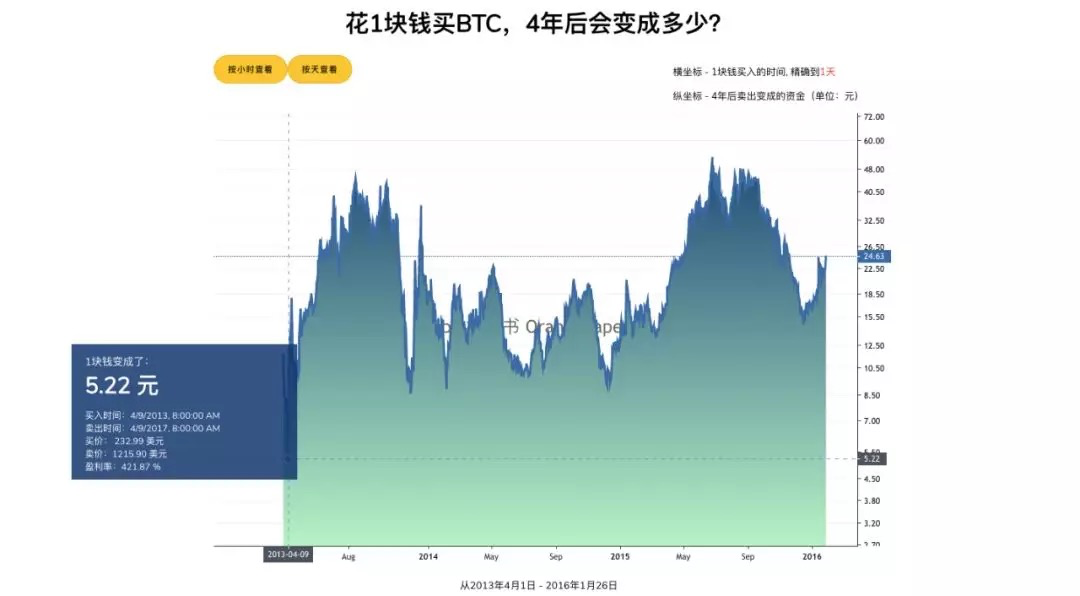
To test the "HODL" strategy's real-world performance, Orange Book ran computational simulations using historical data. We used Bitfinex's API to pull BTC hourly closing prices from April 1, 2013, to January 26, 2020, and simulated buying BTC at any given hour and selling exactly four years later.
In other words, we checked whether buying BTC at any hour between April 1, 2013, and January 26, 2016, and selling precisely four years later would always turn a profit. (Note: Since this article was written in 2020, data for purchases after early 2016 wasn't yet available.)
Selling After Four Years
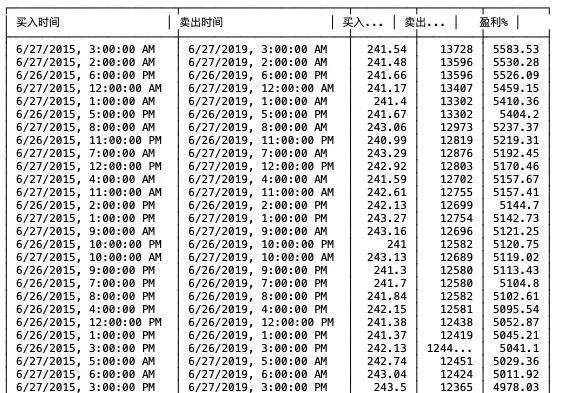
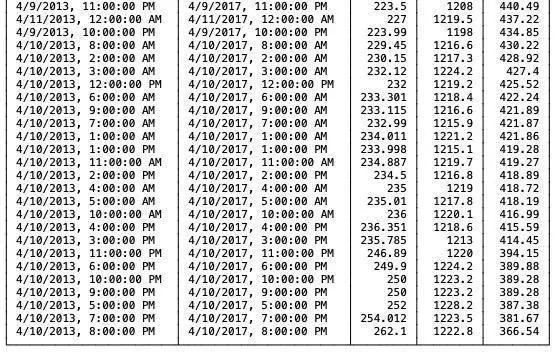
.........................
The charts above show the profit outcomes for buying BTC at any hour and selling exactly four years later (35,064 hours), sorted by return rate from highest to lowest. Return rate = (Selling Price − Purchase Price) / Purchase Price × 100%.
Key findings:
Highest historical return: 5,583.53% — bought at $241.54 on June 27, 2015, at 3:00 AM, sold at $13,728 four years later.
Lowest historical return: 366% — bought at $262.10 on April 10, 2013, at 8:00 PM, sold at $1,222.80 four years later.
What about shorter holding periods? Here's how they performed:
Two years (17,531 hours) — Highest: 4,244.85%; Lowest: −68.38% (loss)
Three-and-a-half years (26,297 hours) — Highest: 7,558.6%; Lowest: −36.99% (loss)
Five years (43,829 hours) — Highest: 14,405.63%; Lowest: 241.84%
Six years (52,594 hours) — Highest: 18,035.48%; Lowest: 533.59%
Conclusion: Holding for less than four years carries a risk of loss; holding for four years or longer has historically guaranteed a profit.
Why Four Years?
Buying BTC at any time and holding for four years has always been profitable—even the lowest return was a solid 366%. That's impressive. Interestingly, four years also aligns perfectly with Bitcoin's halving cycle. This strategy assumes BTC's price will reach new all-time highs after each full cycle, ensuring that any entry point remains above the previous cycle's peak.
Belief in Bitcoin's cycles is rooted in its halving narrative. Satoshi Nakamoto designed Bitcoin with a fixed supply of 21 million BTC, leading many to see it as "digital gold" and a store of value. These 21 million BTC are gradually released through mining, with the block reward halving every four years. Initially, miners received 50 BTC per block; after four years, it dropped to 25 BTC, and so on.
Because of this mechanism, many believe BTC's price will hit new highs after each halving, as reduced rewards increase miners' costs per BTC, requiring higher prices to maintain profitability. So far, Bitcoin has undergone two halvings, with the third scheduled for May this year. However, historical data doesn't show a clear correlation between halving dates and bull market timing.
Risks of Investing in Bitcoin
Compared to short-term trading, quantitative strategies, and futures, “HODLing” Bitcoin is often seen as a lower-risk approach. However, it’s not without its own set of risks—like the potential for the halving effect to weaken after four years, the historical cycle breaking, or the price failing to set a new all-time high.
Even though past data shows that buying Bitcoin at any point and holding for four years has always been profitable, many wonder if this will hold true going forward. In essence, the core risk of HODLing is whether Bitcoin’s halving-driven cycles will persist. In the crypto community, those who’ve lived through two successful halvings tend to have the strongest conviction; for everyone else, doubt remains.
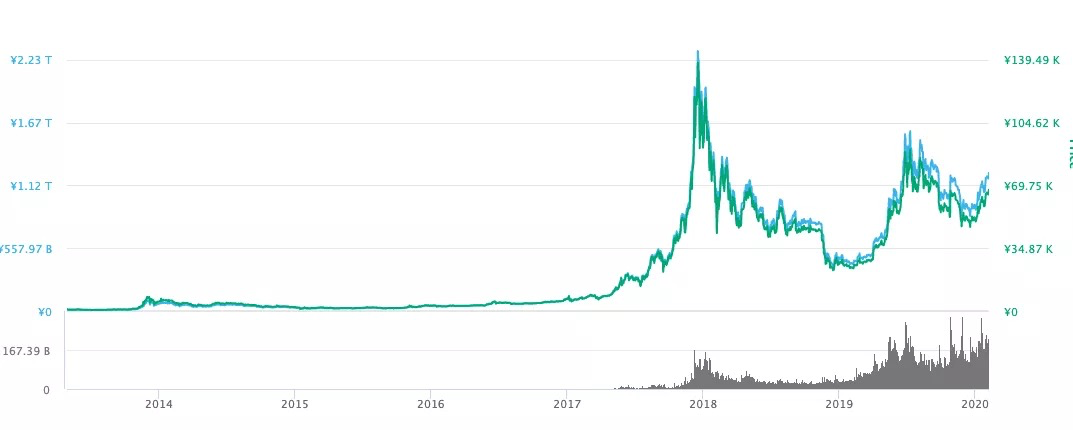
Bitcoin’s price remains highly volatile
Bitcoin is still an extremely high-risk asset. Its volatility is intense and unpredictable. That’s why seasoned HODLers often advise: only invest what you’re prepared to lose entirely. You must be okay with the possibility of your investment going to zero.
Yet the real trap of HODLing is that most people struggle to find that sweet spot: an amount large enough to be meaningful if it grows, but small enough to forget about mentally.
By choosing the simplest strategy—just holding—you commit to locking up your capital for four years or more. During that time, you can’t touch the funds, no matter how badly you might need them. The feedback loop on whether your investment pays off is painfully long. For the average person, HODLing ties up significant liquidity and carries a high opportunity cost, creating substantial psychological pressure.
This is why HODLing, despite seeming simple, is incredibly hard to stick with.
Why Is “Just Holding” So Difficult?
Very few people have actually held Bitcoin for more than four years. In the end, long-term holding is just as counterintuitive as short-term trading. Staying the course usually means surviving several psychological gauntlets:
When the price crashes: Bitcoin’s volatility is so extreme that watching your investment drop by half—or even 80-90%—is common. Most people can’t stomach that and end up selling at the bottom.
When the price soars: While some can “HODL through the pain” of losses, far more people sell after a 2x or 3x gain, missing out on further upside.
When major news hits: Occasionally, shocking events trigger panic selling—like China’s 2017 crackdown (the “9/4 Event”). Or consider a hypothetical: What if Craig Wright (CSW) one day produces Satoshi’s Genesis private key? Would you sell or keep holding? (Honestly, who knows—the impact would be massive…)
When you think you can outsmart the market: Sometimes you believe you can time the market—buy low, sell high—so you jump into trading. This happens less often, as most people learn humility after a few attempts.
In short, the hardest part of HODLing is doing *nothing*.
Should You HODL Bitcoin?
This article isn’t telling everyone to HODL; it’s meant to give ordinary investors a framework to think about Bitcoin. Committing to a long-term holding strategy requires one fundamental thing: a belief in Bitcoin’s long-term value. That’s a personal decision only you can make.
Many holders we know don’t measure their strategy by time alone. They follow a simple rule: “I won’t sell until Bitcoin hits $100,000.” Ask them why $100k and not $120k, and they often can’t explain—it’s just their target.
But how can you better gauge whether HODLing will work?
Historical data shows the four-year hold has been profitable so far, but we want to know: How can we test—*as early as possible*—if this strategy still holds water in the future?
Take the four-year buy-and-hold example:
The table above only confirms profits for buys made between 2013 and 2016. You can apply the same logic to future windows to test the strategy’s viability. For instance, Bitcoin peaked near $20,000 in December 2017. Using a minimum 2x return threshold, the strategy would fail if the price stayed below $60,000 by December 2021.
Here are some nearer-term examples:
June 2016 (~$600): Strategy fails if price is below $1,800 in June 2020.
December 2016 (~$800): Fails if below $2,400 in December 2020.
March 2017 (~$1,000): Fails if below $3,000 in March 2021.
June 2017 (~$2,500): Fails if below $7,500 in June 2021.
September 2017 (~$3,800): Fails if below $11,400 in September 2021.
December 2017 (~$15,000): Fails if below $45,000 in December 2021.
Meeting these thresholds before June 2021 seems relatively achievable.
Can It Really Keep Going Up?
For most investors considering Bitcoin, the question eventually becomes: “It’s already risen so much—can it possibly keep going?”
We can’t give a definitive answer, but here are two common perspectives:
1. It Won’t Rise Further
Bitcoin’s past surges happened in a very different, early-stage market. Today’s ecosystem is much larger, with mature derivatives and hedging tools. Historical data from earlier cycles may have limited relevance now.
2. It Will Keep Rising
History is full of people who thought the same way. They saw Bitcoin break through a previous high, assumed it couldn't possibly go higher, only to watch it surge again—proving what they thought was a peak was merely a foothill.
Can you apply the "HODL" strategy to other cryptocurrencies?
Well… Good luck with that.