

The SARS outbreak in 2003 did more than just accelerate the public's access to information through the then-nascent internet, fundamentally reshaping lifestyles via e-commerce. It also significantly advanced social governance through online oversight, policy consultation, and administration. Could the strikingly similar COVID-19 pandemic of 2020 similarly propel blockchain onto a much larger historical stage?
To explore this question, Dr. Feng Xiao, Founder of PlatON and Chairman & CEO of Wanxiang Blockchain, has contributed a special article titled “Blockchain and Global Public Affairs Governance.”

Editor’s Note: This Lunar New Year holiday, we have all been impacted by a global public health emergency. I believe all parties involved genuinely sought the best possible outcome. Yet, as with many past global crises, we've seen that the governance process is often fraught with difficulty and can even produce counterproductive results.
The inherently "public" nature of such events—with numerous participants, diverse stakeholders, complex relationships, and conflicting objectives—makes effective governance a monumental challenge worldwide.
This is especially true in the Information Age. From SARS in 2003 to today's novel coronavirus (NCP), we find that top-down governance mechanisms are increasingly inadequate, often failing to maintain effective control. This isn't just due to the rapid population mobility enabled by high-speed rail over the past decade, but more critically, to the diversification and overload of information driven by the internet and social media.
The complex social dynamics arising from intricate network structures pose new challenges for global public affairs governance. Yet digital technologies—including artificial intelligence, cloud computing, and blockchain—also provide powerful new tools to address them.
So, what can blockchain contribute to epidemic prevention and disaster relief?
Optimizing Public Trust
First, governing public affairs typically requires multiple parties to share, verify, and interoperate information. This process must be timely, efficient, and credible, with minimal cost for establishing trust. The core feature of distributed ledgers is that data can be added and mutually verified by all participants, ensuring immutability. Public disclosure, evidence preservation, and traceability in governance are ideal use cases for blockchain. Using this technology to track charitable donations, trace food and pharmaceutical supply chains, and ensure project transparency are already mature, widely deployed solutions.
Any sudden public emergency immediately attracts widespread attention. The fact that twenty million people monitored the round-the-clock construction of Wuhan's temporary hospitals is a clear example. Providing society with a reliable, transparent, and publicly accessible "mathematical proof" may be the fastest way to build broad consensus and public trust. After all, mathematical algorithms produce verifiable outcomes—anyone can independently check their correctness. The conclusion that one plus one equals two is universally accepted. The industry has already demonstrated blockchain's utility here through numerous real-world applications, so further elaboration is unnecessary.

Food and pharmaceutical traceability is a classic blockchain application.
Enabling Highly Efficient Multi-Party Collaboration
Second, public affairs governance usually demands participation from multiple stakeholders and large-scale coordination. Many global governance failures—including inappropriate responses, poor outcomes, or inefficiency—stem from an inability to effectively coordinate diverse participants. Blockchain was designed as a "general ledger system" where multiple parties maintain a shared ledger. Ethereum, for instance, was conceived as a "global computer collaborative network." While that ultimate vision remains unrealized, blockchain as a shared, multi-party accounting system is already proving effective.
Public affairs governance cannot simply replicate corporate models. Top-down, centralized decision-making faces at least three critical limitations here: First, it struggles to coordinate numerous external or cross-sector participants, as decision-makers cannot be deeply familiar with every stakeholder. Second, it responds slowly—or not at all—to complex or urgent situations at the grassroots level. Third, expertise is domain-specific; effective governance requires aggregating diverse resources and capabilities far beyond any single centralized mechanism. The mismanagement of globally donated supplies by the Wuhan Red Cross exemplifies the failure of centralized governance in public affairs. Warehousing, transporting, and distributing medical supplies is a specialized field requiring specific expertise—even hospitals rely on professional logistics firms. The Red Cross could not develop such capabilities overnight.
A blockchain-based distributed ledger system provides the technological foundation for large-scale collaboration—enabling open node access, role-specific assignments, full data sharing, collective validation, and decentralized task execution.
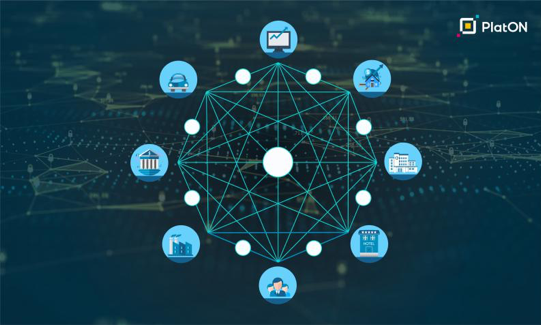
Multi-party, large-scale collaboration enabled by blockchain's distributed ledger.
Implementing Effective Incentive Mechanisms
Third, participants in public affairs governance often represent distinct interest groups. Sustaining their motivation requires carefully accommodating diverse interests. As Professor Xijin Jia of Tsinghua University noted, government assurance and social volunteer mechanisms are two complementary, indispensable frameworks for resource allocation in public affairs. However, centrally coordinating volunteer efforts can undermine their intrinsic motivation. During this pandemic, we've seen many volunteers devise creative workarounds—even using helicopters—to bypass Hubei's centralized allocation and deliver donations directly to recipients.
The root cause is the non-profit nature of public affairs governance. Since economic incentives don't drive participation, centralized institutions are ill-suited to evaluate, allocate, or manage contributions. Volunteer motivations are diverse: compassion, hometown loyalty, social reputation, philanthropy, personal heroism, corporate culture, medical research, and more.
How do we design a flexible, "incentive-compatible" mechanism that satisfies these heterogeneous interests? Clearly, the familiar centralized "coordinated allocation" model falls short.
Blockchain's incentive mechanisms were explicitly designed to resolve such compatibility challenges among stakeholders. Born in an era of globalization, virtualized social relationships, platform networks, and digital economies, blockchain emerged as a technical system for effective decentralized governance. Its incentive architecture isn't about optimizing centralized models; it solves the alignment challenges inherent in decentralized, multi-stakeholder environments with divergent interests.
Given the non-profit nature of public affairs, economic levers are ineffective. Success hinges on thoughtfully accommodating all stakeholders' varied motivations and establishing an effective, incentive-compatible framework.

Blockchain's incentive mechanisms are ideally suited to solving effective incentive challenges in scenarios with diverse demands.
Ensuring Reliable Privacy Protection
Fourth, public affairs governance often spans sectors, industries, disciplines, and even borders. For instance, the storage, transportation, and distribution of pharmaceuticals and medical supplies—a challenge that troubled the Wuhan Red Cross—are routine operations for九州通 Pharmaceutical Group. Of Japan's current 100 confirmed COVID-19 cases, over 70 are international tourists from various countries aboard a cruise ship. Meanwhile, China's disease control authorities proactively shared information on the domestic outbreak and genomic sequencing data with the World Health Organization (WHO) and major countries from the start, seeking global collaboration.
Such diverse and often unrelated parties must establish cooperative frameworks to tackle global public challenges. While agreeing to collaborate might be straightforward, implementing meaningful cooperation usually requires data sharing and joint computation among multiple participants. Undeniably, nations, industries, and individuals all have legitimate concerns regarding data sovereignty, ownership, and privacy—rights that must be clearly defined and strongly protected. Establishing reliable data rights and privacy safeguards is the essential foundation for large-scale cooperation across borders, industries, and individuals.
To date, blockchain technology—with its distributed ledger, consensus mechanisms, economic incentives, and community governance—combined with cryptographic tools like hash functions, zero-knowledge proofs, homomorphic encryption, verifiable computation, and secure multi-party computation, offers the most elegant solution to this global cooperation puzzle.

Blockchain + Privacy-Preserving Computation enables data to flow securely while preserving privacy.
Amid today's epidemic prevention and disaster relief efforts, those in the blockchain space are asking: What can our technology contribute? Donating funds and supplies—however modest—is certainly commendable. Launching a blockchain-based donation traceability system is equally praiseworthy. Yet, in the future governance of public affairs, blockchain's potential impact may far exceed what we currently imagine.