

The Web3 derivatives landscape is dominated by a handful of major platforms, creating a formidable barrier to entry for newcomers. Enter TinyTrader, a white-label service provider emerging as a potential catalyst to break this stalemate, potentially paving the way for deeper integration between traditional and crypto finance in the long run.
As the Web3 financial ecosystem matures, derivatives trading volume has skyrocketed, growing from less than 50% of the total market in its early days to its current dominant position. While the spot market continues to show robust growth, its pace is significantly outpaced by derivatives. By the end of May, derivatives trading volume (approximately $2 trillion) accounted for over 78% of total Web3 market activity.
Having evolved for just over a decade, the crypto market remains minuscule compared to traditional finance, signaling vast untapped potential. Current trends suggest that derivatives are poised to take on an even more prominent leadership role.
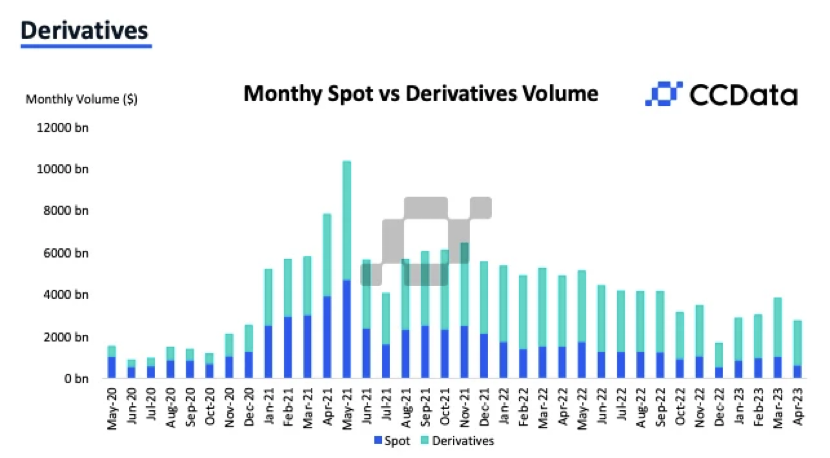
Monthly trading volume: Crypto spot vs. derivatives (Source: CCData official Twitter)
Top Platforms' "Siphoning Effect" Stifles New Entrants
The current derivatives market is built on two main pillars: futures and options. Futures have been around since Web3's early days and saw significant scaling after 2018. Today, the market is dominated by perpetual contracts; Bitcoin futures trading volume reached roughly $790.9 billion in May. Major centralized derivatives exchanges—including Binance, OKX, Bybit, and KuCoin—collectively command over 90% of this volume, with their market share continuing to grow.
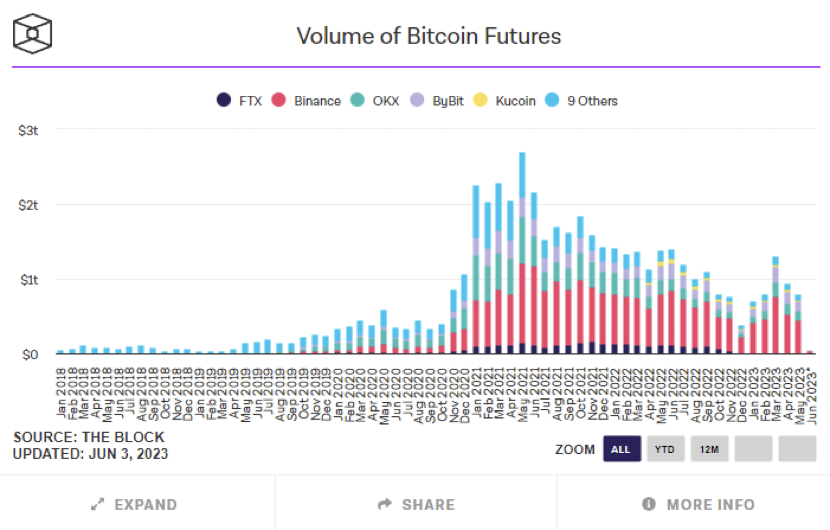
Bitcoin futures trading volume (Source: https://www.theblock.co/data/crypto-markets/futures)
The options market, the second major pillar, launched later and remains far smaller in volume. Bitcoin options trading reached about $19.8 billion in May. Deribit, with its core focus on options, holds roughly 80% of the Bitcoin options market. While Delta and OKX are gradually increasing their share, this segment is also highly concentrated among top players.
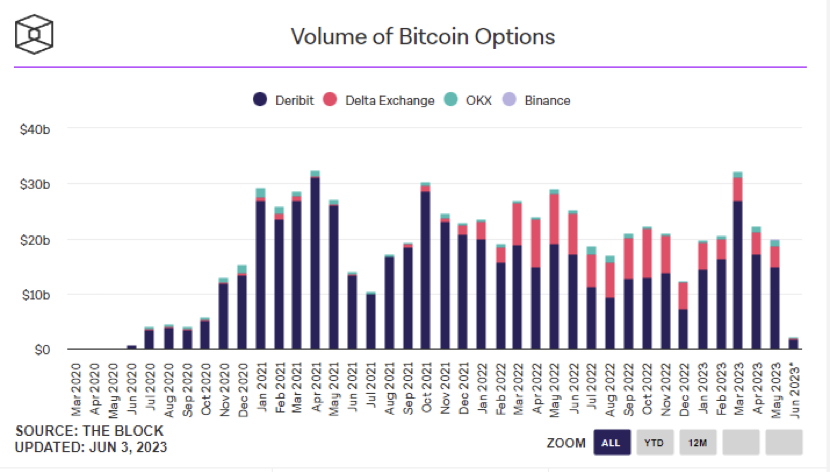
Bitcoin options trading volume (Source: https://www.theblock.co/data/crypto-markets/options)
A 2022 Jump Crypto report highlighted that crypto options volume is a tiny fraction (<2%) of spot volume, compared to 3,500% in U.S. equities markets, pointing to explosive growth potential in the coming years.
Market observation confirms that top-tier platforms capture the lion's share of activity. Their sustained profitability intensifies a "siphoning effect," drawing new traders away from competitors. While the crypto derivatives space holds immense opportunity, emerging platforms struggle to gain traction under the weight of established incumbents.
Most new platforms face fundamental constraints: limited technical capabilities and shallow market insight, which manifest as weaknesses in product innovation, marketing, and operations. This makes differentiation difficult, directly hindering user acquisition and revenue. Compounding factors like market volatility and regulatory uncertainty often trap them in a vicious cycle.
Opportunities, however, do exist. The rapidly growing white-label exchange sector is opening new pathways. White-label services aren't new—FTX, Chainup, and B2B brokers have offered them before. But as market narratives and competitive dynamics shift, especially in derivatives, innovative providers like TinyTrader are gaining prominence. Leveraging white-label infrastructure to launch an exchange is becoming a recognized strategic move.
How White-Label Providers Drive Growth and Profitability
This article applies a first-principles analysis to dissect derivatives platforms, exploring in depth how white-label providers like TinyTrader can deliver tangible growth and profitability advantages to emerging exchanges.
Derivatives as Essential Infrastructure: A Path for Newcomers
At its core, any business must generate revenue. While profitability may not be the only goal, it's a critical pillar of sustainable operation. For derivatives platforms, the paramount question is: how can they consistently monetize their products?
From a transactional view, all participants seek profit by executing strategies amid crypto asset price fluctuations. This trader activity itself drives platform revenue. In Web3 derivatives—whether futures (primarily perpetuals and CFDs) or options—platforms earn from several key sources:
Trading fee revenue (maker/taker fees, options exercise fees, liquidation fees, etc.)
On typical exchanges, crypto asset prices are set by supply and demand between bid and ask orders. Only with deep order books and high volume can platforms offer tight spreads and a superior trading experience. To achieve this, exchanges typically onboard market makers as counter-parties to traders, earning fees on every matched trade. On high-volume platforms, these fees constitute substantial revenue.
Market-making services—generating liquidity revenue (market-making fees, liquidity incentives)
Ultimately, whether a platform relies on fee-based revenue, market-making revenue, or both, the foundational requirement is consistent trading flow and a loyal user base. Without this, profitability remains out of reach.
From a user-acquisition standpoint, platforms must execute sound marketing, operations, and outreach strategies while excelling in usability, security, reputation, and credible endorsements (like regulatory compliance). The former attracts new users; the latter converts them into loyal, repeat customers. Building a profitable, scalable exchange therefore demands excellence across multiple dimensions.
1. Core components of a derivatives platform's trading system
A platform's core trading system forms its technological backbone and is the primary showcase of its product strength. To meet rigorous demands for trading performance, user management, growth, and security—while staying competitive—a mature system must incorporate six essential elements:
A comprehensive derivatives platform requires several core systems: trading software, risk management, liquidity & bridging, customer & agent management, marketing & promotion, and robust network & security solutions.
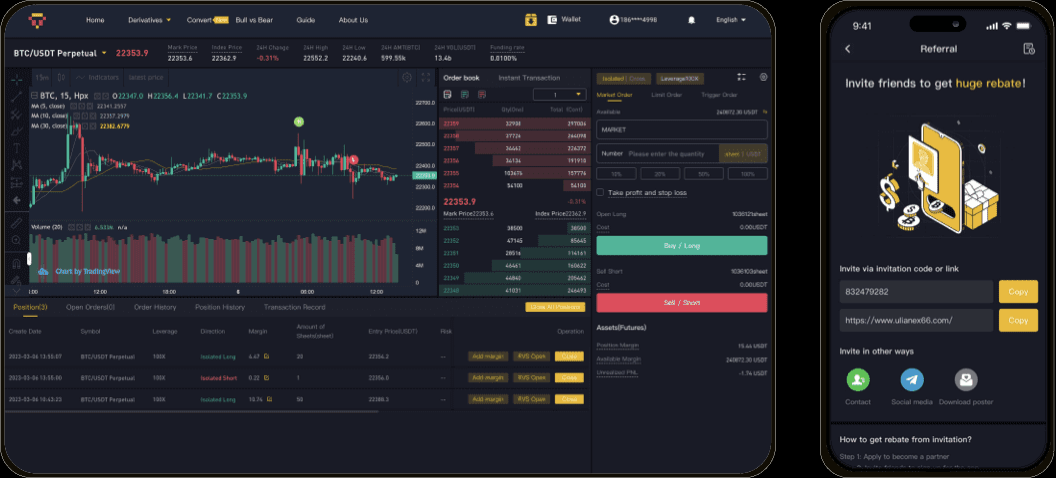
(1) Trading Software: This is the primary interface for end-users (C-end), available on desktop, web, and mobile. The design must prioritize ease of use, simplicity, and comprehensiveness to enhance the trading experience and build user loyalty.
(2) Risk Management System: This system allows for custom hedging strategies across the platform to mitigate trading risks. As the primary defense—especially during market volatility—a robust risk management framework is crucial for protecting both users and the platform, ensuring stable profitability.
(3) Liquidity & Bridging System: By connecting with liquidity providers (LPs), this system obtains bid/ask quotes and matches orders at optimal prices via an ECN (Electronic Communication Network). Strong liquidity is the foundation of any trading platform, reducing spreads and delivering a superior trading experience—an area where new platforms often struggle to compete with established players.
(4) Customer & Agent Management System: This core system manages user data and agent networks. A mature, well-designed system boosts operational efficiency and provides a strategic edge for business and marketing initiatives.
(5) Marketing & Promotion Management System: This system drives user acquisition, trading activity, and engagement. It includes pre-built operational templates for bonuses, red packets, and more, streamlining daily marketing tasks.
(6) Network & Security Solutions: Essential for any cloud-based platform, these solutions ensure real-time data backups, timely security patches, and protection against cyber threats, safeguarding the integrity of all platform data.
Building a derivatives platform from scratch is a complex and resource-intensive endeavor, which is why white-label service providers have become so vital. In recent years, many new trading platforms have opted for white-label solutions.
Early white-label providers needed over two months to deploy a trading system. Today, as the sector has matured, next-generation providers like TinyTrader can deploy and launch a core contract trading system in as little as seven days.
2. Who's Entering the Derivatives Contract Platform Space?
Within the crypto industry, spot trading alone no longer meets traders' demands. As competition intensifies, profitability for spot-only platforms is declining. For existing spot platforms with established user bases, launching derivatives products is now an urgent priority to diversify revenue.
Beyond Web3, traditional finance institutions also see strong demand. Traditional asset service providers—including stock exchanges, private equity platforms, FX platforms, and legacy derivatives platforms—face revenue pressure, especially after regulatory scrutiny of MT4/MT5. Expanding into Web3 offers a compelling new avenue for growth. Furthermore, industrial enterprises, gaming companies, and traditional internet firms with substantial capital and operational strength are also exploring this space, making them potential clients for contract platform infrastructure.
This strategic shift towards derivatives is creating significant new demand for white-label services.
3. How TinyTrader Helps New Derivatives Platforms Achieve Rapid Profitability
While new derivatives platforms offer traders more choice, most still focus narrowly on crypto assets, lacking support for diverse asset classes. Whether it's traditional finance moving into Web3 or crypto platforms adding traditional assets, compliance remains a key challenge.
This is where advanced white-label providers like TinyTrader can make a difference, helping clients diversify revenue and achieve rapid growth through ongoing ecosystem support.
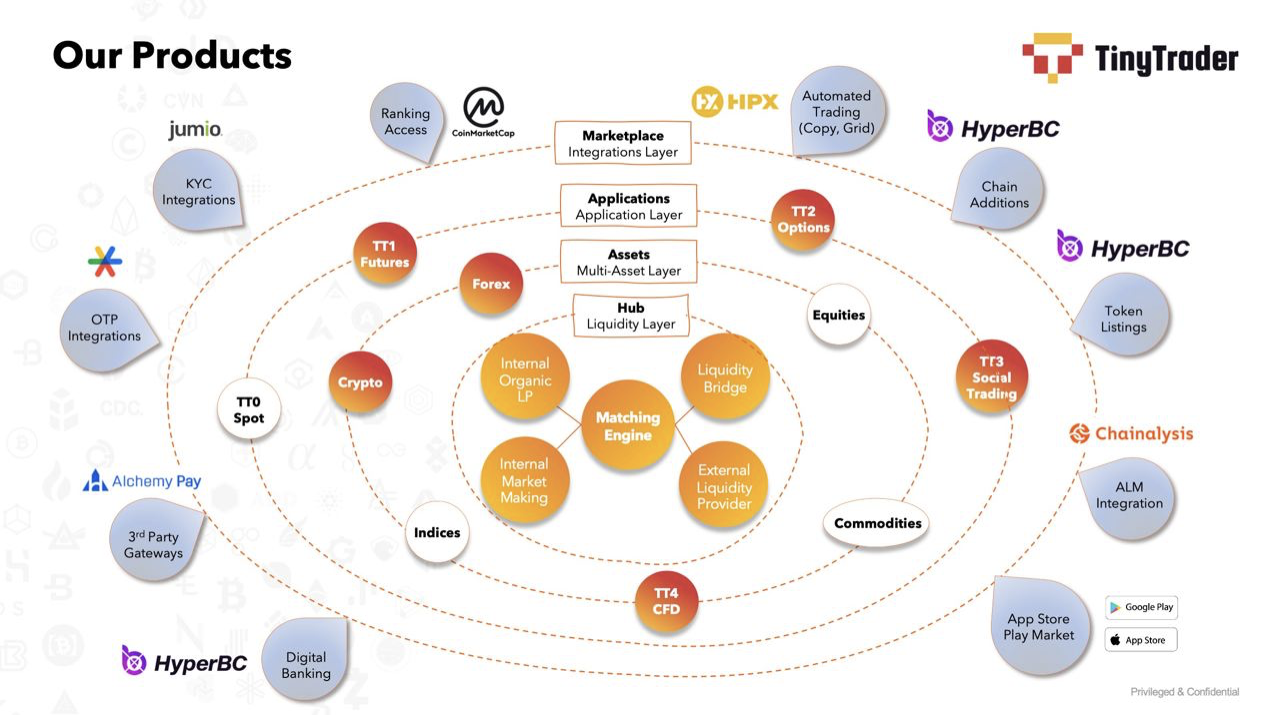
As a leading white-label provider, TinyTrader offers spot and derivatives systems (perpetual and CFD contracts), liquidity aggregation, and fiat engine infrastructure that bridges Web3 assets with traditional FX trading. It is also the first white-label provider to support options trading, allowing clients to enter this emerging market early.
Through its TTMarketplace, TinyTrader provides a suite of third-party services—including payments, KYC, OTC, and compliance solutions—creating a comprehensive application ecosystem. This holistic support enables compliant expansion into diverse use cases across both traditional finance and Web3.
For each product, TinyTrader offers two service models: "Development Mode" and "Full-Stack Mode." Development Mode provides SDKs for clients with in-house development teams who want highly customized solutions. Full-Stack Mode is an end-to-end turnkey service, with core trading systems deployable in just seven days.
Additionally, TinyTrader supports clients with market-making and risk management services. It offers flexible payment terms, including a revenue-sharing model that eliminates upfront fees, providing a solid foundation for new platforms to build mature products and accelerate profitability.
TinyTrader's CEO, Zo Liang, recently announced a $30 million funding round to enhance technical capabilities and product excellence. He emphasized TinyTrader's unique position in bridging Web2 and Web3, helping Web2 clients explore Web3 through continuous innovation. The company is also deepening its AI research to upgrade its quantitative strategy pool and bolster its risk management and security frameworks.
In practice, trading systems built on TinyTrader's framework demonstrate high user stickiness and sustained growth.
Personalized Services & Innovative Exchange Systems Drive User Loyalty
TinyTrader enables clients to build personalized, innovative exchanges. Its proprietary TT1/TT2 derivatives contract series features tools like ST Social Copy Trading and GT Grid Quantitative Strategies. These allow novice traders to learn from and copy experts, accelerating their path to profitability. Built-in grid trading functionality keeps quantitative strategies running continuously, engaging users for the long term.
Efficient Customer & Agent Channel Management
TinyTrader's user management system supports unlimited hierarchical structures for exponential, viral growth. It offers flexible commission distribution (fee-based or profit-sharing) with automated settlement. Built-in lead-generation tools, including bonus airdrops, stimulate trading interest and boost activity.
Automated Marketing & Growth
For customer acquisition, TinyTrader automates marketing funnel models, improving conversion rates for contract exchanges while reducing manual costs and boosting ROI. Its automated notification system extends customer lifetime value and encourages increased trading participation.
TinyTrader also allows for A/B testing of marketing content and visuals tailored to different customer segments. All marketing materials can be easily adapted to new target markets and shifting demands. Furthermore, by integrating trading signals from compliant social trading platforms, TinyTrader enables highly targeted marketing campaigns for specific user groups.
Data shows that clients using TinyTrader's next-gen automated marketing tools achieve key performance metrics—like email open rates, customer lifetime value, initial deposit amounts, and lead conversion rates—that are 25%–30% above industry averages. Click-through rates (CTR) even double the industry standard.
TinyTrader delivers excellence across all six core components crucial for a derivatives exchange. By combining superior product design, powerful marketing, and a comprehensive ecosystem, it empowers new platforms to grow rapidly, achieve profitability, and stand out in highly competitive markets.
TinyTrader: Tapping into a Blue Ocean Market
1. The White-Label Services Market is Evolving
Technological advancement is driving a transformation in the white-label service provider landscape.
Currently, most providers focus only on trading system development, offering limited support for ecosystem growth—particularly the regulatory compliance needed to bridge Web2 and Web3 for diverse users. Providers specializing in either Web2 or Web3 often struggle to deliver cross-domain solutions that meet heterogeneous user needs.
From a product standpoint, the vast majority of white-label platforms support only futures contracts—mainly perpetual swaps, which have high market saturation. They lack robust support for Contracts for Difference (CFDs), which hold a small market share, and for options contracts, which are still in early development.
Moreover, development cycles typically exceed two months, and most providers operate on a one-time payment model, showing limited commitment to long-term partnership. As a result, many derivatives platforms built on these solutions suffer from product homogenization, making it difficult to differentiate from leading exchanges and challenging to attract users and turn a profit.
As an emerging player, TinyTrader is the first to offer a true end-to-end white-label solution—covering frontend to backend, from perpetuals to options, and including liquidity services and compliance support. Beyond dramatically improving marketing efficiency and user growth, TinyTrader's offerings span both traditional finance and Web3—two high-potential markets—effectively breaking down user acquisition barriers across domains. This positions it at the forefront of industry trends.

2. The Blue Ocean Potential of TinyTrader
Traditional finance, built over centuries, operates at a massive scale. In contrast, the total crypto market cap is just $1.15 trillion. The gap between crypto derivatives and traditional financial derivatives is equally vast. As a Web3 domain built on crypto assets, the sector is still in its infancy—meaning today's Web3 market, anchored to Web2, holds tremendous untapped potential.
As a pioneer breaking down barriers between Web2 and Web3, TinyTrader helps traditional markets upgrade their infrastructure and access broader asset classes. This not only improves trading efficiency but also lowers the entry barrier for investors into Web3 assets, driving significant incremental growth for the ecosystem. Looking ahead, TinyTrader is poised to catalyze deep innovation across the white-label services market, representing a strong blue ocean opportunity.
TinyTrader has released "The Success Playbook for Web3 Derivatives Exchanges" to assist more users. To claim your complimentary $600 industry trading handbook, contact TinyTrader's success team at [email protected].