

Source: ZONFF Research
Author: Victoria
Table of Contents
The Rollercoaster of SocialFi 1.0
Demand
Investment History
Structure
Three Defining Moments for SocialFi in 2022
I. The Rise of SBTs
II. The Value of Data
III. The Rise of the Social Protocol Ecosystem
SocialFi 2.0 in Progress
A Dual Internal & External Loop Structure
Opportunity-Level Considerations
In 2021, Binance CEO CZ wrote in Fortune India that more traditional financial institutions would enter the crypto space in 2022. He also predicted that SocialFi and GameFi would be key drivers for institutional adoption, suggesting we could expect robust innovation throughout the year.
The crypto world moves faster than we think. We still remember how, from late 2021 into January 2022, major media outlets widely shared CZ's outlook for the new year. His optimism for SocialFi and GameFi led many to declare 2022 "The Year of Social." Time flies. Amid the volatile crypto market of 2022—where DeFi apps grew quiet, NFT floor prices repeatedly crashed, and public blockchain sectors remained lukewarm—SocialFi, though subdued, had its bright spots. As the new year begins, let's look back at the developments and innovations of SocialFi 1.0 in 2022 and share our outlook for SocialFi 2.0 in 2023. Here's to new beginnings!
The Rollercoaster of SocialFi 1.0
SocialFi's development path may resemble GameFi's. However, games naturally attract more attention than social interactions and have clearer inflection points and stages (often with more pronounced Ponzi-like dynamics). As a result, SocialFi lacks the distinct phase classifications seen in GameFi (e.g., GameFi 1.0–3.0). For this discussion, we define the early period of Web3 social projects before 2022 as SocialFi 1.0.
Demand
As French sociologist Gabriel Tarde wrote in *The Laws of Imitation*: "In human transformation, truly novel inventions are rare; most progress comes from adaptation and imitation."
What is innovation? It can mean solving existing problems or creating new demand to address emerging challenges. Web3 social applications exist not only to fix legacy Web2 issues but also to generate new demand and tackle new problems. Most SocialFi 1.0 projects go beyond simply replacing Web2 social products; they integrate social networking with the financial attributes native to blockchain. The term "SocialFi" is now well-defined: it aims to deliver user benefits and transparency by financially empowering social networks—essentially, the fusion of Social Networking and the Money Effect. More broadly, Web3 social applications can solve many long-standing problems of Web2 platforms, including: social relationships locked into centralized platforms/closed ecosystems, user-generated content stored exclusively on platforms, user data owned entirely by platforms, monetization models dictated solely by platform policies, and creators' value going unrecognized or undercompensated. In the Web2 era, social media algorithms decide who our friends are, what activities we enjoy, and what content we see. As Benedict Evans noted in "The Death of Facebook's News Feed": "All social apps grow until you need a News Feed. All News Feeds grow until you need an algorithm. All algorithmic feeds grow until you get tired of seeing nothing—or the wrong things—and switch to a simpler, newer app. Then that app grows until it, too, needs a News Feed."
Using blockchain technology, Web3 social applications offer three core value propositions distinct from centralized platforms to address these traditional social challenges:
Data Ownership: Traditional social media platforms collect and store as much user data as possible on their own servers, retaining full ownership. Decentralized social platforms, in contrast, return data sovereignty to users. Data and on-chain activity become transparent; any platform wishing to access this data or activity history must first obtain user consent and pay associated fees. Blockchain's immutable nature makes data collection more transparent and resistant to fraud.
Revenue Distribution / Incentive Mechanisms: Social media platforms typically monetize through advertising. They profit directly from traffic and user engagement, yet users receive no direct compensation for their participation. SocialFi pioneers a DeFi-inspired approach to the social economy: issuers connect directly with participants using social tokens, and both parties benefit. Creators can monetize their social influence directly, cutting out third-party platform commissions.
User Authorization (Privacy/Security): In traditional social networks, account registration requires personal information like phone numbers or email addresses, which is stored centrally on platform servers. This centralized storage makes user data vulnerable to leaks and cyberattacks (the July 2022 Shanghai data breach further heightened mainstream awareness of privacy and security risks). SocialFi's decentralized architecture allows for cross-platform sharing and migration of social content and assets, better protecting user privacy and security.
As SocialFi 1.0 projects explore these three core value propositions, more native Web3 social use cases are emerging. For example: digital citizens need a new-generation public forum and information marketplace aligned with decentralized web values to sustain social content sharing; decentralized social apps' inherent on-chain asset features and multi-account identity structures create demand for verifiable identity solutions and on-chain social graph mapping; and there's a growing need for portable social relationships and assets across platforms. Consequently, genuine decentralized social development will reshape data and information flows: in the future, information and data must move in tandem, while relationships become tokenizable—eliminating central authorities and hierarchical distinctions.

Investment History
Throughout history, the emergence of "capital sinks" has signaled rising powers and shifting global trends. Where capital flows, new opportunities and narratives often follow.
Around 2017, a wave of blockchain-based social projects launched, including prominent names like Steem, Voice, ONO, QunQun, GSC, YeeCall, NRC, SwagChain, Huoxin (Fire Messenger), and TTC Protocol. However, constrained by an immature market, limited user adoption, and flawed ecosystem models, many of these early ventures faded away. The DeFi summer of 2020, followed by the explosive growth of NFTFi and GameFi, reshaped the landscape. Influenced by open finance and liquidity mining, SocialFi 1.0 evolved from simple "Social + Finance" to a more integrated "Social + DeFi" model. By 2021, a broader wave of Web3 participants arrived, fueling a new generation of socially-driven, entertainment-focused applications. The breakout success of Axie Infinity that year further spotlighted the social potential of blockchain. In the fast-moving crypto world, SocialFi has continued to evolve rapidly. According to Footprint Analytics, SocialFi funding reached $392 million in 2020. In September 2021 alone, the sector attracted $220 million. That spring, Project Galaxy (now Galxe) secured seed funding, while the social DAO Friends with Benefits began its fundraising. By early September, FWB closed a multi-million dollar round at a $100 million valuation. Later that year, a series of notable raises followed: Torum raised $300,000 in September; Monaco Planet secured $3 million in November; CyberConnect raised $10 million in November; BBS Network raised $1.5 million in December; and the Web3 infrastructure project RSS3 closed a new round—all contributing significantly to SocialFi's total capital inflow.

Structure
Driven by capital interest and user demand, the main narratives and investment opportunities in SocialFi 1.0 can be grouped into three categories:
Infrastructure Tools, Middleware, and Protocols:
Key projects include: Mask Network, RSS3, 5Degrees, Mem Protocols, Likecoin, Snapshot, Lens Protocol, Collab.Land, CyberConnect, and Project Galaxy.

Lens, CyberConnect, and Project Galaxy have been widely covered elsewhere. Instead of rehashing basics, let's focus on what made them stand out at the time.
POAP pioneered the concept of on-chain behavioral memory, predating Vitalik Buterin's SBT narrative. Launched at ETH Denver in 2017 and formally incorporated in 2021, POAP has become a cultural staple in Web3. The Proof-of-Attendance Protocol issues unique NFT badges as verifiable, immutable credentials for participating in online or offline events. These digital collectibles are permanently stored on-chain. POAP doesn't run a marketplace; it carved out and expertly executed this niche. Project Galaxy later expanded on POAP's protocol. In April 2022, POAP partnered with Warner Music Group to issue badges at concerts. To date, over 4.5 million POAPs have been minted for more than 500,000 collectors.
Project Galaxy's on-chain credentialing opened new frontiers for SocialFi 1.0's social graphs, sparking fresh interest. Its multi-chain support gave it an edge over competitors like Rabbithole (ETH-focused) and POAP (primarily Ethereum-based), enabling richer, cross-chain user profiling. This allowed users to claim benefits across multiple accounts, binding various identities together. CyberConnect, founded in 2021, also builds on-chain social graphs with features like "follow" buttons and public follower lists. Users retain full ownership and control of their data. However, CyberConnect isn't a smart contract; content is stored on IPFS, which means no recurring gas fees and permanent storage, but also a steeper learning curve for developers and users. As development progressed, both Galaxy and CyberConnect faced data challenges: Galaxy's Gleam index has limitations, while CyberConnect lacks upstream data sources. Both are now seeking partnerships with social data oracles. Such projects may find renewed relevance in SocialFi 2.0.
Another major 2021 narrative was Lens Protocol. Initially, Lens provided basic social connections rather than a full social graph, requiring developers to fetch and reconstruct on-chain data (often via The Graph) at significant cost. Early users also faced high gas fees per action and constant wallet pop-ups, creating major UX hurdles. As Lens transitions toward SocialFi 2.0, it is introducing new solutions to improve user experience and explore whether next-generation middleware is needed for on-chain social graphs.
Decentralized Content & Social Media Platforms (Media DApps) / NFT Subscription Platforms & Tools:
Key projects include: Bluesky, BitClout, BBS Network, Monaco Yacht, Subsocial, myMessage, ShowMe, Theta (decentralized video), Audius (decentralized audio), Joystream, Mirror, Cent, Yup, Matataki, SWAGG, Entre, Nafter, and Mastodon.
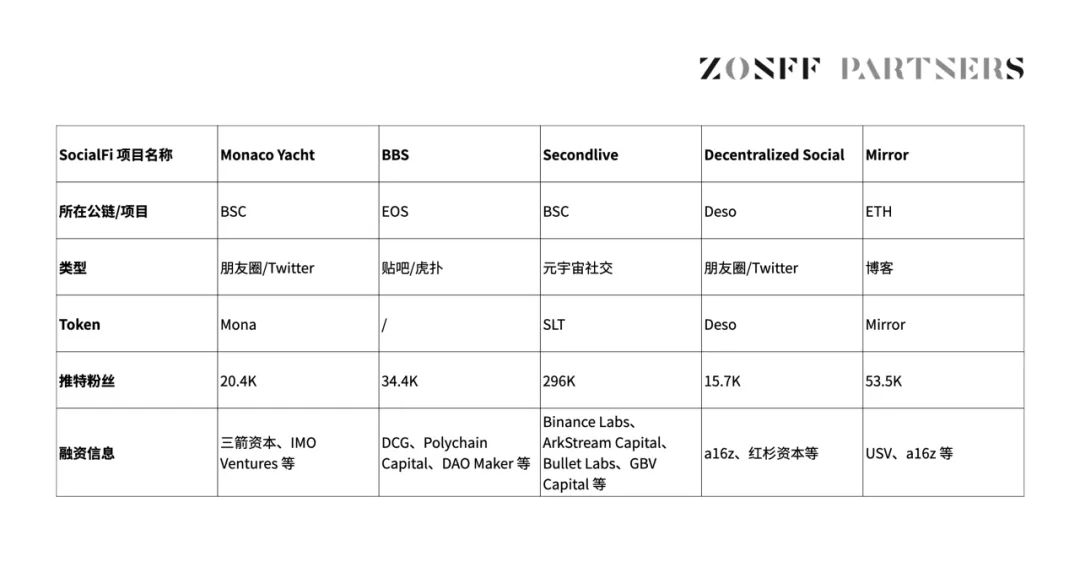
These projects have been discussed extensively elsewhere, so we won't detail them here.
A few notable narratives deserve highlighting:
Decentralized content and social media platforms operate on public blockchains. Unlike centralized giants like WeChat, Weibo, or Facebook—where data is controlled by a single corporation—these platforms allow anyone to run nodes, access backends, build applications, and manage content streams.
A standout in 2021 was Monaco Planet ("content mining"), the only domestic project backed by Three Arrows Capital, which fueled the SocialFi 1.0 investment frenzy. Dubbed "Twitter for Web3," it let users post videos, images, and text, with features for likes, comments, retweets, NFT display, and staking to earn MONA tokens. Its early virality was driven by its Yacht NFT launch, where only buyers received access codes and invites—a classic Web3 growth mechanic. At its Beta launch, community excitement soared, with invitation codes trading above $100. However, its simplistic token distribution algorithm failed to incentivize quality content long-term. Users chased attention, leading to repetitive content and weak token value capture. Despite initial hype, Monaco's reputation quickly collapsed. Nevertheless, as a content-media platform, it paved the way for creator-economy innovations in SocialFi 2.0.
Social Token Issuance Platforms:
Early SocialFi 1.0 projects were primarily focused on token issuance. At that stage, the core value proposition of SocialFi centered on Social Tokens. These tokens can be categorized into three types, each with its representative projects: Personal Tokens, Community Tokens, and Social Platform Tokens. Personal tokens are issued by individual users, carrying unique information and predefined access rights. Community tokens are issued by organizations to strengthen member connections, while governance platform tokens form the foundational layer of an organization.
Personal Tokens: Holders gain access to exclusive fan groups, event discounts, priority participation, merchandise or NFTs, and status symbols. Early creators and entrepreneurs can monetize their influence. Examples include RAC, ROLL, Whale, MeTokens, and MintGate.
Community Tokens (Social Platform Tokens): In addition to personal token benefits, holders gain DAO governance rights, influence within their ecosystem communities, and revenue from community asset leasing or services. Examples include Karma DAO, Friends with Benefits, Forefront, Flamingo, and DeepDAO.
Minting & Distribution Platform Tokens: Governance power for these platforms comes from transaction fees or token burn mechanisms, while financial gains are tied to the growth of social tokens issued on them. Examples include Chilliz, Zora, CircleUBI, and Fyooz.
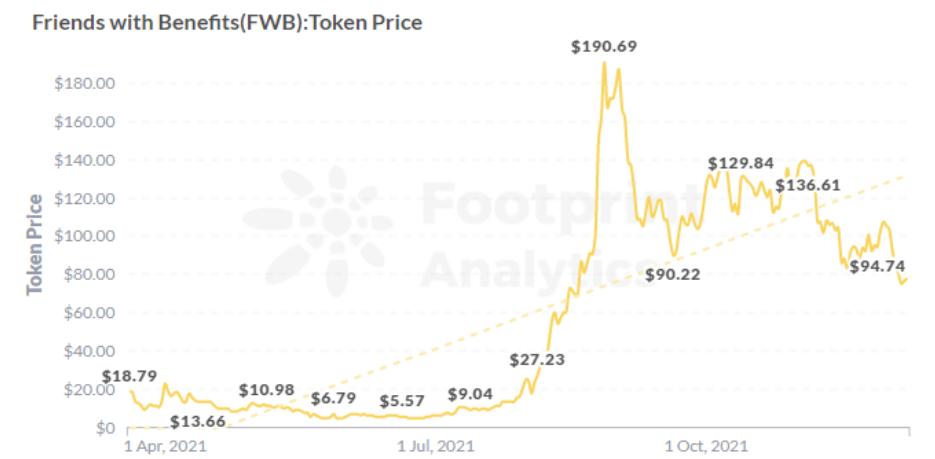
Looking at the price charts of FWB and RLY reveals significant volatility. According to Footprint Analytics, FWB's price surged from $17.69 to $190.69—a 977% increase—and secured investment from a16z in October. However, projects like FWB and RLY lost momentum after that peak and declined sharply throughout the first half of 2022, dimming their earlier appeal. This shift marked the beginning of a new social narrative for the year.

Three Defining Moments for SocialFi in 2022
As the starting point for Web3 social, the rise and fall of SocialFi 1.0 exposed several critical industry issues:
1) Homogeneous user base lacking diversity: SocialFi 1.0 primarily addressed existing Web3 social problems without sufficient consideration for interaction-layer design. It failed to truly understand users or account for different personas and demographics. At this stage, users were predominantly "airdrop hunters" focused on profit—prioritizing "X-to-earn" models and user experience, similar to DeFi participants who actively contribute to and govern DAO communities. This phase lacked a significant influx of traditional Web2 users—those who prioritize product quality and detail, care about profit distribution, and could attract top-tier creators and social media influencers from traditional platforms.
2) Data silos and insufficient composability: While SocialFi 1.0 represented progress over traditional social methods—especially in monetizing content creation—it created numerous isolated ecosystems. Each protocol operated across different blockchains with distinct reward algorithms, tokenomics, and user interactions, preventing the portability and reuse of Web3 social assets. Moreover, the influence monopoly problem from Web2 persisted in Web3: early entrants or established figures could quickly accumulate attention and dominate content creation, leaving long-tail creators with low visibility and inadequate compensation. Breaking this monopoly remains an unresolved challenge.
3) Incomplete value capture models: The "Fi" in SocialFi 1.0 was limited. First, creators earned rewards through tips for content—essentially maximizing traditional creator economy profits for themselves, including early Lens ecosystem features like rewarded reposts, likes, and comments. Second, "Write-to-Earn" models, exemplified by Monaco Planet, centered on content but required sophisticated algorithmic design. Overly simplistic algorithms could flood platforms with low-quality posts aimed solely at claiming incentives. Crude ranking based on attention or net worth led to homogenized feeds. Low-quality content and interactions highlighted the need for better incentives for high-quality contributions, improved moderation, refined token reward algorithms, and optimized value capture models.
In response to these challenges, 2022's social applications may not have become the key catalyst for institutional market entry that CZ predicted a year earlier, but they witnessed significant transformative shifts. With growing participation from both native Web3 users and traditional players, major projects meaningfully explored the three value propositions above, reshaping the SocialFi 1.0 landscape and proactively addressing its early shortcomings.
Below, we summarize three defining moments of 2022 with brief commentary.
01 The Introduction of SBTs
"The Dao is the profound essence of all things—the treasure of the good, and the refuge of the unworthy."
The most prominent highlight—and arguably the most impactful development for the industry—was the May release of Vitalik Buterin's co-authored paper, "Decentralized Society: Finding Web3's Soul," which introduced Soulbound Tokens (SBTs). Widely regarded as an industry classic, this paper proposed a new paradigm for Web3 social applications and added fresh solutions to the decentralized social space, ushering in a new narrative.

SBT stands for Soulbound Token. Its philosophical essence is drawn from Laozi's *Tao Te Ching*. As early as January 2022, Vitalik introduced SBTs in a blog post titled "Soulbound," explaining that the term originates from the game *World of Warcraft*, where soulbound items can only be used by the player who acquired them and cannot be traded or gifted. In Web3, Soulbound Tokens are non-transferable tokens bound to a user's wallet address. Any organization can issue SBTs to a wallet, with issuers retaining revocation rights. Once stored in a wallet, an SBT becomes a unique identifier representing the holder. Accumulating more SBTs signifies broader recognition, forming a personalized credit system and, ultimately, a verifiable digital identity. This became one of the hottest narratives in 2022 social applications: the DID (Decentralized Identity) and reputation赛道.
Voltaire wrote about "identity" in his *Philosophical Dictionary*:
"Only memory establishes identity—that is, personal sameness." "My identity today clearly arises from my experiences yesterday—and the traces they leave upon my body and consciousness."
In a discussion about reputation DAO tools, Rabbit Hole CEO and Co-Founder Brian Flynn pointed out a key issue with current airdrops: they largely reward past actions rather than future potential. This makes reputation a uniquely valuable metric—it measures what someone is likely to contribute next. Accurately predicting this could lead to more rational and sustainable token distribution. (If a Web3 search engine tracked trending terms, "DID" would undoubtedly have been 2022's word of the year.) While Amber Research previously outlined four directions for this space, they broadly fall into two camps: (1) on-chain identity and management solutions like Spruce, Unipass, and BrightID, which verify real-world identity; and (2) on-chain identity profiling tools like Project Galaxy, POAP, and Rabbit Hole, which analyze user behavior on the blockchain.
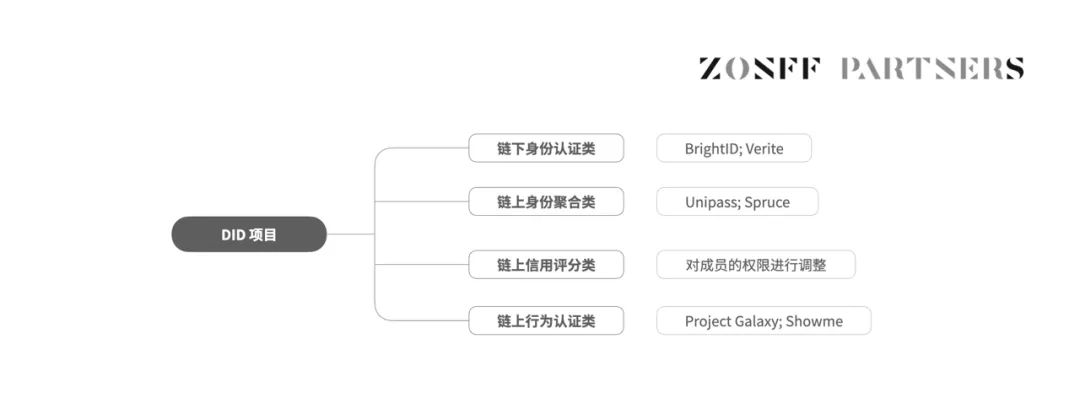
The DID reputation and identity sector has been dissected in countless articles. Here, we spotlight a few innovative projects and intriguing trends that emerged in 2022.
Carv
Carv is a platform that aggregates gamers and empowers them through Soulbound Tokens (SBTs). Think of it as a Debank for gaming—it combines project information aggregation, social profile display, and game DAO identity management. By analyzing wallet data, Carv builds user reputations by compiling on-chain gaming credentials. Its mission is to make "gaming moments last forever" by providing a platform to display asset information tied to a user's gaming history. Looking ahead, Carv aims to merge off-chain gaming data, creating a multi-dimensional visualization platform that blends on- and off-chain activity. Players earn badges (SBTs) by completing tasks, which helps quantify their in-game skills. For game studios, this data enables precise airdrops, targeted campaigns, efficient user acquisition, and better player retention—ultimately fueling community growth.
DeQuest
DeQuest is another project building a reputation protocol for gamers, but with a different approach. Its V1 product is a cross-metaverse quest platform that establishes identity across multiple chains using Soulbound NFTs (SBTs) to verify achievements, activities, and skills—both on and off-chain. It features automated systems, communication tools, and progress tracking designed for games and guilds. The card-style quests offer a "learn-as-you-play-and-earn" experience, focusing on verifiable credentials for user onboarding. This contrasts with Carv's emphasis on historical data analytics. Future V2 and V3 designs aim to emulate Steam's architecture, envisioning a mature platform with: 1) Cross-chain game access (access); 2) Game-specific forums, potentially governed by DAO tools (reviews); and 3) SBT-based quests or gameplay that encourage progression, unlock content, and boost engagement—while also supporting social expression and status (like custom avatars) to drive platform traffic (social).
Project Data: beta.dequest.io launched on June 4; over 3,000 beta users; more than 20,000 participants in the "Mint Your Soulbound NFT" campaign.
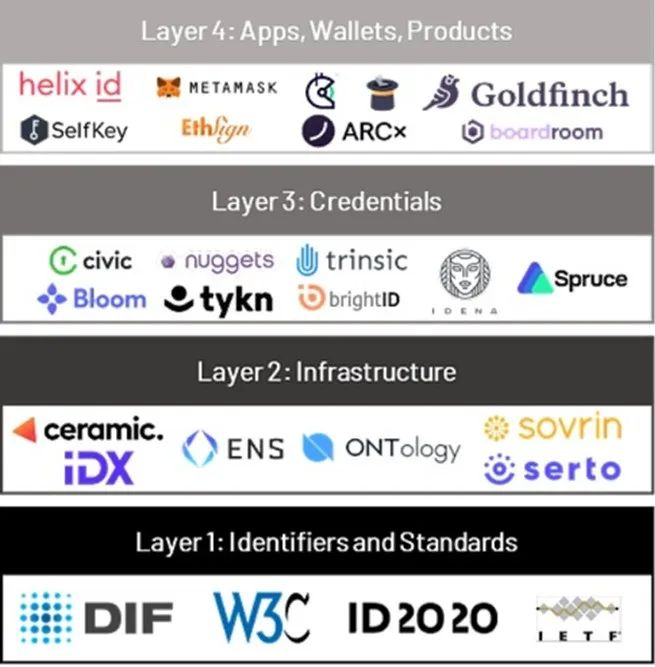
In short, the rise of granular, personalized products and communities has solved SocialFi 1.0's monolithic user profiling problem. Projects now attract traditional users through loyalty programs, credit scoring, and customized governance—like granting NFT event curation rights to active holders or offering minting discounts to high-tier collectors. This leads to greater stickiness and better retention than SocialFi 1.0. Currently, the primary value of SBTs lies in massive data accumulation. However, many data types remain underutilized until they demonstrate clear commercial value. Most SBT products still suffer from low adoption, and users—especially gamers—have yet to fully appreciate the worth of aggregated data or see SBTs as meaningful records of past achievements. As SocialFi 2.0 matures and wallet addresses become enriched with diverse credentials, new use cases and product forms will inevitably emerge. Imagine DeFi apps rewarding active participants with extra incentives or voting power; gaming guilds recruiting players with proven on-chain achievements; NFT projects whitelisting blue-chip NFT holders; or even representing social capital—like being liked by a prominent Twitter account or followed by Vitalik on GitHub—through verifiable credential data.
02 The Value of Data
In Web3, SaaS will become ubiquitous infrastructure—anyone can self-host it and offer integrated applications or APIs to diverse users.
The massive data breach in July 2022 sent shockwaves—reportedly even Telegram accounts were used to trace Shanghai residents' personal details, raising serious alarms. The attack likely exploited a vulnerability to dump database contents. This incident coincided with a U.S. Commerce Department mandate in early June requiring American software vendors to seek approval before sharing security vulnerabilities with Chinese entities. This means domestic data could be stolen or compromised without our knowledge, and without access to source code, fixing newly discovered vulnerabilities becomes nearly impossible. Recall the 2018 Spectre and Meltdown incidents, which primarily affected cloud providers and required patches from Intel and Microsoft—no comprehensive domestic solution existed. Accelerating China's IT innovation to ensure autonomy over foundational hardware and software, and strengthening Web3 infrastructure, is crucial for enhancing user experience and data security. As data incidents proliferate, user awareness of data ownership is growing: our traditional internet accounts aren't truly ours—we only have usage rights. Platforms retain full control, even over the valuable content and data we generate. Managing scattered accounts across platforms remains a hassle, and our identity data is still defined by third-party institutions. It's time to awaken user consciousness around identity and data ownership.
As mentioned, SBTs and data are two sides of the same coin. Identity is the core "you," and DID emerges from accumulated data. Online, when an individual receives a unique, cryptographically verified "Identifier," a biological person gains a digital identity. Personal data—social interactions, location, workplace affiliations—is then anchored to this identity, mirroring real-world identity management. In Web3, identities are linked via wallet history and credentials (transactions, owned NFTs, crypto assets). Here, data sources are critical—they not only define Web3 identities but also bridge to real-world selves. For a deeper technical dive into data—its definition, generation, collection, storage, management, and usage—check out our earlier article on WeChat: What Are We Talking About When We Talk About Web3 Data?
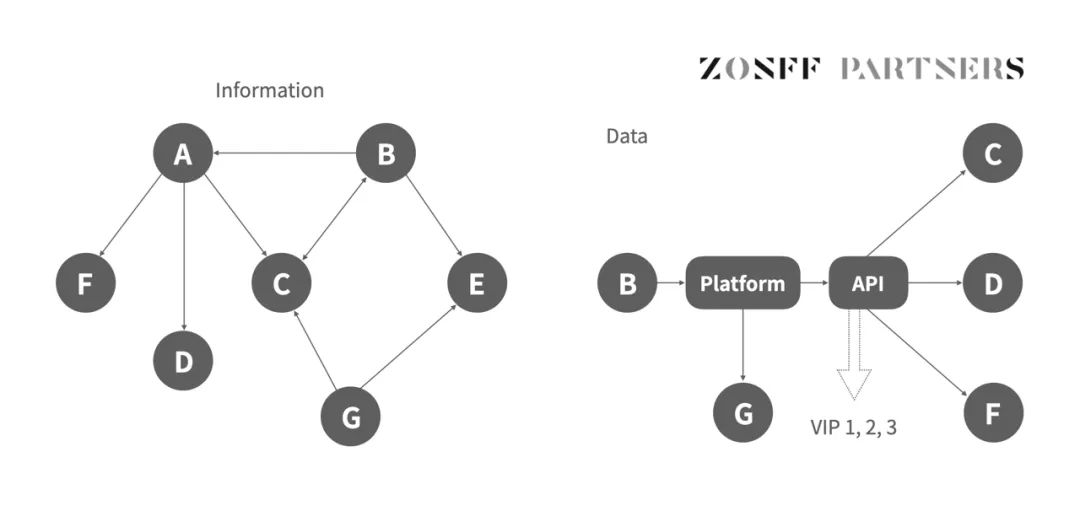
Galxe's founder provided a clear framework for data source classification: First, publicly accessible data—platforms offer tools to process it, like aggregating OpenSea contract data. Second, publicly inaccessible or unrecorded data—Galxe helps collect it, such as Discord AMA participants or Twitter Spaces attendance. Third, private data (in-app behavior, search queries, clickstreams)—currently not publicly available. Much Web3 interaction data only contributes to personal identity credentials, lacking broader utility. In contrast, Web2 apps leverage user behavior for big-data analytics and targeted ads. So, what can on-chain blockchain data enable? Let's explore a few data-focused projects and unique insights from 2022.
Port3
Port3 aims to be an open, transparent data middleware layer—the gateway to Social Data. It emphasizes user ownership of data, which is reflected in two key areas: privacy protection and economic incentives. By sharing their data, users can earn significant rewards within the Port3 ecosystem. Ultimately, Port3 is building an open, collaborative on-chain data middleware layer for other products to leverage, creating a Social Data Oracle to serve a wider audience. Its core offerings include a Social Data Oracle, a combined Web3 & Web2 Social Data Graph, and a Sentiment Dashboard called SoGraph. Port3 strives to be a superior platform that delivers business data, user analytics, cross-chain insights, and more precise airdrop targeting for projects. Meanwhile, DAO communities often lack effective governance tools and detailed user profiling. While many Web3 builders contribute across various DAOs, these contributions aren't easily linked to their on-chain identities. Furthermore, the market lacks integrated tools for analyzing both on-chain and off-chain data. To address this, Port3 is developing a consumer-facing analytics platform focused on specific sectors or projects. This empowers everyday users with the information they need to spot emerging trends, decide what to follow, and find valuable opportunities for participation and yield generation.
Aspecta
Aspecta is a digital identity ecosystem that bridges Web2 and Web3. Using AI, it builds precise, scenario-based, and interactive digital identities—called Aspecta IDs—from both on-chain and off-chain data sources like GitHub, Stack Overflow, Google Scholar, Twitter, and multiple blockchains. Holders can showcase quantified "insights" across thousands of skill dimensions and qualitative "highlights" across hundreds of experience dimensions. These achievements are stored both in the cloud and on-chain. Its value proposition can be compared to the early internet 30 years ago: back then, only IP addresses existed, making search, targeted advertising, recruitment, and social networking impossible. These applications only emerged once richer user information became available.
Project Metrics: Over 130,000 users have pre-registered for an Aspecta ID by verifying their fragmented on-chain and off-chain accounts.
Chainbase
Chainbase is a Web3 developer platform that provides a suite of middleware services—including multi-chain node infrastructure, data querying, real-time indexing, and application monitoring—to empower developers. It offers multi-chain data and node APIs and supports the creation of custom APIs using SQL. Raw blockchain data must first be decoded and structured across chains before it can be queried and indexed. Additionally, developers face high costs in maintaining self-hosted nodes. Chainbase addresses these industry pain points, especially for long-tail project needs that traditional third-party Web3 API providers often overlook. Its customizable API product is affordably priced, and node service migration naturally follows API adoption.
Project Metrics: As of July, its Beta UI is fully operational for developers and middleware integrators. It has processed over 80 billion transaction records, serves more than 200 active developers, and handles over 3 million daily API calls.
In summary, as on-chain data continues to grow, SocialFi 2.0 will unlock numerous new use cases like intelligent Web3 airdrops, IDOs, and DAO governance. However, in the near term, most user social activity still happens on Web2 platforms. Future solutions will likely need to integrate Web2 and Web3 data to create aggregated cross-platform Social Data for Web3 applications. A hot topic is the need for a unified Universal ID in Web3 social—should on-chain and off-chain identities merge into one coherent system, or remain separate? Currently, most data-focused projects, such as those building DID/SBT reputation systems, face two major challenges: (1) limited access to comprehensive off-chain data APIs, and (2) a scarcity of raw, foundational data. Notably, protocols like Lens and CyberConnect have begun accumulating native data and performing analytics to generate high-value insights for projects and users. Yet, monetizing these products remains difficult. Privacy is another critical issue: collecting highly sensitive transactional data is akin to tracking shopping habits, effectively mapping users' lifestyle patterns. This brings us back to the core value proposition: data privacy. We believe the inevitable trend is toward native data + native social products. Future DIDs will evolve organically, data will be natively born on Web3, and only then combined with off-chain data to form aggregated datasets for downstream service providers. The optimal product form is still up for debate. However, as ZK technology advances and integrates into social applications, selective data disclosure—where users choose exactly what to reveal—will become increasingly feasible.
03 The Rise of the Social Protocol Ecosystem
“It provides the infrastructure for community members to curate digital credentials and contribute to the data network.”
According to We Are Social's 2022 report, there are 5.32 billion global mobile users, 5 billion internet users, and 4.65 billion active social media users—representing 58.7% of the world's population. Crypto-native platforms are also massive: Telegram boasts 500 million global users with 80 million daily actives (DAUs); Discord has 300 million global users and 150 million monthly actives (MAUs); and Twitter reports over 1.3 billion registered users with 330 million MAUs. In the past year alone, tweets mentioning NFTs exceeded 332 million—17 times more than those about "remote work." GWI's latest research shows global internet users now spend an average of 6 hours and 53 minutes online daily. Among Gen Z, 64% use Instagram daily, followed by WhatsApp (59%) and Facebook (45%). Social interaction is a universal, non-negotiable user need. Web3's visibility has grown steadily since 2022; a16z estimated Web3 users numbered 30–50 million that year. With new protocols launching in the second half of the year and real user adoption accelerating, decentralized social is gaining promising momentum.
In July 2022, the decentralized social infrastructure network Farcaster raised $30 million in a round led by a16z, with participation from Standard Crypto and Coinbase Ventures. In August, the decentralized messaging protocol Satellite IM secured a $10.5 million seed round co-led by Multicoin Capital and Framework Ventures, with Solana Ventures and Hashed also joining. These developments seem to break a previous funding stagnation in the decentralized social space. Concurrently, Galxe announced its Galaxy ID user base had surpassed 2 million, while CyberConnect reported over 1.4 million registered users—with more than 70 projects already integrated. Meanwhile, the Lens ecosystem, which gained prominence in 2021, saw over 50 new dApps launched by 2022. Early criticisms of Lens—such as frequent gas fees, Layer 2 capacity limits, and URL-based NFT content storage—were largely addressed in the latter half of 2022. New dApps now offer significantly expanded functionality and composability, support modular development, leverage DAO collaboration, minimize operational overhead, reduce protocol-level governance to essentials, and prioritize product innovation and cash flow. As Lens evolves, our conviction grows that SocialFi 2.0 will follow a "Protocols, not Platforms" model.
Below are several new social graph projects launched in 2022, along with our observations:
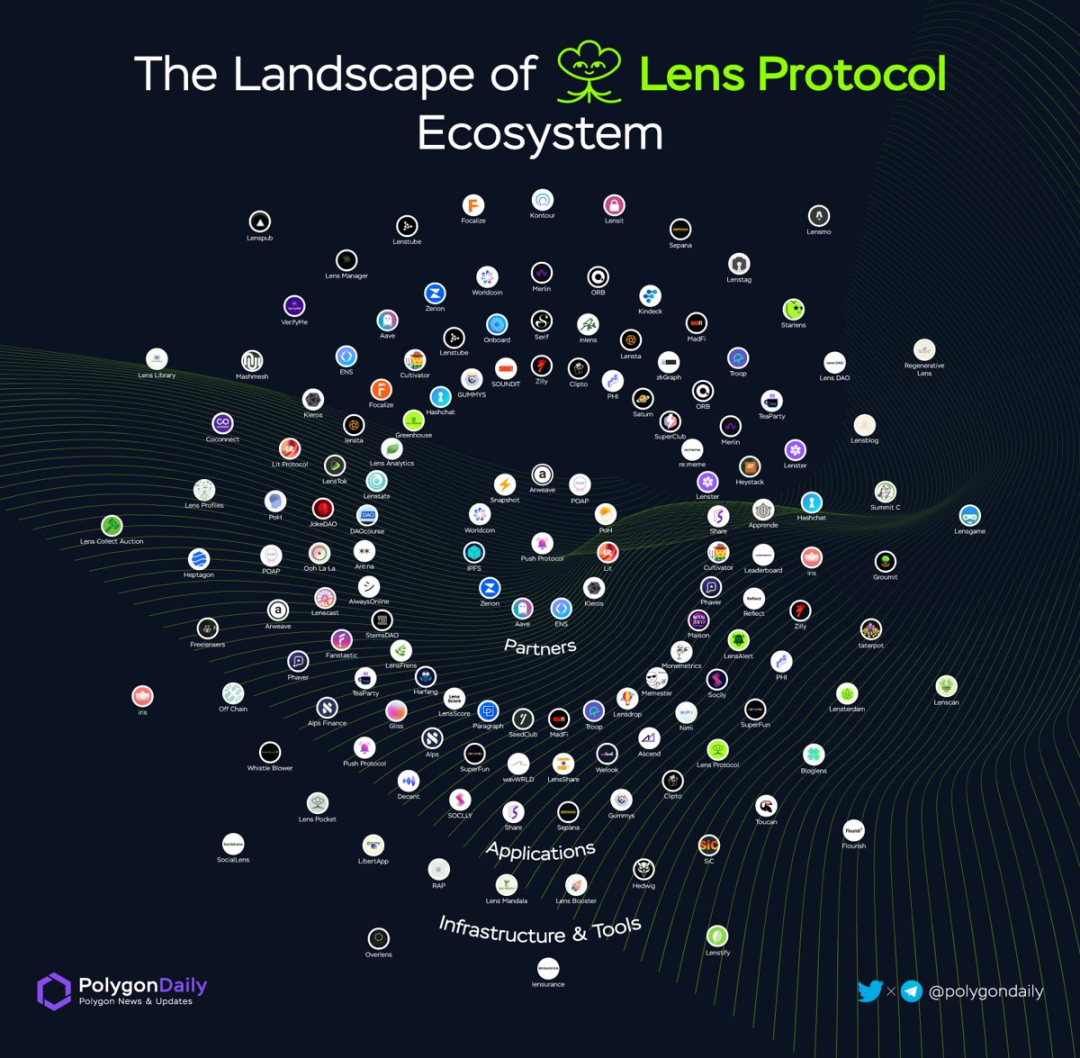
Lens
As the industry's best-known social protocol, Lens aims to give users full ownership of their social network data and the ability to port that data across any application built on Lens. Its method for generating contextual social relationships is distinct from CyberConnect's, operating at a different granularity: Lens binds relationships through NFT minting. As user growth accelerates, scalability—both in handling massive user volumes and storing vast amounts of content—will become increasingly critical for the protocol. At the end of 2022, Bankless's YouTube video was removed, prompting them to publish an essay highlighting Lens's potential, particularly its innovations at the developer and user-experience layers. YouTube's inflexibility and centralization leave creators reliant solely on YouTube Studio for monetization, analytics, and scheduling, while audiences are funneled into a single consumption method. Lens addresses this by decoupling creation tools from consumption tools. Developers can build applications using diverse Web3 and Web2 tools—or combine on-chain and off-chain data—all interconnected via the Lens API. Project Metrics: Lens's Twitter followers grew from 180,000 at the start of 2022 to over 220,000. Its Lens Protocol Profiles NFT collection has seen over 99,000 mints, with roughly 35,000 monthly active users. Since June, over 7.9 million relayed transactions have been processed via Lens's gas-free API relay, accounting for about 4% of all Polygon transactions. Note: Since not all Lens apps use this API, the true total number of Lens transactions is even higher.

Lenster
Lenster stands as one of the most iconic projects in the Lens ecosystem—and one of its earliest and most successful. It's a blog-style application reminiscent of Facebook that fully harnesses Lens's composable nature. For instance, when you create a Lens profile and gain 20 followers, those followers have minted NFTs tied to your profile. If Lenster were to ban your account—say, for violating content policies—you wouldn't lose that social capital. Those 20 follower NFTs remain permanently recorded in the Lens Protocol's underlying database, secured as smart contracts on Polygon. Your social graph within that specific app might vanish, but your foundational connections endure. Furthermore, if you switch to another Lens-based app like Phaver, your social capital—represented by those follower NFTs—travels with you, fully intact and interoperable. This is a revolutionary step, realizing the first of Web3 Social's core promises outlined earlier: truly portable social capital.
Project metrics: Lenster currently reports over 10,000 daily active users (DAUs), with growth continuing at a rapid pace.
Phaver
Phaver is a decentralized "share-to-earn" social app and another major content-focused DApp built on Lens. Blending elements of Twitter, Reddit, and play-to-earn models like Axie Infinity, it rewards users for enhancing the community experience—through creating quality content, discovering valuable posts, or moderating information. This creates a more sustainable model than many predecessors. Unlike the simplistic, attention-driven algorithms of SocialFi 1.0, Phaver maintains high standards for content and interaction. Its unique incentive system allows users to earn tokens by improving the platform for others, or spend tokens to enhance their own experience—such as staking on posts, accessing premium content, or creating NFT-gated discussions. Phaver bridges Web2 and Web3 by letting users share any Web2 content while unlocking Web3 benefits. On Phaver, content value and creator earnings are tied to the amount and duration of token staking by the community, with content securely anchored on-chain. This transforms the platform into a native ownership economy. Within the Lens ecosystem, Phaver ranks highly in user traffic, content volume, and product maturity.
Project metrics: To date, Phaver has seen over 100,000 posts, roughly 10,000 downloads on Google Play, with 95% of users coming from organic referrals. It boasts a notably high 30% retention rate—impressive figures, especially in a bear market.

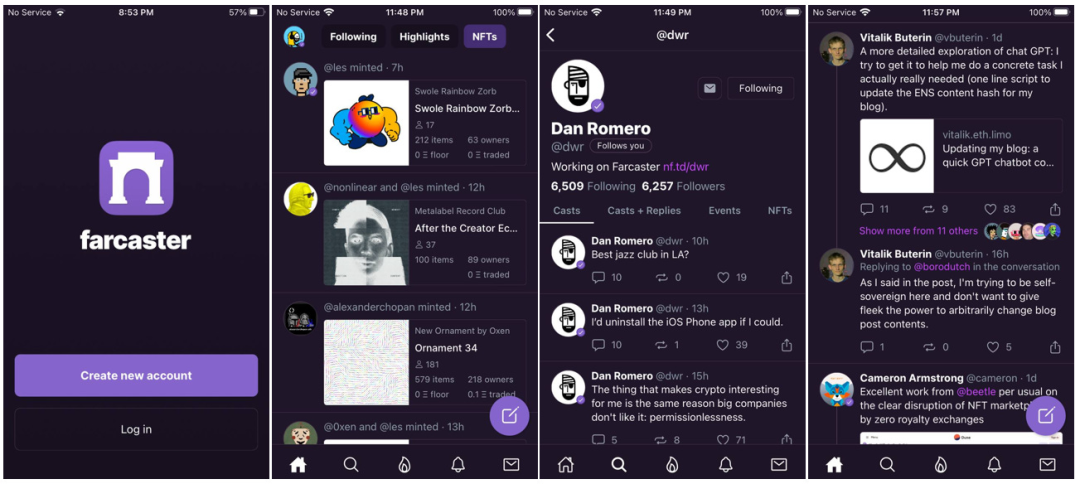
Farcaster
Another major social protocol launched in 2022 was Farcaster, co-founded by former Coinbase executives Dan Romero and Varun Srinivasan. They started with an idea called "RSS+": a foundational protocol for decentralized social networks that allows developers to build multiple clients on top—similar to how email works. Its core logic mirrors Lens Protocol: users can freely migrate their social graphs and identities between applications, retaining full ownership of their audience. Developers, in turn, can build feature-rich apps on the network. Farcaster handles user data through an on-chain registry and off-chain hosts. Project metrics: As of December 2022, Farcaster had 6,700 total users with 3,500 monthly active users (MAUs). The team planned to open-source the Farcaster Hub data and APIs by January 2023 and migrate to Ethereum mainnet by February 2023.
In short, the rise of social graph protocols like Lens has begun to solve two key issues from SocialFi 1.0: achieving user data sovereignty, composability, and a sustainable value cycle. Users no longer risk losing content, followers, or income due to a single platform's algorithm or policy changes. Instead, they own their account data and reap the full benefits. As more projects—including Nostr and Orbis—bring in users and traffic, more developers will be drawn to build higher-quality DApps. Better content attracts developers, who in turn attract more users. However, current protocols often operate as isolated ecosystems with non-portable social assets, risking new data silos. The outcome of this protocol race is still unclear. SocialFi 2.0 could evolve into a tripartite balance—or even a vibrant, multi-player landscape.
SocialFi 2.0 Is Here
The core purpose and value of Soulbound Tokens (SBTs) were never in doubt. Efforts to migrate Web2 data on-chain, monetize content, reinvent creator economies, link social graphs to real-world identity, and enable tangible utility have all enriched the decentralized social landscape. After the boom and bust of SocialFi 1.0 and the "protocol-first" focus of 2022, we believe 2023 marks the true dawn of SocialFi 2.0—the era of Web3 social applications. Looking ahead, we predict that once foundational blockchain challenges around scalability, storage, security, and privacy are addressed, the application layer will thrive, and standardized SBT protocols will likely emerge.
A Dual-Cycle Architecture: Internal & External Loops
For Web3 to endure, it must enter an era where profitability is sustained by users and services—not centralized platforms.
Advances in Social Graph protocols, data oracles, and Decentralized Identifiers (DIDs) in 2022 laid the groundwork for SocialFi 2.0. Data ownership is gradually returning to users and becoming permanently storable; new Data Storage paradigms have emerged; on-chain activity is transparent; the value of structured data is recognized; and new protocols are accumulating social capital in a portable form. These developments will propel SocialFi 2.0 forward in 2023.
As mentioned, several core Web2 problems—platform-locked social graphs, platform-owned content and data, platform-controlled revenue, and undervalued creators—have been partially addressed through SocialFi 1.0. Meanwhile, Web3 Social's three core value propositions are taking shape. In 2023, decentralized social will gain clarity and a sharper narrative. A dual-layer market structure will emerge: a foundational layer focused on Social Graph protocols, data storage, and privacy-preserving computation; and an application layer centered on creator economies, instant messaging (IM), and DID/reputation systems.
Internal Cycle: Infrastructure & ToB Focus
SocialFi 2.0 rests on three foundational layers: Data, Protocol, and Privacy. Most infrastructure projects adopt a business-to-business (ToB) model. Investment strategies often follow SaaS or platform logic, emphasizing technical architecture and guided by core blockchain principles like decentralization. Key evaluation criteria include: 1) Technical depth and defensibility ("moat"); 2) Development timeline; 3) Team execution and technical skill. SaaS growth is essentially a solo endeavor—relentlessly pursuing leads, optimizing marketing channels, refining sales funnels, and analyzing conversion rates to improve targeting.
Focus on the Social Graph Protocol Layer: Building protocols is fundamentally different from building products. Products focus on functionality, service, and user interaction. Protocols define standardized rules for interoperability—how different systems or standards coordinate and communicate. Both centralized and decentralized social platforms rely on social graphs for user interaction. But traditional platforms don't own user relationship data, making cross-platform migration impossible and hindering creator growth and monetization. As protocols mature, on-chain community graphs can be built as objective, native databases. Objective data is easiest to put on-chain, and wallet history can reliably link it to identity. This solves cross-platform data storage challenges, enabling portable identity management and seamless value flow.
External Cycle: Application & ToC Focus
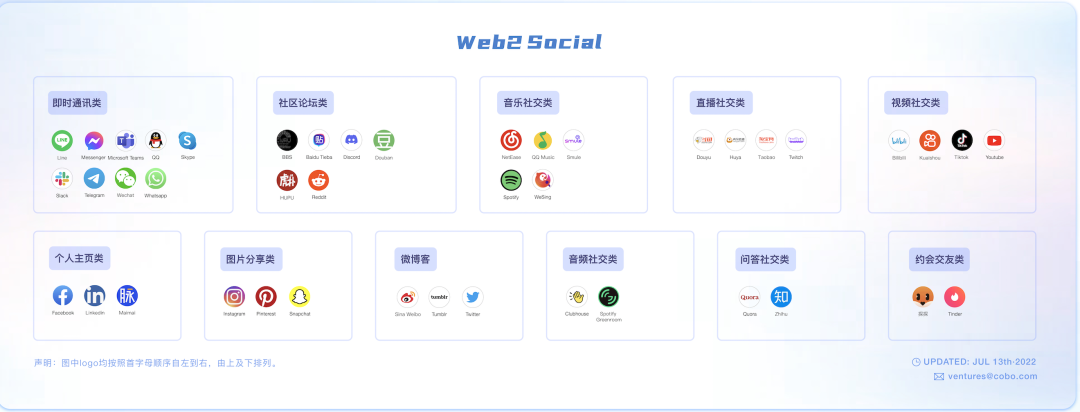
Most application-layer projects target consumers (ToC). Their investment strategies typically focus on product logic and user orientation, relying heavily on external feedback and driven by real-world use cases. Key evaluation criteria include: 1) Market demand and deep user insight; 2) Narrative strength; 3) The team's product logic; and 4) Operational and business development (BD) capabilities. Following traditional models, social applications can be categorized into four types: communication & messaging, dating & matchmaking, social media platforms, and UGC communities, each with distinct design principles and user value propositions. In contrast, decentralized social applications are built from the ground up to address user needs, integrating on-chain asset attributes, identity verification, social graph mapping, content sharing, peer-to-peer chat, and NFT display as social signals. This has given rise to creator economies, instant messaging (IM) apps, and ToC products centered on DID (Decentralized Identifiers) and reputation systems. While a breakout consumer-facing (C-end) social product has yet to emerge, the industry is expected to prioritize infrastructure development before application-layer growth takes off. With three key preconditions now in place—growing mainstream adoption of Web3 social needs, heightened user awareness of privacy, and increasing willingness to pay for Web3 social services—2023 could be the year we see that breakout C-end product.
Opportunity-Level Considerations
As Isaac Newton once said: “If I have seen further, it is by standing on the shoulders of giants.”
The inflection point for Web3 social will arrive with more robust data standards and protocols—the foundational infrastructure for social data. These must mature before traffic-generating C-end applications can flourish. This is why SocialFi 2.0 continues to focus on how social graphs are reshaping the industry. While DApps and decentralized protocols have achieved interoperability for data, assets, and protocols, individuals remain isolated. Social graph protocols aim to bridge this gap. However, current solutions often operate within their own siloed ecosystems: people are no longer isolated, but their data is. SocialFi 2.0 will introduce deeper, cross-protocol standards, enabling not just the transfer of social capital within a single protocol, but the seamless migration and interoperability of social relationships and data across different protocols.
Finer-grained, more precise databases will drive user traffic to the application layer. Whether in Web2 or Web3, individuals need definition, labeling, and community alignment based on shared interests. Credentials permeate our daily lives, representing identity, professional background, or interaction history. Granular behavioral data enables precise user management for Web3 applications, targeted marketing for project teams, and accurate community analytics for researchers. SocialFi 2.0 will continue to explore DID implementation in specific verticals—for instance, wallets building their own identity and reputation systems, and the potential for DID Profiles on social platforms or decentralized gaming identities as C-end applications scale.
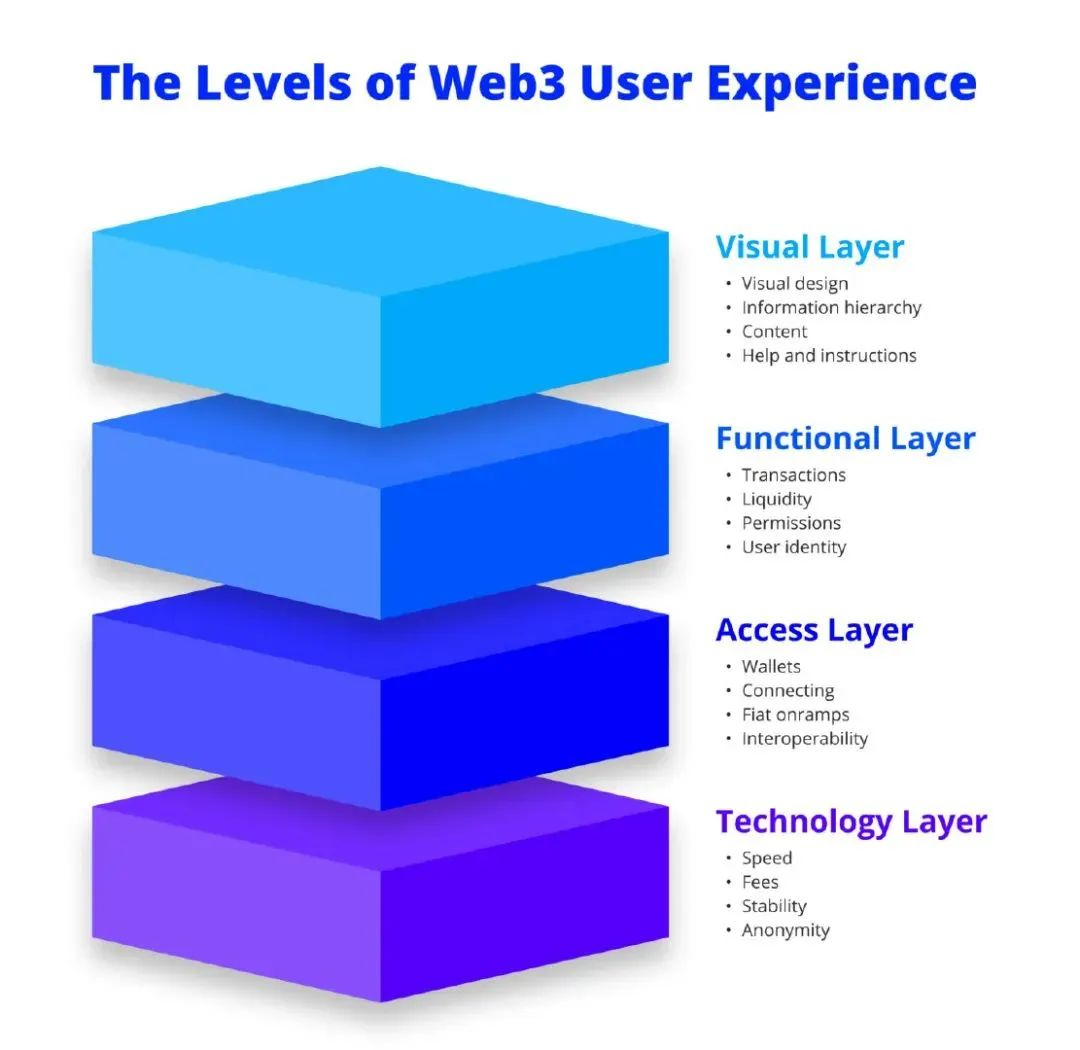
SocialFi 2.0 will see a rise in tooling projects designed to enhance UI/UX for DApps. User retention remains the top challenge for Web3 social projects. While data ownership, privacy, and fair revenue distribution are critical pain points for Web2 users and creators, poor product design, clunky user experience, and low early adoption severely undermine user stickiness. Early growth and network effects are therefore paramount. Traditional UX comprises four distinct layers, each representing a complex journey. Consider a popular smartphone app: its interface is just the final step in a long chain that begins in the physical world, traverses digital spaces, passes through multiple hardware and software layers, and finally lands on a button designed by someone else. Only DApps with truly superior UX design will successfully onboard mainstream users.
SocialFi 2.0 will foster more decentralized media and content platforms for creators. The core evaluation criterion will be whether a product delivers sufficient value and sustainable tokenomics to retain core users and high-quality creators, thereby establishing a robust endogenous economic cycle. The creator economy is a fascinating sector within social applications. Its scope extends beyond traditional content creators to include NFT artists, game developers, and others—representing a convergence of SocialFi, GameFi, and NFTFi. For creators, Web3's new value proposition isn't just blockchain-enabled ownership, but the freedom to create focused, personalized content with permanent storage, data rights, and built-in royalties. This promises stable income independent of platform algorithms and enables quantifiable value. New projects in this space emphasize Creator and Content, building novel media or content-distribution protocols with creators at the center to redistribute value.
The current social landscape still lacks a content search engine capable of information retrieval, indexing, recommendation, and precise targeting—allowing users to access layered, personalized content as they do on Web2 platforms (e.g., Twitter may soon launch dedicated content classification and search features).
IM communication protocol tools may explode in SocialFi 2.0. Peer-to-peer chat is evolving from one-on-one and one-to-many toward multi-to-multi interactions, mirroring real-time audio chat demands seen on Clubhouse or Twitter Spaces. Messaging solutions gain traction only when they address specific use cases. Previous pure-communication projects like Blockscan Chat stagnated, and standalone apps face limited near-term prospects. However, next-generation Web3 communication protocols like XMTP and Satellite IM, along with products like Notifi, Dialect, Swapchat, and Beoble, hold strong potential. IM is no longer confined to standalone tools; it can be embedded across diverse applications to enable direct user-platform communication. Just as shoppers interact with merchants on Taobao, decentralized applications may soon support service-provider communications. Future tools could facilitate NFT price negotiations, integrate bot- or live-based customer support for DApps, enable group chats linked to shared accounts, and allow DAOs to notify members about governance votes.
“The road ahead is long and arduous—I shall tirelessly seek and explore.” Advancing SocialFi requires work across all layers, from infrastructure and applications to fundamental market structures. As we begin the new year, let us collectively anticipate the evolution of SocialFi 2.0 in 2023. Keep Fighting & Building!
Disclaimer: Projects mentioned herein do not constitute investment advice. The views expressed reflect the author’s personal opinions at the time of writing and do not represent Zonff Partners. Information and perspectives presented may become outdated due to subsequent developments or other factors. For feedback or discussion, please contact us via the official channel.
Sources & References:
Figure 1: “Analyzing the ‘Web 3.0 Paradox’, Finding Its Mechanism and Breakthrough Point” — highly recommended reading that inspired and resonated deeply with the author: https://mirror.xyz/0x89951775926A0317848eccAaFe6407BE16098479/ULcdZePY2u-1FGtv8h6efJ8-JI778yjopZlIt0qjR1g
Figure 2: “The Path Toward Mass Adoption for Web3 Social” https://www.jinse.com/writings/2761484.html
Figure 3: “A Comprehensive Analysis of Web3 Social: Deep On-Chain Social Interactions Are Now Possible” https://www.jinse.com/blockchain/2264686.html
Figure 4: “Digital Identity in Web3 – Decentralized Identity: DID” https://mp.weixin.qq.com/s/1kVCpu0bRVjSCHjbcxASiQ
Figure 5: “The Status of Web3 Social” https://newsletter.banklesshq.com/p/the-status-of-web3-social
Figure 6: “Unpacking Web3 Social” https://medium.com/collab-currency/unpacking-web3-social-ce2ae84e170d
Figure 7: “Summary: The Four Layers of Web3 User Experience” is another highly recommended read. It offers an excellent overview of the key factors and typical evolution considered in Web3 product UX/UI design. Original article: “The Multiple Levels of Web3 UX” https://uxdesign.cc/the-levels-of-web3-user-experience-4f2ad113e37d