

On the morning of October 8, Huobi founder Li Lin announced on his WeChat Moments that the controlling shareholders of Huobi Global had sold their stakes. A fund under Baicai Capital is now the largest shareholder and actual controller of Huobi Global. Li Lin no longer holds any shares in Huobi Global and has relinquished all direct and indirect authority over the company.
After nine years, Huobi Exchange has completed a top-level leadership transition with the founder's departure, marking the end of an era.
Founded in 2013, Huobi was one of China's earliest cryptocurrency exchanges, alongside contemporaries like OKX, Yunbi, Jubi, BTC-Trade, and ChinaBTC.
It was an era of "mass entrepreneurship and innovation," where young people were full of energy and pursued their dreams with relentless passion.
Wu Jihan was translating the Bitcoin whitepaper; Li Xiaolai was promoting Bitcoin at the Garage Café; Guo Hongcai was still selling beef; Shenyu dropped out of graduate school to start F2Pool; Da Hongfei co-founded the "Bitcoin Entrepreneurship Camp"...
Li Lin's exit inevitably makes us wonder: what happened to the other OGs from that pioneering crypto generation? Some have moved overseas, living quiet, reclusive lives. Others have seen dramatic rises and falls, with a single misstep landing them in prison. Some have quietly stepped back from the front lines, waiting for their next move. And tragically, some passed away while exploring new frontiers, though their ideas continue to inspire.
Emigration
Lao Mao, former COO of Yunbi Network, now lives comfortably overseas, splitting his time between Japan and Australia.
Lao Mao's story is one of upward mobility through a deep grasp of the blockchain industry. He started his career at a government-affiliated institution, where his future path seemed set. In his thirties, he quit to start his own business—first in e-commerce, then entering the blockchain space in 2014. His first project was "Pineapple Market," China's first Bitcoin shopping platform. Soon after, he was invited by Qiu Liang, founder and CEO of Pixiu Network (Yunbi's predecessor), to join the team.
In 2014, the crypto market entered a winter. Yunbi Network cut staff to survive, but Lao Mao stayed on.
Ethereum launched in 2015 and began trading in 2016. At the time, China's three major exchanges—BTC China, OK, and Huobi—had yet to list ETH. This made Yunbi Network China's largest Ethereum trading platform, with daily volumes reaching millions of dollars.
As Ethereum surged and the ICO boom took off in 2016, Yunbi entered its golden age, generating millions in daily revenue and planning a Nasdaq listing for October 2017.
On September 4, 2017, seven Chinese regulators, including the People's Bank of China, issued the "Notice on Preventing Risks Related to Token Issuance Financing," defining token fundraising as an illegal, unapproved public offering. This "September 4 Notice" became a watershed moment for China's crypto industry: many ICO projects refunded investors, exchanges shut down, and while some entrepreneurs moved overseas, most struggled to adapt and gradually faded away.
Yunbi Network complied and shut down its website. Lao Mao also retreated from public view, buying a seaside apartment in Japan and enjoying relaxed gatherings with old friends.

Lao Mao's last major public appearance at a blockchain event was in April 2018 at the launch ceremony of the Xiong'an Fund, alongside Li Xiaolai. He gave a keynote speech—I can't recall the details, but I remember the final slide of his presentation read "Stars and Oceans."
Lao Mao now lives in Australia and has recently taken up sailing, already planning formal training.
Now in his fifties, Lao Mao maintains a mindset of constant learning. This relentless curiosity is how he discovered Bitcoin nearing 40 and still managed to achieve life-changing success during the last bull cycle.
Imprisonment
Few have the foresight and discipline to step back at the right moment.
In August 2022, news spread online that Zhao Dong, founder of the OTC and crypto lending platform RenrenBit, had been released from prison after serving his sentence. Zhao Dong was detained on June 19, 2020, on suspicion of illegal business operations and aiding information network crime activities.
In recent years, cryptocurrency money laundering has surged. On September 26, the Hunan Hengyang County Public Security Bureau cracked a major case where a criminal syndicate allegedly laundered 40 billion RMB (approx. $5.6 billion) through crypto transactions, linked to over 300 telecom fraud cases.
According to Liu Yang, an advisor at DeHeng Law Offices, OTC trading—exchanging fiat for digital assets—is more easily detected in the criminal chain and is often the first target of enforcement.
Zhao Dong entered crypto in 2013, having already sold his stake in Moji Weather and serving as CTO at Beijing's Garage Café—a key early hub for China's crypto community. Other pioneers like Li Lin, Xu Mingxing, Li Xiaolai, Er Bao, and Zhao Guofeng were also regulars.

In April 2013, Zhao Dong sold his only Beijing apartment for 3 million RMB, using 1 million RMB to buy 2,000 BTC. By early November, Bitcoin's price neared 2,000 RMB, meaning his investment had already surpassed the value of his former home. By year-end, those 2,000 BTC were worth 10 million RMB.
Entering the market just before a major bull run can breed overconfidence. Zhao Dong's crypto assets quickly exceeded 100 million RMB, but when the market turned, he doubled down with leverage, betting on a rebound. He was margin-called. His mining operation generated over 1 million RMB in daily profits during the bull market, but as prices fell, the mined coins couldn't even cover electricity costs.
At his lowest, Zhao Dong was 60 million RMB in debt with only 100,000 RMB left—and still needed to pay his son's tuition.
Relying on his reputation, Zhao Dong started an OTC trading business, generating steady cash flow. He also caught the 2017 bull market and successfully repaid all his debts.
After the "September 4 Notice," Zhao Dong moved overseas, buying property in Japan in February 2018. Unlike Lao Mao's tranquil expat life, Zhao Dong remained restless: in November 2018, he founded RenrenBit. Leveraging his reputation and innovative C2C lending and order-matching services—with full financial transparency—the platform gained traction even in a bear market. In June 2019, RenrenBit raised $3 million in Series A funding from Bitfinex, DFund, and Dragonfly. In July, it launched its native token RRB, raising 21 million USDT in about four hours. In April 2020, RenrenBit published its unaudited Q1 2020 financial report, showing total assets of 157 million USDT and a net profit of 1.311 million USDT.
In the summer of 2020, as a new bull market began, Zhao Dong—who had been living in Japan—returned to China in June and was soon taken into custody. After his arrest, RenrenBit announced it would wind down operations and initiate an RRB token buyback due to regulatory pressure. On November 15, 2021, RenrenBit's servers were permanently shut down.
A dark joke once circulated within China's crypto community: "In Web3, you're either abroad or in jail." This pattern isn't unique to crypto. Many entrepreneurs from other industries, during their early, unregulated growth phases, have met similar fates:
Huang Guangyu, founder of Gome Electrical Appliances and a three-time titleholder as China's richest person, was sentenced in May 2010 to 14 years in prison for illegal business operations, insider trading, and corporate bribery. He was also fined 600 million RMB and had 200 million RMB in personal assets confiscated.
Wang Xin, founder of KuaiBo (Kuailiao), received a three-and-a-half-year prison sentence and a 1 million RMB fine in 2016 for profiting from distributing obscene content.
Wang Chuyun, founder of HiWiFi, was sentenced in 2018 to one year and ten months in prison, plus a 50,000 RMB fine, for illegally raising public deposits.
Feng Xin, founder of Baofeng Video, was arrested in 2019 on suspicion of bribing non-state personnel and embezzlement.
Stepping Back from the Front Line
As the first person to translate Satoshi Nakamoto's Bitcoin whitepaper into Chinese, Wu Jihan is a legendary figure in China's crypto scene. Under his leadership, Bitmain pioneered a new era in Bitcoin mining. On the Hurun Research Institute's "2019 Hurun Rich List of Self-Made Billionaires Under 80," Wu Jihan ranked seventh with a net worth of 17 billion RMB.
"Humans are inherently defiant."
This line appears in the preface Wu Jihan wrote for the 2018 book Everyone Understands Blockchain, titled "The Beauty of Computational Power."
Looking back, Wu Jihan's defiant, all-or-nothing personality is evident in several pivotal life decisions.
In 2011, shortly after discovering Bitcoin, he invested everything he had. For him, it was a binary outcome: lose it all or see a 100x return.
In 2012, he joined a crowdfunding campaign for ASIC mining hardware launched by "Fried Cat" (Calin). As Wu later admitted, he gave this investment only a 30% chance of success; failure would have meant financial ruin.
Both gambles paid off spectacularly. In 2013, Calin's miners went into production just as Bitcoin's price skyrocketed, making the 27-year-old Wu Jihan a multimillionaire overnight.
What truly cemented his status was co-founding Bitmain with Zhan Ketuan. Although Bitmain entered the market later than competitors like Calin, Avalon, and several U.S. mining hardware makers, its relentless innovation—even during bear markets—propelled its Antminer ASIC devices to market dominance within two years. Bitmain's IPO prospectus filed in September 2018 revealed it held a 74.5% global market share in cryptocurrency mining hardware.
In 2017, Wu made another bold bet by backing the Bitcoin Cash (BCH) hard fork, a move that sent shockwaves through the industry. He was a true believer in BCH, telling Wang Feng in an interview: "I believe the misunderstandings surrounding BCH today are as profound as those surrounding BTC in 2011—and the investment opportunity is just as vast."
This gamble did not pay off. The BCH community fractured in the following years, its price stagnated, and its struggles dragged down Bitmain's progress. Over the next three years, the company was embroiled in a series of baffling internal power struggles—clients left, employees were forced to pick sides, and the firm ultimately split. In January 2021, Wu Jihan stepped down as Bitmain's CEO and Chairman. Its cloud-mining business, Bitdeer, along with mining farms in the U.S. and Norway, were spun off, with Wu becoming Chairman of Bitdeer.
These internal conflicts also delayed Bitmain's listing. Meanwhile, domestic rivals Canaan Creative and Ebang International successfully listed on Nasdaq in November 2019 and June 2020, respectively. Bitmain's plan for a Hong Kong listing was effectively blocked following a speech by Li Xiaojia, and its confidential filing with the U.S. SEC remains unresolved.
Now 36, Wu Jihan is in his prime. Unlike many leaders who crave the spotlight, he maintains a low profile. Throughout 2022, his personal Twitter account was silent except for one retweet: the official announcement of Li Lin's departure from Huobi.
A Life Cut Short
On June 5, 2022, the crypto research institution X-Order published an obituary announcing that Mr. Tony Tao (Tao Rongqi) had passed away on May 30, 2022, due to illness while on a business trip.
This marked the crypto world's second major loss after the unexpected passing of Chinese-American physicist Shoucheng Zhang. 2022 proved a tragic year for blockchain, with privacy computing and blockchain researcher Mo Xiaokang also passing away the previous month due to illness.
Tony Tao entered the crypto industry in 2014, working at BTC China and Antshares (later NEO). He was a founding partner of NGC Ventures (formerly NEO Global Capital), founder of X-Order and Metaverse Capital (later rebranded y2z Ventures), and initiator of the Great Voyage DAO. He co-translated China's first published blockchain book, The New Economic Blueprint of Blockchain and Introduction, and co-authored Blockchain: From Digital Currency to Credit Society.
He was one of China's earliest blockchain and crypto advocates, a core figure in Shanghai's blockchain community, and widely respected.
"Authentic" is how many described Tony Tao. In the volatile and often opaque world of crypto, maintaining authenticity is exceptionally rare and precious.
In 2020, amid the global pandemic, he boldly declared: "Long Crypto, Long Gold, Long China."
After 2021, his perspective shifted profoundly. Confronted with reality, some ideals faded. Recognizing that the core Web3 ecosystem lay outside China, he began redirecting his focus toward more promising opportunities overseas.
He said: "We're now living in the Age of Great Navigation, the Age of Youth, the Age of Crypto—and above all, the Age of Awakening."
He said: "The most essential trait of a Web3 entrepreneur is 'courage.' Fear is the most dangerous mindset for any entrepreneur—it's like the red pill versus the blue pill. Once you realize a choice must be made, you're already close to the truth."
He said: "If global digital nomadism is a historical trend, then Chinese digital nomads are its vanguard."
He chose to become a digital nomad himself, using his actions to inspire the youth around him to see the world.
Approaching 40, he explored the world with childlike curiosity—watching people sunbathe mask-free on San Francisco park lawns; taking windy seaside photos on Palm Jumeirah; riding a motorcycle for the first time in Bali; paragliding with friends in Colombia; watching games at the FTX Arena…
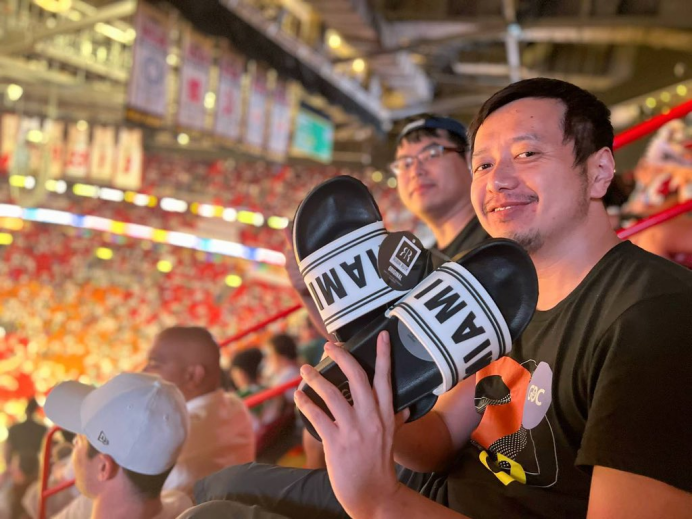
His final journey ended in El Salvador—the first country to adopt Bitcoin as legal tender.
He said: "To live is to bloom. If you don't bloom, you've lived in vain."
He also noted that every hero's journey must eventually conclude—and beyond that end, a new hero is born.
Through the Grand Voyage DAO's mission, he hoped to help propel outstanding Chinese teams onto the global stage and collectively nurture the next generation of pioneers from the ground up.
In that sense, he was like Captain Roger of the D. Clan, who ushered in the Great Age of Sail with his own life.
Tao Rongqi fell while exploring new frontiers—but the Great Age of Sail has only just begun. His vision has deeply inspired a generation of young Web3 entrepreneurs in China, who have since overcome countless hurdles to launch their own journeys overseas.
And Many More
After more than nine turbulent years, many others in this industry deserve recognition—some continue to build on the front lines, while others now support the next generation. In today's crypto era, amid sweeping global transformation, everyone who remains is helping to write history.