

Source: ChainNews Author: Pan Zhixiong, Research Director at ChainNews
Asia has consistently been a global hotspot for the cryptocurrency and blockchain industry, widely recognized as a major source of investment capital worldwide. The region is home to China, a nation actively promoting blockchain technology, as well as South Korea and Japan—both of which have ranked among the world's most active markets for Bitcoin and cryptocurrency trading. Furthermore, the major financial hubs of Singapore and Hong Kong have become preferred jurisdictions for offshore entity registration for countless companies. These factors collectively cement Asia's position as the second most popular region for investment, just behind North America.
To map the flow of mainstream capital in blockchain investing, it's crucial to understand the preferences and strategies of core investors. By analyzing the portfolio investments made by leading Asian blockchain venture capital (VC) firms in 2019, we identified key characteristics that distinguish the Asian market. Most notably, Asian investors have taken a relatively cautious approach toward Decentralized Finance (DeFi).
Of course, our analysis reveals much more than that.
In December last year, X-Order—a research institution focused on crypto investment, open finance, and data science—partnered with ChainNews, a professional media outlet covering fintech and blockchain, to launch the "Proof of Value Blockchain VC Fund Rankings." This initiative provides a comprehensive evaluation of the reputation and brand recognition of blockchain and cryptocurrency investment funds globally.
From this ranking, we selected the top five Asian blockchain venture capital firms and compiled all their publicly disclosed investments from 2019 through mid-January 2020 as the basis for our study. Data was sourced from public channels including ChainNews, Block123.com, and Crunchbase.
We found that these top-tier Asian firms have largely stopped investing in new projects based on the Security Token Offering (STO) model and remain relatively cautious about DeFi. Instead, they continue to channel the majority of their capital into gateway products and clearly profitable business models—particularly cryptocurrency exchanges and foundational blockchain infrastructure technologies.
Top 5 Asian Blockchain Venture Capital Firms
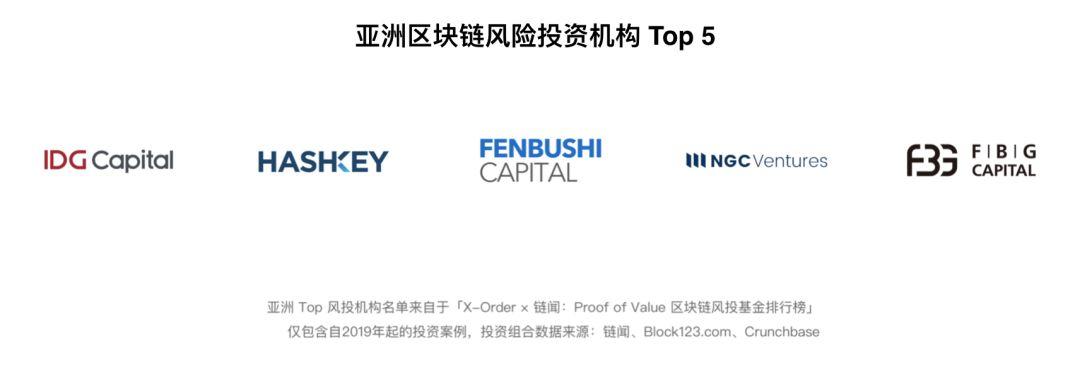
In the "Proof of Value Blockchain VC Fund Rankings" jointly launched by X-Order and ChainNews, the top five Asian venture capital firms are: IDG Capital, HashKey Capital, Distributed Global, NGC Ventures, and FBG Capital.
IDG Capital was founded in Boston, USA, in 1992 and entered the Chinese market as a foreign-invested institution in 1993. It operates across venture capital, private equity, and mergers & acquisitions, with primary investment sectors including TMT (Technology, Media, and Telecommunications), healthcare, consumer & entertainment, and advanced manufacturing & clean energy. It was an early investor in prominent companies like Baidu, Tencent, and NIO.
HashKey Capital is a blockchain-focused investment fund under HashKey Group, a financial group headquartered in Hong Kong. HashKey Group's Chairman, Xiao Feng, also serves as Vice Chairman and Executive Director of China Wanxiang Holdings Co., Ltd., and Chairman & CEO of Shanghai Wanxiang Blockchain Co., Ltd.
Distributed Global was established in 2015 as a venture capital firm specializing in blockchain-related enterprises. Its General Partners include Xiao Feng, Chairman of Wanxiang Blockchain, and Shen Bo. Ethereum co-founder Vitalik Buterin serves as an advisor to the fund.
NGC Ventures was founded in December 2017, formerly known as NEO Global Capital, and is a venture capital fund dedicated exclusively to the blockchain industry. Founding partners include Gu Tao and Tao Rongqi.
FBG Capital is a blockchain-focused venture capital fund founded by Zhou Shuoji, a cryptocurrency trading expert and active blockchain investor.
What Do These Top-Tier Firms Prefer to Invest In?
We categorized the projects these five firms have invested in since 2019 into the following groups: public chain technologies, trading ecosystems, wallets, DeFi/CeFi, STO, data/media, and others. This resulted in the following investment map:
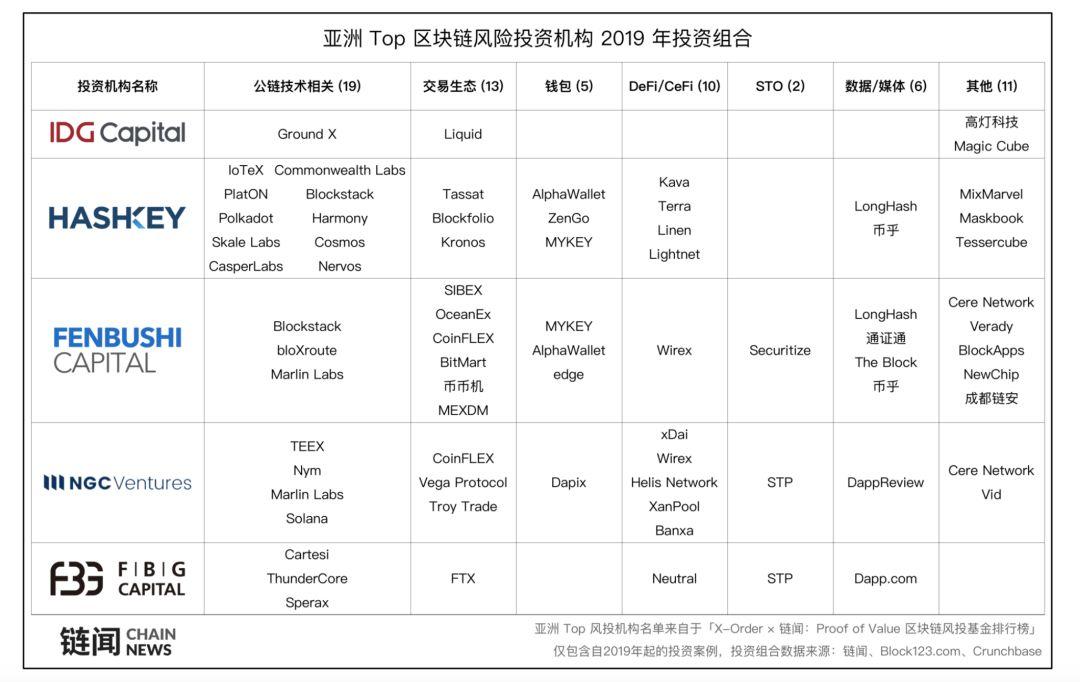
The chart reveals several key investment trends:
Unsurprisingly, public chain technologies and trading ecosystems remained the hottest investment themes in Asia for 2019.
Among the five firms, HashKey Capital, Distributed Global, and NGC Ventures were highly active in 2019, while FBG Capital and IDG Capital made fewer investments.
HashKey Capital and Distributed Global show significant investment overlap, suggesting a degree of synergy.
HashKey Capital leans more heavily toward public chain technologies, Distributed Global favors trading ecosystems, while NGC Ventures maintains a more balanced portfolio.
Despite the hundreds of DeFi projects and protocols launched in 2019, Asian blockchain VCs adopted a cautious stance, averaging just one DeFi investment per firm last year.
Although asset tokenization and Security Token Offerings (STOs) have been hot topics since 2018, only two related investments occurred in 2019.
Compared to centralized custodial wallets, leading Asian VCs show a stronger preference for non-custodial, decentralized wallets.
Out of over 60 projects, ten received backing from two of these top Asian VC firms: Blockstack, Marlin Labs, CoinFLEX, AlphaWallet, MYKEY, Bibi, Wirex, LongHash, Cere Network, and STP.
Public Chain Technologies
Given the foundational nature of the blockchain industry, public chain projects and related technological development remain a top priority for venture capital firms. Moreover, most new public chains benchmark themselves against Ethereum, aiming to overcome the performance limitations of the world's leading public chain network.
In 2019, the top five Asian blockchain investment firms backed 19 projects related to blockchain technologies. These included several public chains, as well as initiatives targeting breakthroughs at Layer 0, Layer 2, privacy, applications, developer tools, and consensus mechanisms.
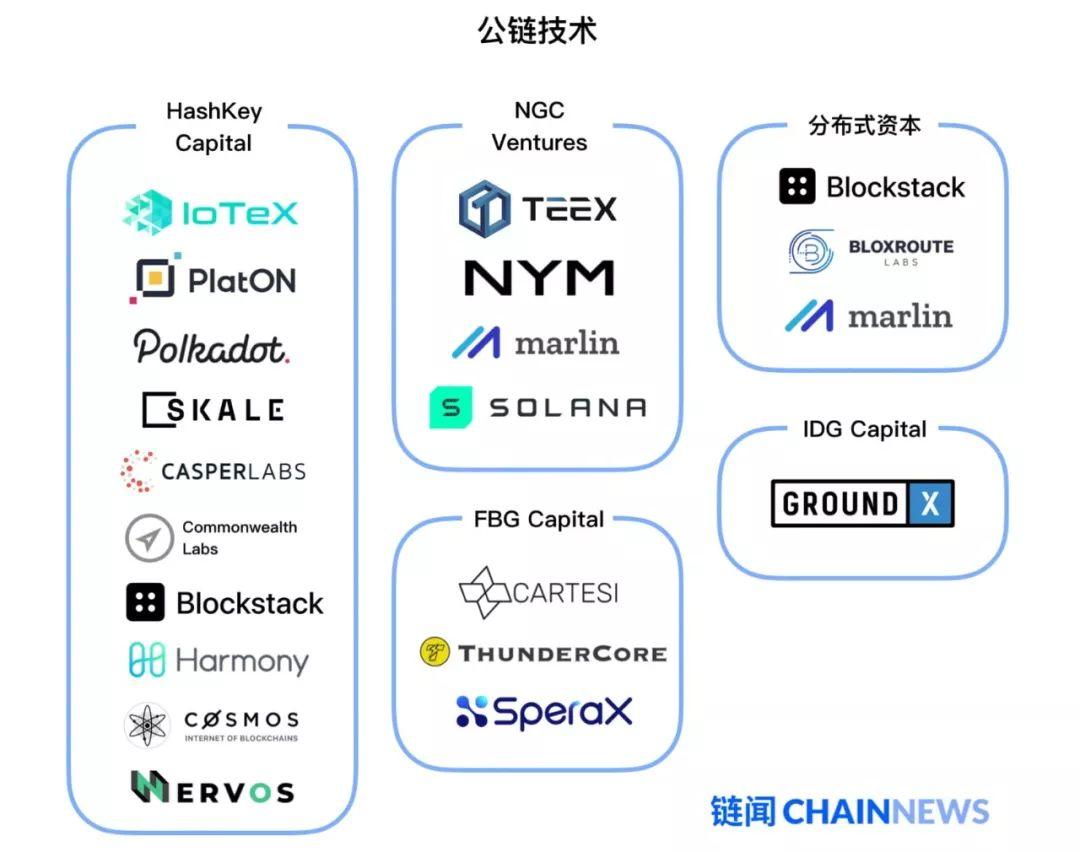
These projects are tackling different aspects of blockchain's core technology. Skale focuses on scaling through Layer 2, CasperLabs is building a better consensus mechanism, Blockstack is entering via DApp platforms, Cartesi provides development tools for Linux-savvy developers, and Nym enhances privacy at the data transmission layer.
Together, they explore the fundamental potential of blockchain. Solving performance bottlenecks could support mass adoption and consumer-grade payment platforms. Better developer tools make it easier for traditional programmers to build on blockchain. Enhanced privacy gives users a real reason to move away from data-harvesting centralized platforms.
Among the five firms, HashKey shows the strongest preference for investing in core blockchain tech, nearly all in public chains. HashKey Capital CEO Deng Chao has positioned blockchain technology in the industry's midstream, downstream from upstream sectors like chip manufacturing and mining. On consortium chains, he noted that while mature solutions have existed since 2016, they gained renewed attention when blockchain became a national strategic priority—though viable commercial use cases remain scarce.
Trading Ecosystem
Since trading remains the primary use case for crypto, the trading ecosystem is the second most popular investment area for these VCs, right after core infrastructure.
In 2019, Asia's leading blockchain investors backed 13 projects in this space.
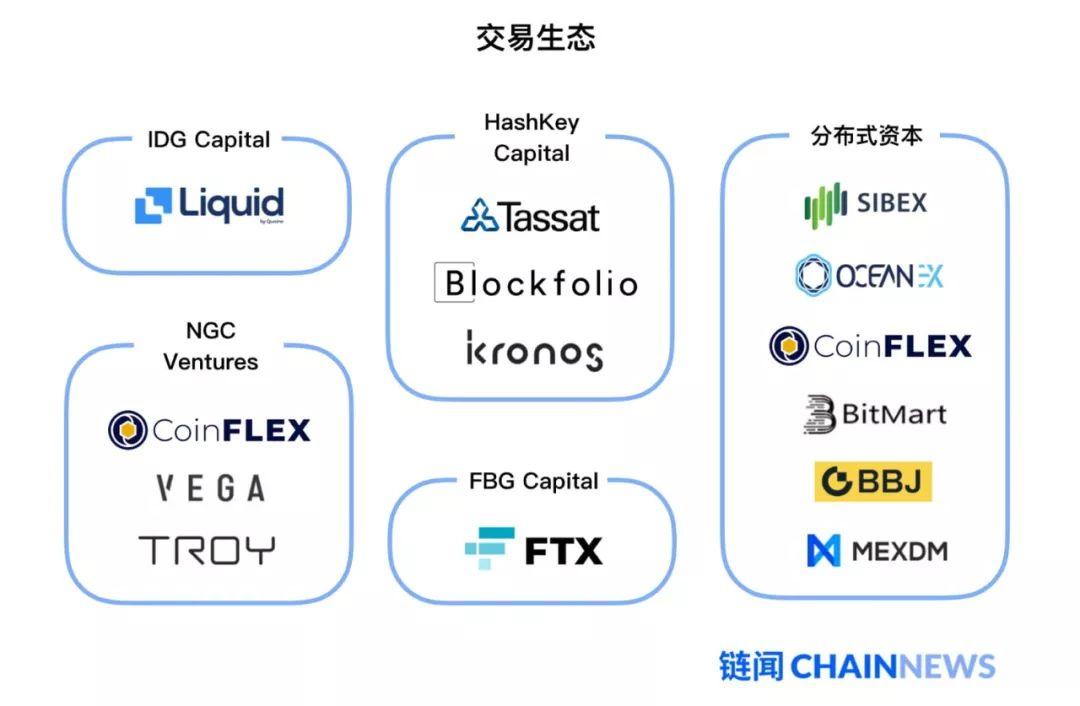
Most of these 13 projects are trading services, with a clear focus on derivatives exchanges. The list includes Japan's contract exchange Liquid, the US-regulated futures exchange Tassat, the physically-settled Bitcoin futures platform CoinFLEX, the rising derivatives exchange FTX (backed by Binance), the VeChain-based OceanEX, and the perpetual contracts-focused Bibiji.
Only Distributed Global and NGC Ventures invested in decentralized exchanges (DEXs): SIBEX and Vega Protocol. Backed by Distributed Global and the Swiss Stock Exchange (SIX), SIBEX is building a real-time, on-chain settlement DEX on a P2P network, featuring optional price disclosure and HTLC-based BTC/ETH trading. Vega Protocol, supported by NGC Ventures, Pantera Capital, and Xpring, enables the fully decentralized creation and trading of financial derivatives.
HashKey Capital invested in Blockfolio, a market data and asset management tool for beginners. With 5–6 million users, Blockfolio is a key player—not just as a portfolio tracker for new users, but also as a vital traffic source and monetization channel for exchanges.
Kronos launched its dark pool product WOOTRADE last year to tackle the market's systemic liquidity shortage. Despite the number of crypto exchanges, overall liquidity is still far below traditional finance levels, which keeps major institutions away. WOOTRADE aggregates liquidity from multiple market makers and Kronos itself, helping to build foundational liquidity infrastructure for the industry.
FTX was a breakout star in the 2019 crypto derivatives market, incubated and backed by liquidity provider Alameda Research. After an $8 million seed round last August, it secured a strategic investment from Binance by year-end. FTX stands out for its innovative proprietary products—like volatility contracts, leveraged tokens, and index contracts—and even launched tokenized prediction futures such as TRUMP (betting on Trump's re-election) and the Dragon Index (tracking China-based public chains).
Derivatives trading was hot in 2019 and will likely remain so in 2020. Last year saw several compliant derivatives exchanges gain US regulatory approval, including HashKey-backed Tassat. We also saw growing adoption of options contracts alongside futures (FTX recently added Bitcoin options). While current volumes are still modest, the continued maturation of the broader trading ecosystem—including market makers, liquidity providers, brokers, and asset management tools—will shape the crypto trading landscape this year.
Wallets
The five wallet projects each have distinct features. Interestingly, while many wallets in 2019 shifted toward custodial, centralized models—and VCs showed more interest in centralized exchanges—these investors clearly favored non-custodial, decentralized wallets in this category.
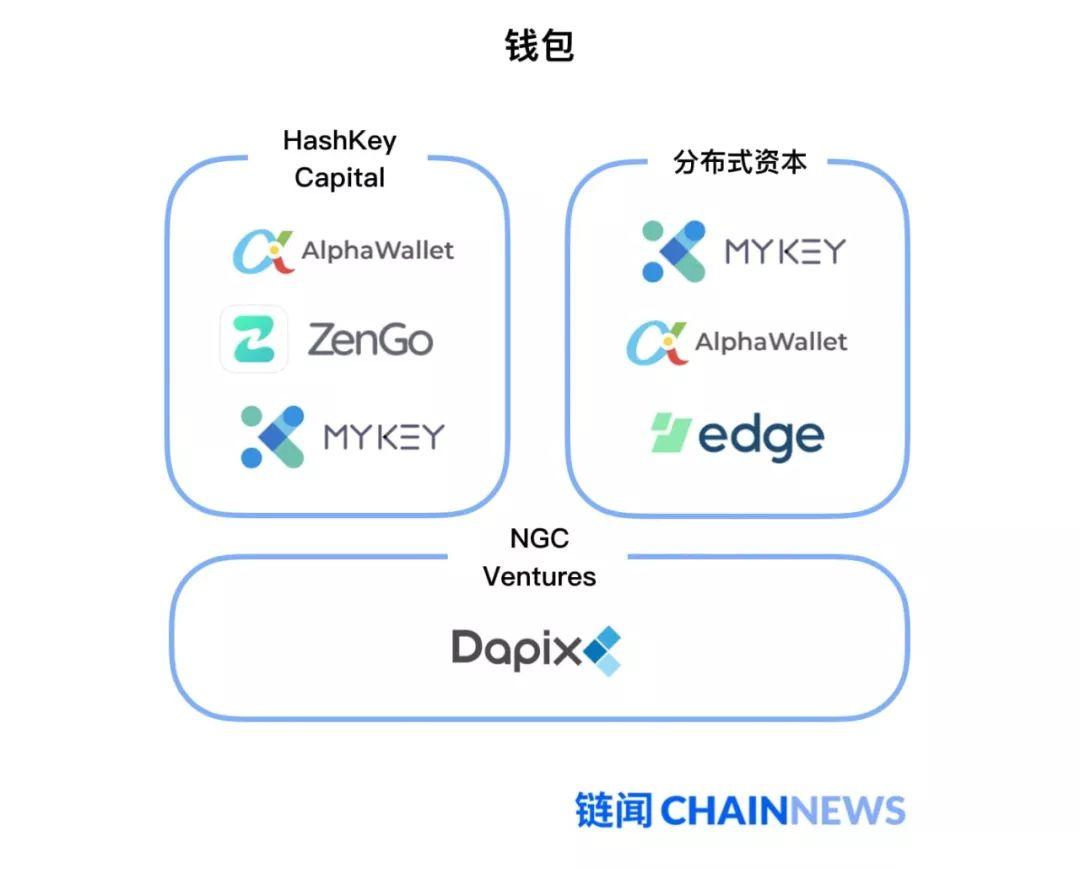
AlphaWallet has attracted investment from both HashKey Capital and Distributed Global. Its team is exploring NFT (non-fungible token) applications—like partnering with Shengkai Sports to issue 20,000 tokenized NFT VIP tickets for UEFA EURO 2020—and introduced Tokenscript, an open standard providing infrastructure for the industry.
MYKEY and the crypto community platform “Bihu” share the same parent company, KEY Group, and have both received backing from HashKey Capital and Distributed Global. MYKEY is a decentralized wallet that improves usability for newcomers through smart product design. It positions itself as a gateway to blockchain and digital assets, connecting users to exchanges, custody services, and DApps. For example, last month MYKEY drove nearly 3,000 new users to MakerDAO—a key Ethereum DeFi protocol—in just two days, proving its value as a high-traffic gateway product.
Another notable wallet investment by HashKey Capital is ZenGo. This wallet delivers both decentralization and a premium user experience: users don't need to memorize or manage seed phrases—private keys can be recovered using facial recognition alone. Anyone who tries ZenGo is impressed by its simple onboarding, which further lowers barriers to crypto adoption.
There's an interesting link between two wallet projects: edge, backed by Distributed Global, and Dapix, backed by NGC Ventures. edge was originally launched in 2014 as Airbitz, a multi-currency decentralized wallet that now integrates exchange tools and the FIO Protocol. The initial version of the FIO Protocol was developed by Dapix (an NGC Ventures portfolio company). This protocol aims to make cryptocurrency wallet addresses more user-friendly by replacing complex alphanumeric strings with human-readable names, allowing users to send funds to simple identifiers like "alice@wallet".
DeFi vs. CeFi
Given the financial core of cryptocurrencies, it's no surprise these five top Asian VCs collectively invested in 10 finance-related projects. With the rise of decentralized finance (DeFi) in 2019, we can group these investments into two broad categories: decentralized finance (DeFi) and centralized finance (CeFi).
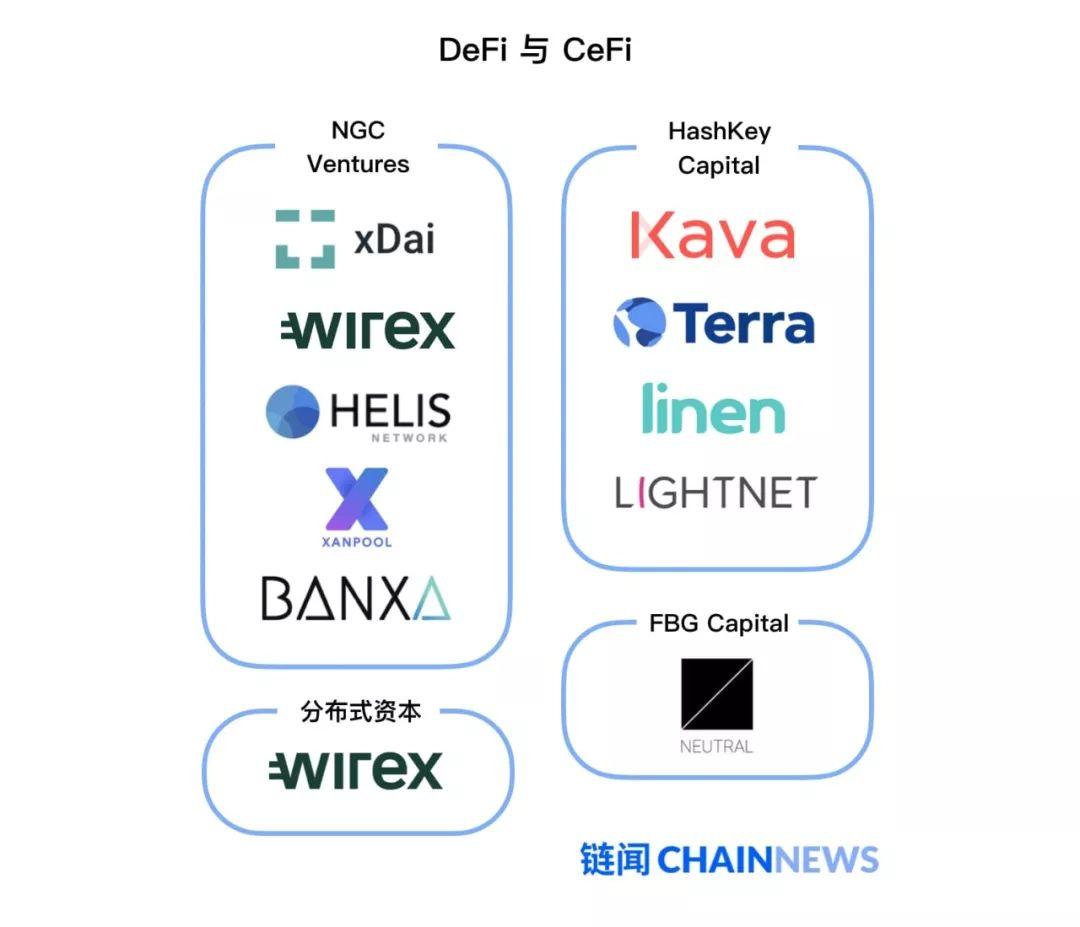
Five of these projects fall into the DeFi category:
Kava (HashKey Capital): A Cosmos-based DeFi platform preparing for its CDP testing phase.
Linen (HashKey Capital): A lending platform that integrates with Compound to provide users with interest income.
xDai (NGC Ventures): A stablecoin payment network built as an Ethereum sidechain, offering fast 5-second block times and low costs.
Helis Network (NGC Ventures): A comprehensive DeFi gateway that aggregates multiple DeFi protocols.
Neutral (FBG Capital): A stablecoin basket aggregator designed to mitigate the risk of any single stablecoin failing.
The other five projects lean more toward CeFi:
Terra (HashKey Capital): A stablecoin issuer focused on payment infrastructure, partnering with Korean payment processor BC Card to enable purchases via its CHAI mobile app.
Lightnet (HashKey Capital): A cross-border remittance, payment, and settlement platform.
Wirex (Distributed Global): An all-in-one service offering digital banking, VISA debit cards, and fiat-to-crypto exchange, holding an EU e-money license and boasting over 2 million users.
XanPool & Banxa (NGC Ventures): Both provide seamless fiat-to-crypto payment channels for individuals and merchants. Notably, Banxa completed a reverse merger onto the TSX Venture Exchange in Toronto following NGC's investment.
Compared to the hundreds of DeFi projects launched in 2019 and the aggressive push by US-based VCs, Asia's leading blockchain investors took a more cautious approach. Their five DeFi bets focus on foundational use cases: stablecoins, lending, and payments—the essential infrastructure for decentralized finance. Meanwhile, aggregation platforms like Helis Network may represent the next investment priority, as the industry will need user-friendly interfaces to onboard a broader audience once the underlying protocols mature.
The Asian VC-backed CeFi applications concentrate on bridging fiat and digital currencies—a strategic move to prepare for onboarding new users. However, these platforms are currently unavailable to users in mainland China.
STOs and Asset Tokenization
Asset tokenization and Security Token Offerings (STOs) were a major talking point in late 2018. After the ICO bubble burst, some investors saw STOs as a potential path to regulatory compliance, giving rise to the term.
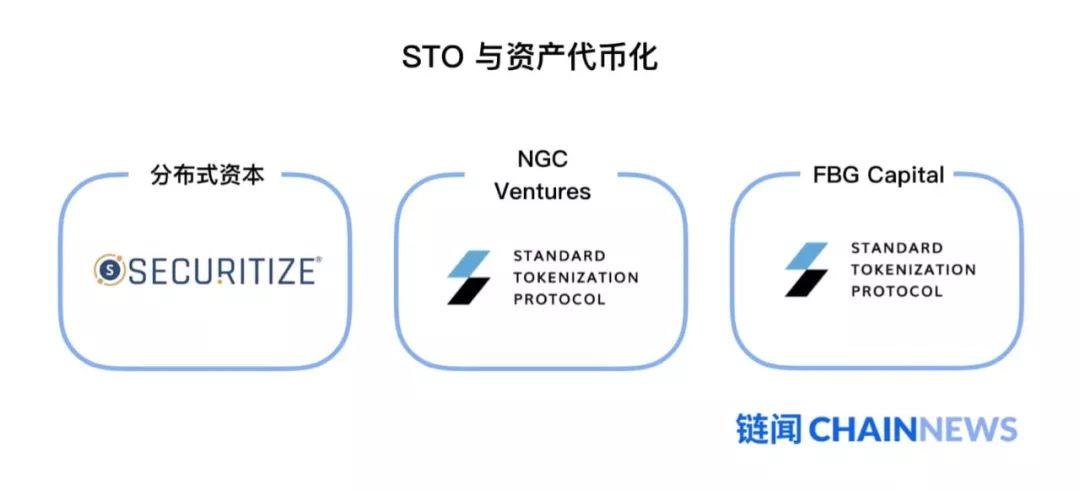
Based on 2019 investments, STOs remain largely conceptual, with few active projects. This category includes just two: Standard Tokenization Protocol (STP) and Securitize. STP, launched by blockchain consultancy Block72, focuses on digital asset investment banking services, including compliant, programmable on-chain crowdfunding and asset issuance.
Securitize, however, has made significant strides. It partnered with Algorand to let issuers deploy digitized securities via its DS Protocol. The company has been highly active, raising funds from investors like Coinbase and Algorand, acquiring Japanese consultancy BUIDL, and forming strategic partnerships.
We hope to see more real-world asset tokenization use cases in 2020: digitized securities issued via platforms like Securitize; experiments by AlphaWallet using NFTs to tokenize assets; or commodity tokens like Paxos' gold-backed PAXG circulating on blockchains.
Data, Media, and Other Projects
This category covers peripheral ecosystem projects beyond core investments, including media, DApp aggregators, tax platforms, and enterprise tools. Each subcategory has relatively few projects. Distributed Global, besides its focus on trading ecosystems, was particularly active here, making it the most prolific Asian blockchain VC across both categories.
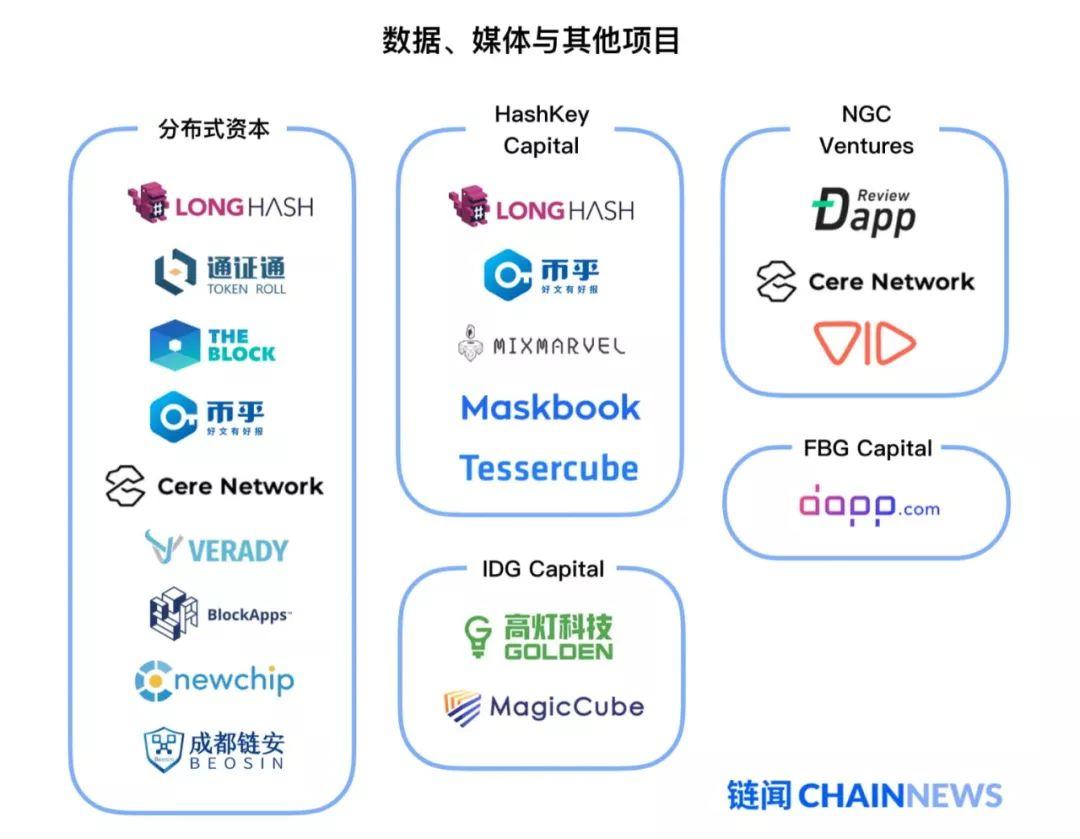
Media projects include LongHash, TokenInsight, The Block, and Bihu. Beyond LongHash's incubator and data tools, and Bihu's community focus, the others are primarily content-driven platforms producing news, analysis, and research reports.
DappReview and Dapp.com are data platforms that help users discover decentralized applications (DApps). Unlike traditional apps, DApps run on blockchains, inheriting properties like decentralization and trustlessness. As the number of DApps grows, users rely on such platforms to find popular options. Following Binance's full acquisition of DappReview, NGC Ventures has exited its investment.
In other categories, MixMarvel stands out as a blockchain game developer and publisher—and the only gaming company in the space to have secured investment from all five of these leading blockchain VCs. It has also incubated Rocket Protocol, a Layer 2 solution that allows games to run seamlessly across multiple mainnets, eliminating costly porting work and significantly lowering operational overhead.
Elsewhere, Chengdu ChainSafe focuses on blockchain security, while Vid explores integrations between VR and blockchain. Platforms like the tax compliance tool Verady, the enterprise application platform BlockApps, and the CRM platform Cere Network may be less familiar to everyday users in China, but they provide essential support to the broader blockchain ecosystem surrounding its core community.
Projects Backed by Multiple VCs
A cross-comparison of the five VC portfolios in 2019 shows that 10 projects received funding from at least two of these top Asian firms. Compared to the broader investment landscape, these projects deserve closer attention—not only because of stronger financial backing, but also due to the wider ecosystem support they enjoy.
Application-focused public chain: Blockstack
Layer 0 scalability solution: Marlin Labs
Derivatives exchange: CoinFLEX
Ethereum wallet: AlphaWallet
Multi-chain wallet (EOS & Ethereum): MYKEY
Community platform: Bibi
Crypto card / payments: Wirex
Incubation / data / media: LongHash
CRM platform: Cere Network
On-chain asset issuance: Standard Tokenization Protocol
These 10 projects reflect the overall investment focus of the five VCs, which remains centered on public chain infrastructure, exchanges, and decentralized wallets. Other categories follow, though notably, no DeFi applications made the list.