

On April 14th at 7 PM, the "Web3 'Riding the Wave' Private Salon — Top-Tier Convergence: The Future of High-Quality Web3 Projects & Hong Kong's Shared Prosperity" kicked off in grand style on the 7th floor of the K11 Office Tower at 18 Salisbury Road, Tsim Sha Tsui, Kowloon, Hong Kong. The event was co-organized by ChainDD, 1783DAO, Star Consulting, and BroadChain, with co-sponsorship from MetaTech, Web3Hub, and CGVFoF.
During his presentation, Hong Qigong drew an analogy, stating that Hong Kong and Malaysia are like two disciples from the same master—one has evolved into the "face," while the other has become the "substance." This divergence, he noted, is shaped by their respective circumstances. The "face" excels at generating exposure and attracting traffic, whereas the "substance" focuses more on conversion and execution.
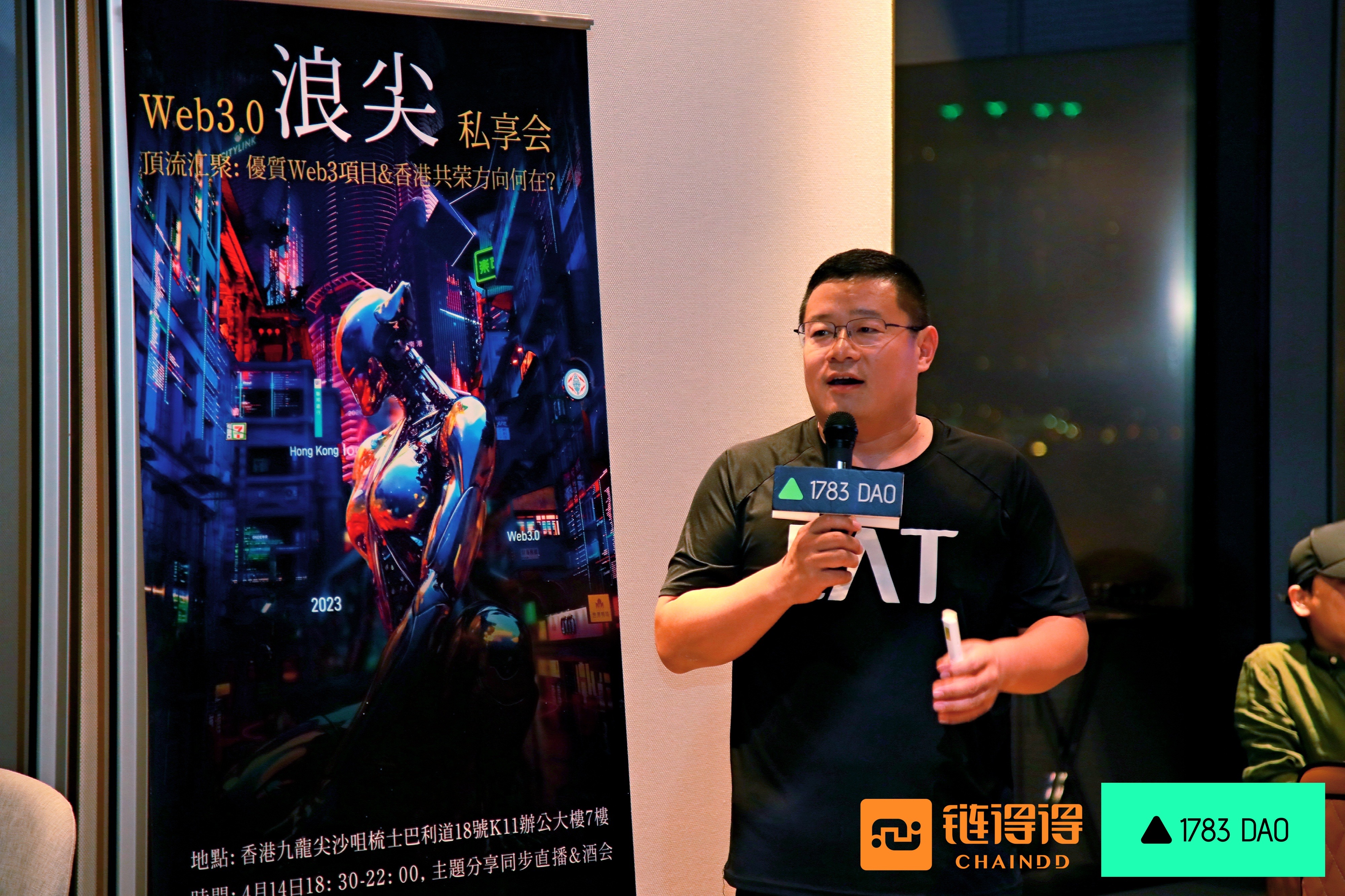
Hong Qigong outlined Malaysia's distinctive national attributes, geographical advantages, and its competitive edge within the global Web3 ecosystem. In his view, Malaysia possesses unique, inherent strengths and opportunities in the worldwide Web3 wave—advantages that Hong Kong simply cannot match.
Furthermore, he believes Malaysia's linguistic and cultural strengths will naturally position it as a global hub for Web3 community communication and exchange over the next two to five years, especially as industry adoption scales to 1–2 billion users.
The following is an edited and condensed version of the speaker's remarks by ChainDD:
I've been based in Malaysia for over a year now. I came to Hong Kong this time to share some perspectives on the complementary strengths between Malaysia and Hong Kong. Malaysia is a fascinating country, yet when I ask people about it, most don't have a strong impression. This is an interesting phenomenon, and today I'd like to share my insights on both Malaysia and Hong Kong.
First, I see Hong Kong and Malaysia as fellow disciples from the same master. One has become the "face," the other the "substance"—a result of their contemporary realities. As the long-standing "Pearl of the Orient," Hong Kong boasts formidable brand power. It excels in both fashion and finance, and its decades as a financial hub have endowed it with a robust legal and financial framework, areas where Malaysia cannot compete. Hong Kong's proximity to mainland China also allows it to attract massive talent and capital—a longstanding strength. As Hong Kong's counterpart, Malaysia functions more as the "substance." Cities like Kuala Lumpur and Johor Bahru emphasize foundational capabilities in infrastructure, manufacturing, and tourism.
Malaysia and Hong Kong share many similarities. Both were former British colonies, giving Malaysia strong compatibility with Hong Kong in terms of foundational rules, language norms, and social conventions. Additionally, ethnic Chinese make up a significant portion of Malaysia's population—about 23%–24%—with Mandarin being the third most widely spoken language. The economic status of ethnic Chinese in Malaysia is exceptionally high; historically, every Malaysian billionaire has been ethnically Chinese, underscoring their pivotal economic role.
During my stay in Hong Kong, I visited a small noodle shop where a basic bowl starts at HK$50. Adding a few side dishes and beef balls easily pushes the bill over HK$100. In contrast, at the most expensive restaurant in Kuala Lumpur, a bowl of noodles costs only RM10–15—a four- to fivefold difference. Similarly, the average monthly income for an adult male in Malaysia is RM3,000–5,000, compared to HK$25,000 in Hong Kong, reflecting a comparable gap. This gives Malaysia a significant cost advantage.
Malaysia and Hong Kong maintain deep-rooted ties. "Face" is important in Hong Kong, and Malaysia shares similar cultural and social norms. While "face" drives exposure and traffic, "substance" is about conversion and tangible results.
Comparing the two, the disparities in brand power and financial capital are clear—Malaysia is undoubtedly weaker here. Hong Kong is a globally recognized financial and branding hub. However, when it comes to labor cost efficiency and linguistic advantage, Hong Kong falls short. Labor costs differ by roughly four to five times, and linguistic advantage is Malaysia's unique national endowment. In terms of internationalization, both are highly internationalized, though Malaysia still lags slightly behind Hong Kong. This makes complementarity essential.
Moreover, Malaysia enjoys another unique advantage: it is an Islamic nation, a Muslim-majority country where all ethnic Malays are Muslim. This shared Muslim identity allows Malaysia to bridge relationships with otherwise hard-to-access, relatively closed Arab countries across the Middle East. These "Muslim brothers" are highly open to each other and enjoy excellent relations—a truly distinctive edge.
Another advantage lies in the Malay language—the native tongue of Malaysia's largest ethnic group—which serves as a lingua franca across the entire South Pacific archipelago. Furthermore, as an independent sovereign state, Malaysia hosts the world's only nationally recognized ethnic Chinese population at the state level. Unlike Hong Kong or Taiwan, Malaysia is a fully independent nation with a significant Chinese demographic. Here, comprehensive Chinese cultural education coexists with Commonwealth membership—an advantage virtually no other jurisdiction possesses.
Malaysian Chinese are typically fluent in five languages—Malay, English, Mandarin, Cantonese, and Hokkien—giving them innate communication and interaction advantages. This positions Malaysia uniquely within the global Web3 wave, granting it unparalleled opportunities. In my view, Dubai cannot seize this opportunity, nor can Singapore, Hong Kong, Beijing, Shanghai, or New York.
Malaysia's unique linguistic and communication strengths mean that as global Web3 adoption grows—from today's 100–200 million users to 1–2 billion, or even 3 billion—every project will require its own global community. These communities need structure and volunteers, a role artificial intelligence cannot replace.
When global Web3 penetration reaches 2 billion users, each project's community could effortlessly number in the millions. Of course, building this still incurs costs. So, if you're a project lead, community representative, or decision-maker, ask yourself: where would you place your operations to minimize communication, education, and dissemination costs while maximizing efficiency? The answer is Malaysia.
Malaysia's linguistic and communication advantages will naturally elevate it to become the global hub for Web3 community interaction and exchange over the next two to five years, as industry-wide adoption scales to 1–2 billion users.
I believe that today, if your project is expanding overseas, Hong Kong is the "face," while Malaysia is your "substance." Bring your team, future community, and organizational structure to Malaysia: costs are low, practical outcomes are strong, and operational efficiency is high.
Choosing Malaysia today is like choosing Ethereum back in 2016. Malaysia's unique advantages—its national endowment—make it unassailable by Dubai, Singapore, Hong Kong, Beijing, or Shanghai.
Finally, let me leave you with two thoughts: First, thanks to Malaysia's unique communication, interaction, and community strengths, our community attributes are exceptionally powerful—we can mobilize numerous strong communities. If you're interested in community-building, welcome to Malaysia to connect with us. Second, if you'd like to conduct an exploratory visit, welcome to Malaysia—and to Kuala Lumpur.