
Gold is eternal—its value endures.
Bitcoin has long been called "digital gold" due to its inherent properties, and many investors hope it will one day function as a safe-haven reserve asset, much like gold.
But can Bitcoin truly compete with gold? We have our doubts.
Reason One: Lack of Mainstream Recognition
For millennia, people around the world have seen gold as the ultimate portable currency. Even today, gold is universally accepted. You can exchange physical gold for local currency at banks, jewelry stores, and bullion dealers globally—it enjoys seamless, worldwide acceptance. Its monetary status is more stable than the U.S. dollar, and its intrinsic value is acknowledged by all nations, cementing its role as a globally recognized asset.
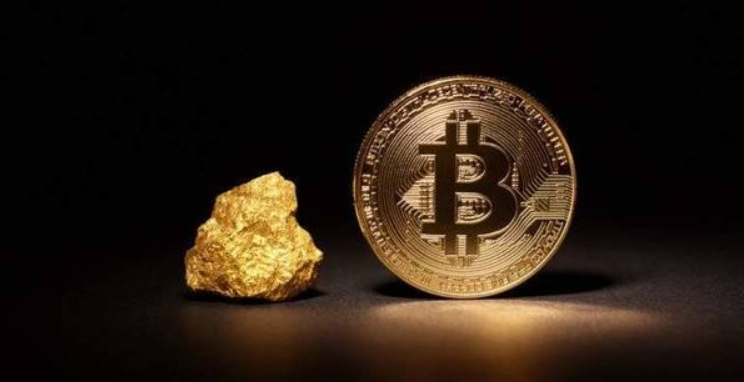
Bitcoin, born after the 2008 financial crisis, entered public awareness mainly through dramatic price rallies and stories of newfound wealth. Its history is brief compared to gold's millennia-long legacy. Moreover, due to its technical nature and still-niche adoption, Bitcoin remains largely confined to tech circles (especially developers) and financial speculation communities—achieving broad consensus remains a steep challenge.
Like any ideology, consensus depends not just on time, but on policy, culture, history, art, religion, and other subtle, long-term influences. Gold's reign as a premier store of value over thousands of years has deeply embedded its worth in the global psyche—making it incredibly difficult to displace.
Reason Two: Divergent Value Foundations
As a physical currency and a national strategic reserve, gold benefits from a broad social consensus on its stability and store-of-value qualities. It has intrinsic value—its worth persists regardless of how it's used—and its supply is influenced by market factors like mining output and extraction technology.
Demand for gold is driven by both its intrinsic value and its expected future exchange value.
Bitcoin, by contrast, lacks intrinsic value. Its worth is derived from its utility. Its economic success stems from its usability—particularly its convenience and ability to drastically lower cross-border transaction costs, thereby promoting financial inclusion.
Bitcoin's supply is theoretically exogenously determined—governed by pre-programmed algorithmic rules set outside the economic system. It acts as an external variable that influences the system but is not influenced by it.
Reason Three: Uncertain Safe-Haven Properties
During crises—like the COVID-19 outbreak or broader financial panic—investors typically flee volatile assets like stocks and Bitcoin, seeking safer, highly liquid safe havens instead.

Gold prices show a strong positive correlation with inflation and a predominantly negative correlation with the U.S. Dollar Index and major stock indices (like the Dow Jones and S&P 500). As a result, gold reliably acts as a safe haven and preserves value during periods of major macroeconomic turmoil.
As a safe-haven instrument, Bitcoin's stability doesn't match gold's—and its broader societal acceptance is still pending. While its risk profile is significant, its short-term sensitivity to public sentiment is becoming increasingly clear.
Although some analyses suggest Bitcoin can act as a safe haven—showing weak or inverse correlations with mainstream stock indices—in March 2020, during the global pandemic and market crash, investors seeking refuge did not turn to Bitcoin. In fact, Bitcoin and gold moved in opposite directions. Beyond price action, CME Group's Bitcoin futures data further indicates that institutional investors were actively avoiding Bitcoin.
Cai Kailong, Senior Researcher at the Institute of Fintech, Renmin University of China, notes that the drivers behind Bitcoin's price movements are growing more complex. He argues the market will ultimately see Bitcoin not as "digital gold," but as a "risk amplifier." Its value is unanchored—unlike traditional assets whose prices reflect production costs and fundamentals, Bitcoin has no normal valuation range. To date, it lacks any credible, widely accepted valuation framework, resembling a small boat adrift in stormy seas. Without a stable anchor, its price swings are extreme; factors like halving events and supply-demand dynamics matter far less than market psychology.

Wang Yongli, former Deputy Governor of the Bank of China, wrote that during the COVID-19 shock, "digital currencies" including Bitcoin plunged sharply—losing two-thirds of their value in a week. He urges the market to recognize that such assets cannot become "digital gold," nor can they function as strong currencies or safe-haven assets. Investors must shed illusions about various "cryptocurrencies" and develop a sober, accurate understanding of money. Although Bitcoin mimics gold's mechanics, it is fundamentally not real gold—it is merely digitized "virtual gold" or a "virtual asset."
In summary, we believe Bitcoin's equivalence to gold remains unproven. What's your take? Share your thoughts in the comments!
Follow DCLUB on WeChat by scanning the QR code below.
For reprint requests, please contact the editor via WeChat: DCLUB123.