

Summary
In our inaugural AIGC report last year, "AIGC: A Productivity Tool for the Web3 Era," we explored the technology's transformative potential across industries. Since ChatGPT's explosive debut, a pressing question has emerged: How will AIGC achieve commercialization and generate revenue? To find answers, we spoke with dozens of AIGC teams worldwide. Meanwhile, Microsoft's expanded partnership with OpenAI in early January—integrating AI into its products and launching Azure OpenAI Service—has brought AIGC's commercial viability into sharper focus. This article examines its path to market.
AIGC-Driven Business Model Transformation: The Rise of Explicit AI As natural language processing (NLP) makes AI more accessible and AIGC algorithms grow more sophisticated, we're seeing its commercialization advance faster than anticipated. Companies like Jasper are already generating revenue, signaling a shift: AI is now emerging as a distinct, commercially viable product. It's no longer just bundled with hardware or hidden within complex systems, nor is it an obscure technology out of reach for the average user.
B2B: The Core AIGC Business Model While AIGC empowers consumers to create content with ease, the B2B sector remains its primary commercial focus. Enterprise clients offer more stable demand and willingness to pay, driven by two key factors: (1) clear efficiency gains and cost savings—for instance, using AIGC to extract data and auto-fill templates for news or product reviews; and (2) the ability to address previously unmet or hard-to-solve business needs.
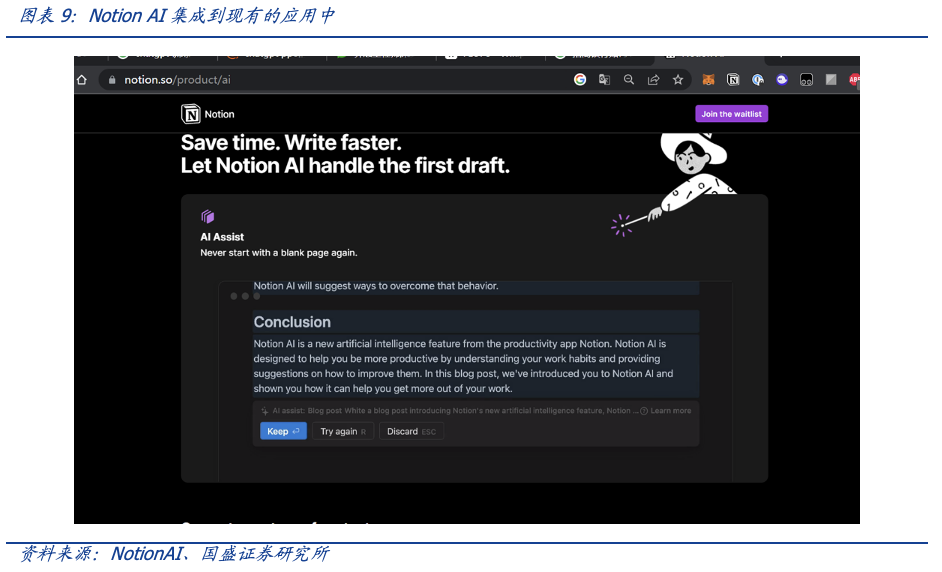
Consumer AIGC Embraces the SaaS Subscription Model As AI models and computing power cross key usability thresholds, AIGC's potential for individual users grows—and the dominant model will be SaaS subscriptions. It serves a dual purpose: first, as an efficiency tool that boosts productivity across workflows like information gathering, formatting, and automation; second, as a creative tool that, much like video or photo editing software, dramatically lowers the barrier to content creation for mainstream users. A prime example is NotionAI, which stands out for seamlessly integrating AI models as infrastructure into existing user workflows.
The future of AIGC is built on a massive computing power market. OpenAI's research shows that the computational power needed for AI training is growing exponentially, far outpacing the pace of hardware improvements predicted by Moore's Law. This demand comes at a steep price: training GPT-3 alone cost over $4 million in compute resources. While AI models are often open-sourced, the datasets and the resulting trained models are closely guarded proprietary assets. This means every AI product must shoulder its own substantial training costs. As AIGC moves into commercial deployment across both B2B and B2C sectors, demand for computing clusters and cloud services is set to surge. Furthermore, with export restrictions on NVIDIA's high-end A100 and H100 GPUs, domestic Chinese AI chip manufacturers are poised to capture significant market share.
The value of AIGC communities. In recent discussions with startup teams, a clear trend has emerged: the intersection of AIGC with Web3.0, and more broadly, its integration into online communities. AIGC lowers the barrier to creation, boosting community interaction and growth while slashing content production costs for platforms. In turn, community discussions and content preferences provide invaluable feedback, refining and optimizing the AIGC models and strengthening the product over time. NFTs add another layer by enabling verifiable ownership of digital creations and fostering deeper community engagement. Exploring the synergy between AIGC and NFT communities could unlock significant commercial innovation.
An AIGC investment framework: software, hardware, and datasets. Generative algorithms, NLP capabilities, and computing power form the foundational layer that makes AIGC systems possible. However, it is the quality of the datasets that ultimately determines the output's caliber and commercial potential. On the software front, key players include NLP technology providers like Google, Microsoft, iFLYTEK, and TOLSTO, alongside AIGC model and dataset developers such as NVIDIA, Meta, Baidu, BlueFocus, Visual China Group, and Kunlun Tech. The hardware and compute layer features companies like ZTE, Montage Technology, Eoptolink, TFN, and Baosight Software.
Risk Warning: Technology may not advance as expected, and regulatory changes pose additional risks.
Microsoft and OpenAI Deepen Partnership to Accelerate AIGC Commercialization. On January 23, Microsoft announced a major expansion of its partnership with OpenAI, committing to invest billions of dollars over the next several years to bring advanced AI to a broader audience. Microsoft is fast-tracking the commercialization of OpenAI's technology by integrating tools like ChatGPT and DALL-E across its software ecosystem, including Bing and Office, to deliver more intuitive user experiences. Significantly, Microsoft will also offer Azure OpenAI Service, a cloud-based platform that allows developers to build custom applications on top of OpenAI's models, further speeding up the real-world adoption of AI.
This move marks OpenAI's shift into commercialization. As the leading AIGC company, it is positioning itself in two key ways: first, by serving as foundational AI infrastructure that powers search engines and productivity software to boost efficiency and user engagement; and second, by leveraging its partners' computing resources to build a hardware foundation for future expansion.
In our earlier report, "AIGC: Productivity Tools for the Web3 Era," we explored AIGC's technological shifts and use cases. As the technology matures and applications grow, the market's focus is turning to a critical question: how does AIGC make money? Based on our industry discussions, we believe 2023 will be the year AIGC commercialization accelerates, bringing these tools into everyday life and work.
1. The AIGC-Driven Business Model Shift: AI Steps into the Spotlight
A key insight from our recent industry conversations is the concept of AI's "explicitness." While AI has been around for years, its past applications often resembled specialized "undergraduates"—highly trained in narrow fields. Today's large-model AIGC, in contrast, is more like a well-rounded "graduate student" with broad foundational knowledge. Though still developing expertise in specific areas, AIGC offers far greater adaptability. We expect "AIGC+" to become a global trend following GPT-4's 2023 release. Foundational models and datasets will form the core "IT infrastructure" of the next tech era, delivering both vertical specialization and horizontal scale. This is already clear in the OpenAI-Microsoft partnership, highlighting a major shift: general-purpose AI is now explicitly integrating into mainstream applications.
AI has the power to transform business models by automating tasks, boosting efficiency, and enabling entirely new ways of operating. Here are a few ways it's driving change:
Automation: AI can handle repetitive tasks like data entry, customer service, and supply chain management automatically. This reduces the need for manual labor, boosts efficiency, cuts costs, and ultimately increases profits.
Enhanced Decision-Making: By analyzing vast datasets, AI uncovers insights that empower businesses to make smarter choices. It can optimize pricing, spot new opportunities, and predict customer behavior.
Personalization: AI tailors products and services to individual customers, allowing companies to target their marketing more effectively and boost customer satisfaction.
New Business Models: AI is unlocking entirely new ways of doing business. For example, AI-powered chatbots enable companies to offer 24/7 customer support, even outside of regular business hours.
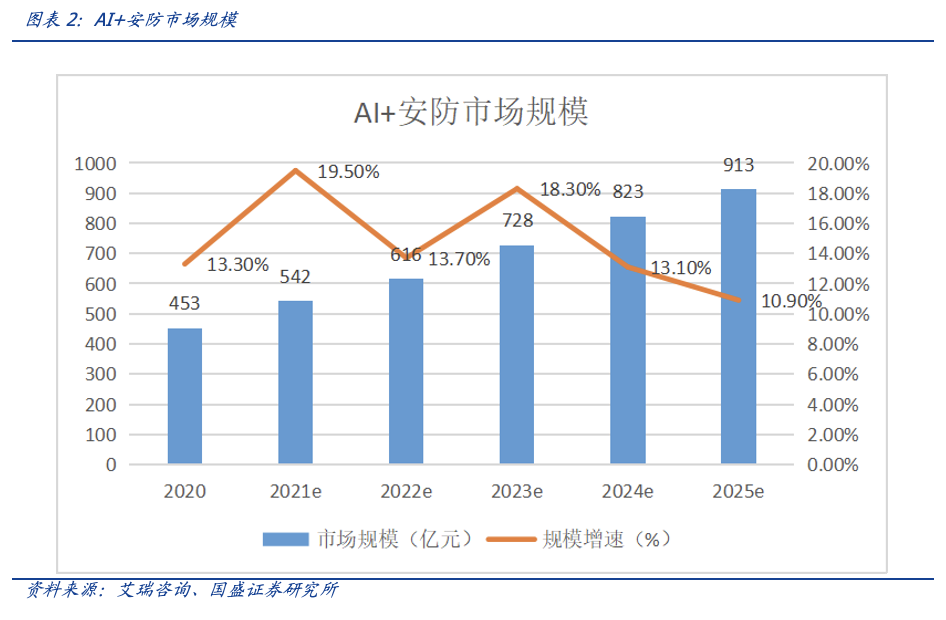
Historically, AI applications have been concentrated in fields like security surveillance and network monitoring. The AI + Security market in China, for instance, was valued at RMB 45.3 billion in 2020, representing one of the fastest-commercializing and largest sectors. It's projected to reach RMB 90 billion by 2025. However, solutions in this space are often tied to hardware and integrated systems.
Now, as natural language processing (NLP) lowers the barrier to using AI and AIGC (AI-Generated Content) algorithms mature, we're seeing strong commercial traction for AIGC. Startups like Jasper are already generating revenue, proving that viable AI business models are emerging. Founded in 2021, Jasper reportedly earned $45 million in its first year with 70,000 users, and its 2022 revenue is projected at $75 million. The company operates on a SaaS subscription model with Starter, Boss Mode, and Custom tiers. Similarly, leading AIGC companies in China saw rapid user and content growth in 2022, making revenue and profitability from 2023 onward a realistic goal. The key question is whether they can successfully transition to sustainable SaaS subscription models.
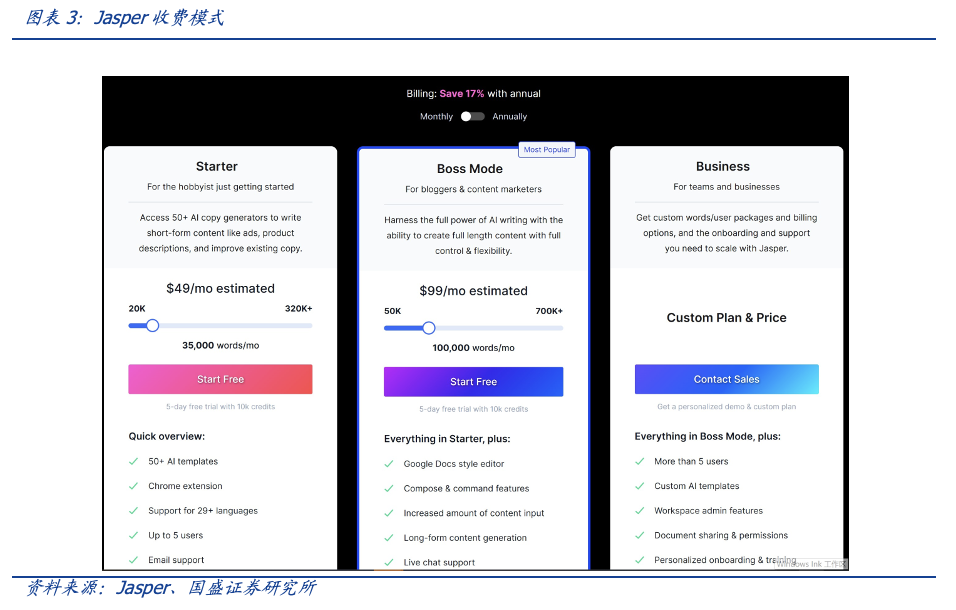
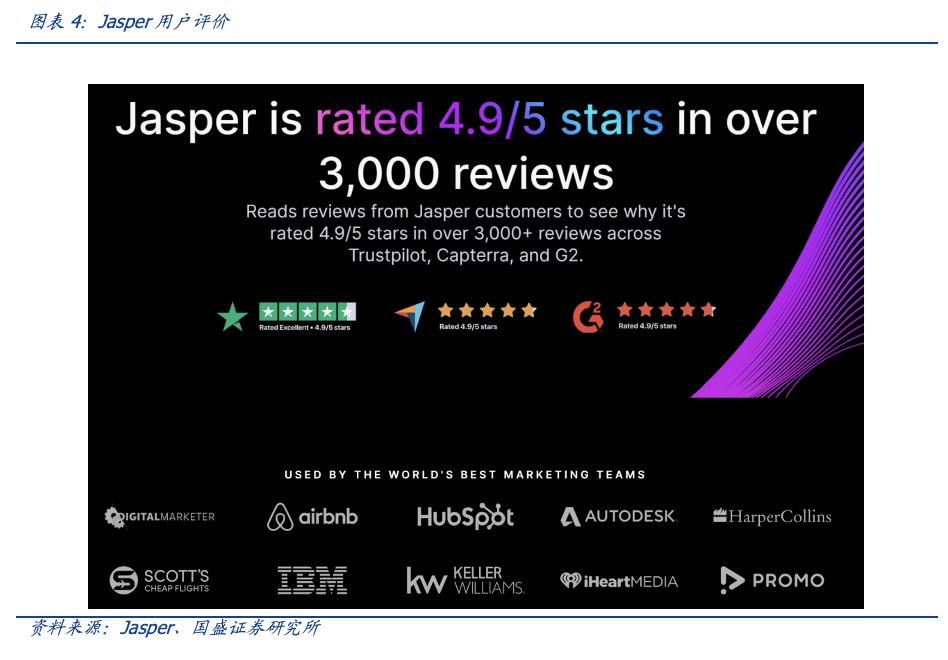
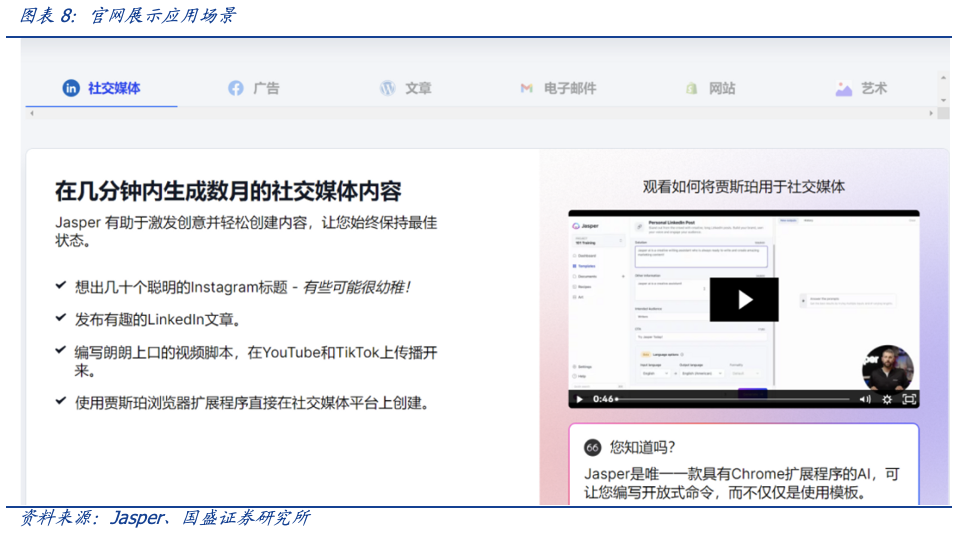
Take Jasper as an example. It integrates multiple model algorithms—including GPT-3, NeoX, and T5—and further fine-tunes models based on real-world business needs to create custom interfaces and workflows, making AI practical for everyday tasks. By leveraging multiple models, Jasper can identify the best combination for specific use cases or industries. This strategy reduces reliance on any single source and improves overall output quality. Jasper's interface offers hundreds of industry-specific templates, such as email drafts for product launches, allowing users to generate highly targeted content and boosting engagement. It's no surprise that Jasper, founded just two years ago, already counts IBM and Airbnb among its major clients.
As technology advances, AI is no longer commercialized solely through bundled hardware and system solutions, as was common in the past. For everyday users, AI has shed its image as an inaccessible frontier technology. Instead, it has become a practical tool that anyone can use to enhance productivity—a clear sign of maturing AI business models.
2. B2B: The Core Business Model for AIGC
While AIGC lowers the barrier for consumers to create AI-generated content, the B2B model remains the primary path to commercialization today. Consumer demand is often sporadic, driven by curiosity or brief experimentation rather than sustained need. In contrast, business clients demonstrate more stable, long-term demand and a stronger willingness to pay, largely for two key reasons:
Cost Reduction
AIGC is taking over tasks traditionally handled by human creators, such as content editing and graphic design. For a company with labor costs of, say, RMB 1 million, adopting AIGC can slash those expenses by more than half. This powerful incentive is already driving automation across industries, especially in sectors like sports, finance, and automotive.
This shift isn't new. Back in 2018, Reuters introduced Lynx Insight, an AI tool designed to write news. Its goal was to let AI handle data-heavy editorial work—like mining and pattern recognition—while editors focused on higher-level tasks such as framing questions, prioritizing assignments, and interpreting context. It's similar to how we've used ChatGPT to draft research reports. Looking ahead, humans will likely set the strategic direction and ask the right questions, while AI gathers, processes, and synthesizes the information.
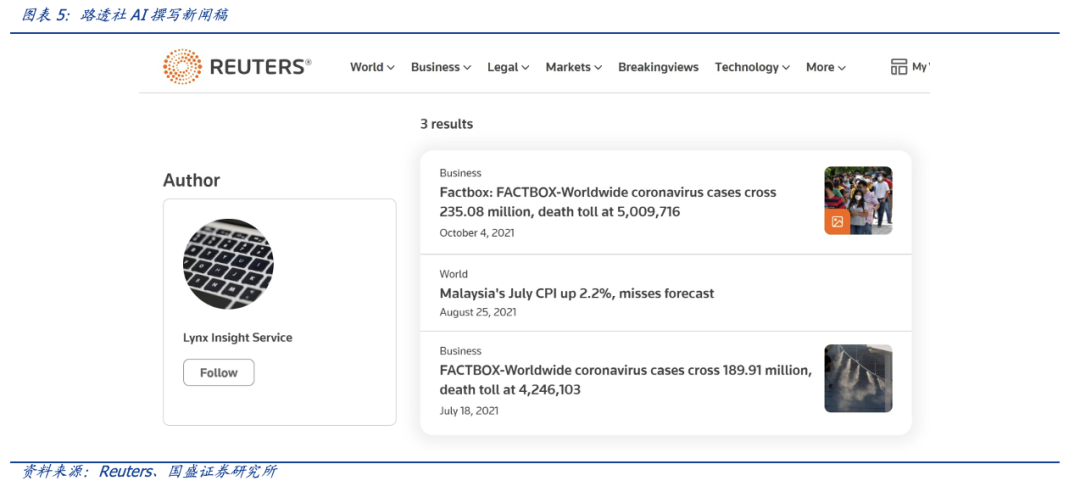
A more common approach today involves using AI to quickly pull data and plug it into pre-built templates to generate articles. You see this in services like Wind's news alerts or automotive sites that compare vehicle specs.
AIGC isn't just for text. It's also creating images for news articles and social media posts, including illustrations and cover art. Compared to generic stock photos, AI-generated visuals can better align with the content, reduce dependency on designers, and speed up production. That said, demand for text generation currently outpaces image creation—partly because AI handles text more reliably, and the market potential is simply larger.
Bridging the B2B Demand Gap
Many B2B projects are inherently complex and difficult to execute, creating what we call a "demand gap." Take building an IP matrix, for example. Expanding a major intellectual property across films, TV series, games, anime, and merchandise is a massive undertaking. It requires significant time, investment, and the coordinated effort of many creators. Content producers are often stretched too thin to generate the volume of original material needed, while clients on the demand side are reluctant to commit funds without seeing concrete results. This is where AIGC can change the game. In the future, creators could use generative models to produce vast amounts of content from simple hand-drawn sketches. Thanks to diffusion models, this hybrid "white-box + black-box" approach can even facilitate derivative works ("second creation"). By bridging this demand gap, AIGC could make large-scale B2B projects far more viable.
Consider the anime and manga market, which is in a phase of explosive growth with a rapidly maturing value chain. China's overall market size exceeded RMB 100 billion in 2020, and the user base is projected to reach 500 million by 2023. New product categories built around anime IP—like collectible toys, virtual idols, apparel, and offline entertainment—represent huge opportunities and are currently key areas of focus for development.
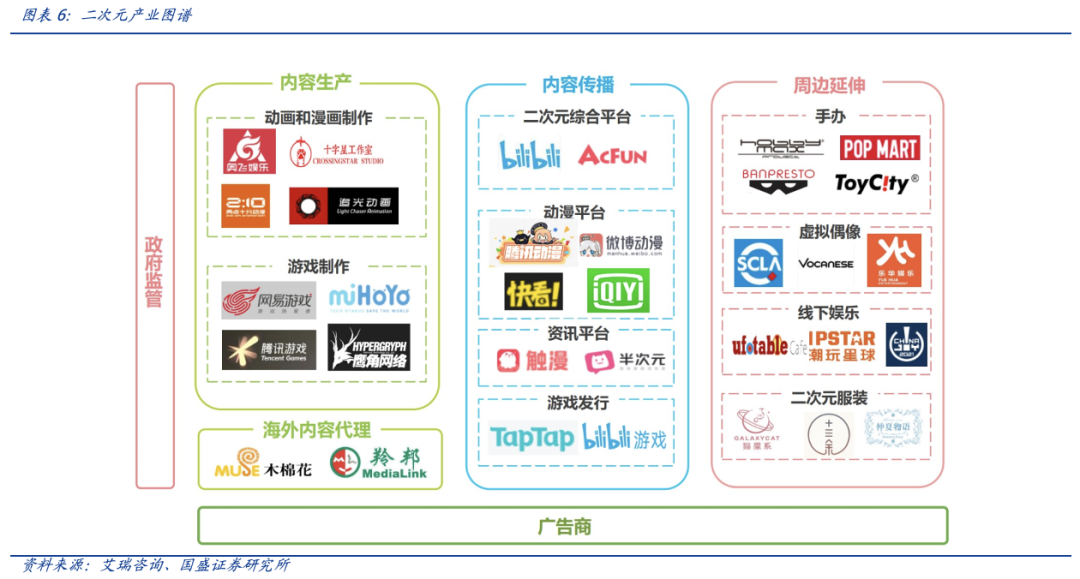
Designing products like collectible toys, virtual idols, or apparel involves crucial steps like selecting designers and finalizing concepts. AIGC can dramatically improve efficiency here. Traditionally, a team of designers would create initial concepts for client review, leading to multiple rounds of feedback—a process with high communication overhead and upfront costs. With AIGC, designers can first train personalized generative models to quickly produce multiple concept drafts that meet the IP owner's specifications. This speeds up designer selection and cuts communication costs. Afterwards, AIGC can efficiently generate additional content in a consistent style, further boosting productivity and reducing expenses.
Even as AIGC technology advances and sees broader adoption, we believe the B2B model will remain its primary commercial avenue for now. The core reason is clear: AIGC delivers tangible efficiency gains for enterprise clients and can address previously unmet demand. This directly strengthens their willingness to pay.
3. Consumer-facing AIGC, primarily subscription-based SaaS
As AI models and computing power reach a level of practical utility, AIGC's ability to empower individuals has emerged as a significant trend. With minimal marginal cost, AIGC applications can dramatically boost an individual's efficiency in processing information and the quality of their content output. This technological shift has the potential to reshape production relations.
The commercial value of consumer-facing AIGC applications can be understood in two key ways. First, as an efficiency tool—akin to traditional note-taking or calendar apps—AIGC can boost productivity by streamlining tasks like information gathering, formatting, and workflow management. Furthermore, AI models act as foundational infrastructure that can be embedded directly into existing processes. Second, as a creative tool—comparable to video editing or photo software—AIGC lowers the barrier to content creation for everyday users in today's UGC-dominated environment, amplifying the IP value of personal media.
From a commercial standpoint, SaaS subscriptions powered by AIGC infrastructure are set to become a lasting trend. Companies like Midjourney are already leading the way. Users are willing to pay for these services for several key reasons:
More efficient access to information
AIGC is poised to replace search engines as the next-generation way to find information. Ever since ChatGPT launched, one question has dominated the conversation: "Will ChatGPT replace Google?" Traditional search engines work by matching keywords and scoring relevance to retrieve and rank web pages, ultimately presenting users with a list of potentially useful links. ChatGPT, on the other hand, draws directly from its massive training dataset to provide direct answers. Ask it for an overview of the fiber-optic cable industry, and it will deliver a coherent summary. Follow up with more questions, and it maintains the thread of conversation. A traditional search engine would require you to hunt for keywords, sift through the results, and piece the information together yourself. In practice, answers from ChatGPT are often higher quality and faster to obtain than trawling through search results—though it is limited by its training data (for instance, its knowledge cuts off around 2020). Even with this constraint, ChatGPT is already capable of handling the majority of search use cases. Despite still being in a demo phase, many users on social media have said they'd be willing to pay for it to boost their personal productivity.
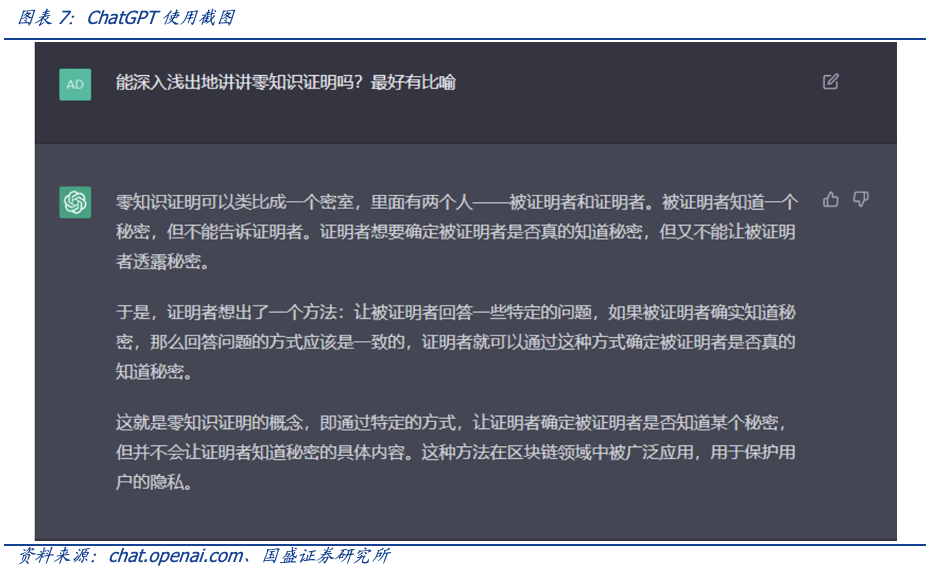
From a supplementary tool to a full replacement
In content creation, AIGC is evolving from a helpful assistant to a full replacement for human effort. We've long used efficiency tools to aid expression and streamline communication—Grammarly, for instance, polishes tone and word choice while offering templates and standard formats. AIGC takes this further by generating content tailored to specific formats, tones, and scenarios, effectively automating the creative process. Jasper is a prime example: its core product leverages AI to generate text. Users can produce Instagram captions, draft TikTok scripts, write marketing copy, compose emails, and more.
Seamless integration into existing workflows
AIGC will be integrated into existing workflows. As foundational infrastructure, large AI models can be customized for specific use cases or embedded directly into current workflows. Take Notion AI as an example. Built on top of Notion—a popular cross-platform tool for collaborative documentation, note-taking, spreadsheets, and kanban boards—it demonstrates this integration in action. In 2021, Notion raised $250 million in a Series C round led by Coatue and Sequoia Capital, reaching a post-money valuation of $10.3 billion. By 2022, the platform had grown to 30 million users, including 4 million paying customers. Its recent beta launch of Notion AI seamlessly weaves AI assistance into the existing workflow, helping users organize materials, manage schedules, and create content with significantly boosted productivity. Tools like MidJourney, Wujie Map (Wu Jie Ban Tu), and ChatGPT, while powerful, aren't complete solutions on their own. Without being embedded into users' established workflows, AIGC risks remaining a mere novelty. It's the integration into daily processes that unlocks its true utility.
Expanding User Creativity
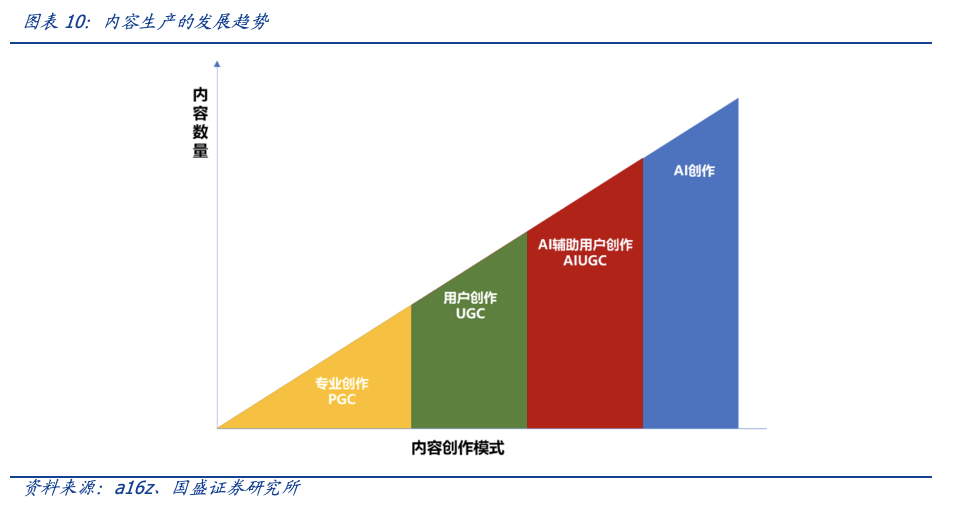
The development of creative tools has empowered more people to become content creators, fueling the rise of User-Generated Content (UGC). As a content creation tool, AIGC takes this a step further by dramatically lowering the barrier to producing images, videos, and other media. While text-to-speech automation previously turned written copy into voiceovers, AIGC now enables the generation of copy, images, and even videos from a single line of text. For example, with MidJourney, users simply input a text description, and the system generates a corresponding image. Similarly, AIGC-powered virtual humans can autonomously produce entire hosted programs based on a text script. With minimal learning curve, these applications allow users to create far more content in a fraction of the time.
4. The Computing Power Business Behind AIGC
Just how massive is the computational power required for AIGC?
AI's computational demands are skyrocketing, far outpacing the pace of hardware improvement predicted by Moore's Law. In 2018, OpenAI published a study that quantified the compute resources required for large language models (LLMs) and tracked their growth. The findings were stark: from 2012 to 2018, the compute needed to train cutting-edge AI models doubled roughly every 3–4 months—an exponential growth rate that dwarfs Moore's Law's prediction of a doubling every 18 months. Over that six-year span, AI training compute surged by a factor of 300,000, whereas Moore's Law would have forecast only a 7x increase.
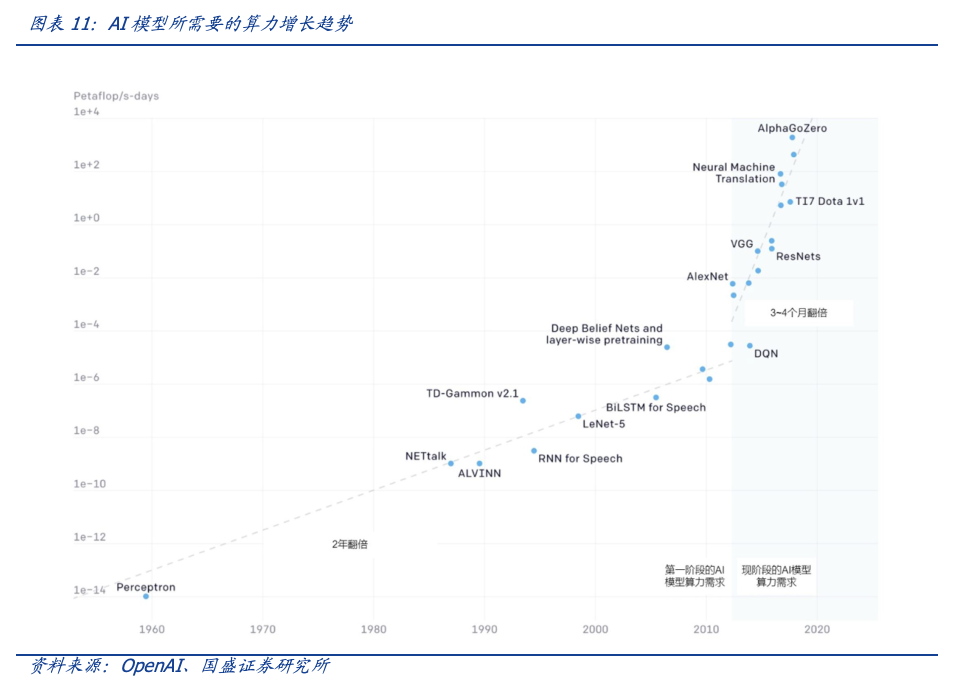
Today, the computational scale for leading models like GPT-3, NLG, and Gopher is often measured in petaFLOPS-days. One petaFLOPS-day represents 24 hours of continuous computation on a system performing one quadrillion (1015) floating-point operations per second. To put that in perspective, an NVIDIA RTX 3090—a flagship consumer GPU—delivers about 35 teraFLOPS (35 trillion FLOPS) under standard conditions. Therefore, a single petaFLOPS-day is equivalent to running an RTX 3090 at full tilt for 29 days straight. Even with the world's fastest supercomputers, such training runs would take over a week under ideal circumstances.
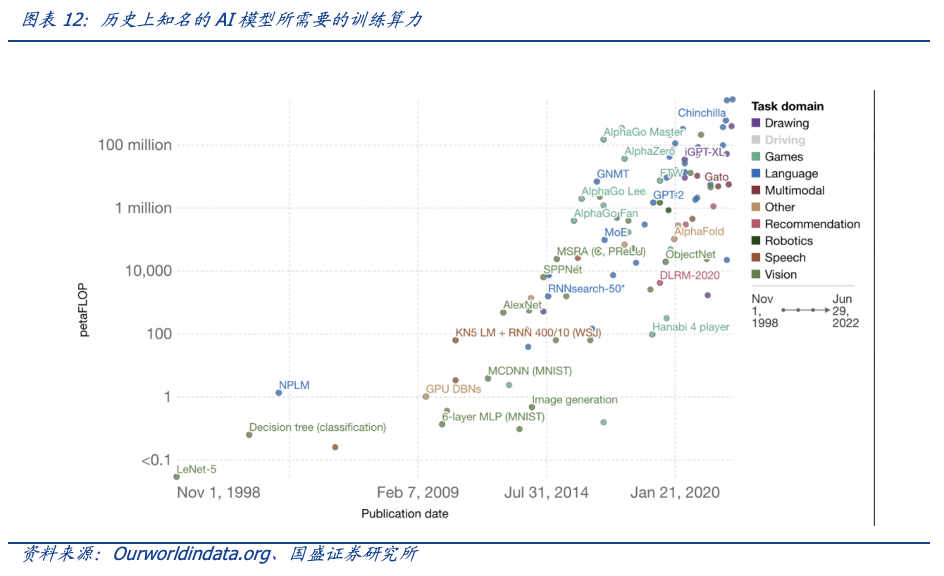
The widespread adoption of AIGC is fueling a massive computing power market. Training large AI models demands immense computational resources at a high cost. Take GPT-3, for example, with its 175 billion parameters. Training it required 3,650 PFLOPS-days of computing power. According to Lambda's estimates, using an NVIDIA V100 GPU (delivering 28 TFLOPS under ideal conditions) and factoring in a minimum three-year cloud computing cost, training GPT-3 would cost around $4.6 million. The next-generation model, GPT-4, will have even more parameters, pushing costs higher.
While AI models are often open-sourced, the datasets and trained weights are proprietary assets. This means each AI product must shoulder its own training expenses. Most startups currently rely on cloud platforms, as building dedicated compute clusters is prohibitively expensive. A single high-end A100 GPU costs roughly ¥60,000–¥90,000 (RMB). Equipping a cluster with 1,000 A100 GPUs, plus the necessary CPUs, storage, and data center infrastructure, requires a hardware investment approaching ¥100 million. As AIGC achieves commercial deployment across both B2B and B2C sectors, demand for compute clusters and cloud services will surge. Furthermore, with export restrictions on NVIDIA's A100 and H100 GPUs, domestic Chinese AI chipmakers are poised to capture significant market share.
5. The Value of AIGC Communities — The Future's Goldmine
In our recent conversations with various startup teams, a clear industry focus has emerged: the convergence of AIGC with Web3.0, and its integration with community building. This trend is primarily unfolding in three key areas: AIGC can supercharge community engagement and cultural development;communities can provide valuable feedback to train and refine AI models;and the fusion of AIGC with NFTs is unlocking novel business models.
Lowering the barrier to expression encourages broader user participation in community interaction. Compared to UGC platforms, AIGC makes it even easier and cheaper for users to create content. This further reduction in creative friction fuels community engagement and growth, while also cutting down on platform content costs. Take Baozou Comics as an example: its comic creation tools lowered the barrier for user expression, spawning a wave of popular memes and enriching the entire "Baozou IP" community. AIGC grants users far greater creative power than traditional content communities—potentially unlocking entirely new platform business models.
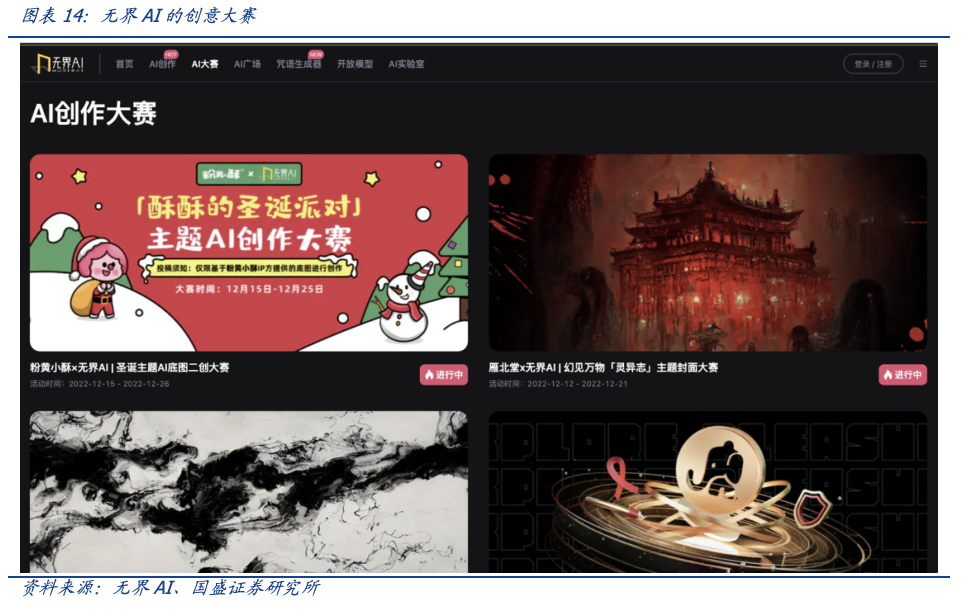
Community feedback on AIGC outputs serves as valuable training data for AI models. Take image generation: the same prompt can produce wildly different results across platforms—excellent on one, poor on another. A major reason is model training. Even starting from the same base model, different training approaches lead to vastly different outcomes. In supervised learning, trainers must evaluate AIGC content and fine-tune the algorithm until it performs well. A key reason ChatGPT launched a free demo was to gather richer feedback through open user interaction. Community discussions and preferences provide high-quality signals for refining AIGC models, enabling optimization and improved capabilities.
When AIGC intersects with intellectual property (IP), traditional copyright frameworks often fall short—a challenge already seen in the UGC era with fan-made derivatives. The inherent tokenization of NFTs enables more dynamic connections between original creators, derivative makers, and audiences. We've seen exclusive communities form around NFT projects like BAYC and CryptoPunks, with ongoing experiments in blending NFTs with fan economies. Due to its probabilistic nature, AIGC is unlikely to produce identical outputs, instead generating unique "seeds" akin to digital fingerprints. Combining AIGC with NFTs can link content creators to their outputs—and those outputs back to original IPs. This opens a vast space for experimentation. Numerous teams in Silicon Valley and Singapore are already exploring it, and we will continue to track these developments in our research.
6. Investment Strategy: AIGC Hardware, Software, and Datasets
The evolution from PGC to UGC and now to AIGC has liberated human creativity from the constraints of content production. AIGC enables the efficient generation of high-quality content, paving the way for a true metaverse. To meet the metaverse's demands—where AIGC must independently produce high-quality, high-precision content—the underlying technology still needs significant advancement. This development can be viewed through two lenses: hardware and software. On the software side, key components include natural language processing (NLP), AIGC generative algorithms, and datasets. On the hardware side, critical factors are computing power and communication networks.
Catalysts:
1) The launch of the new GPT-4 model in Q2.
2) Microsoft has integrated AIGC capabilities into its search engine and Office productivity suite.
From a thematic investment perspective, we believe AIGC is poised for a major breakout in 2023. Having moved past the initial hype phase in 2022, this year will see the technology not only advance with new models but also achieve practical, widespread adoption as "AIGC+" integrates across industries. On one hand, AIGC is set to transform existing platforms like short-video and gaming—potentially boosting content volume and user engagement while offering new tools for social media and advertising. On the other hand, aligned with Web3's open and collaborative spirit, the fusion of UGC and AIGC will unlock more compelling content, sparking a new wave of creative derivatives and boundless imagination.
Risk Warning
Slower-than-expected technological innovation: The development of AIGC technology, along with foundational hardware like supercomputers and computing infrastructure, may progress more slowly than anticipated.
Policy and Regulatory Risks: AIGC is still in its early stages, and the future regulatory landscape remains uncertain. It is unclear what rules—such as those governing intellectual property or other legal frameworks—may eventually apply to AI-generated content.