
Author: Nichanan Kesonpat
Compiled by: Rachel
DAOs represent a burgeoning sector in crypto, yet one that still needs to prove its real-world utility. With over 1,000 Snapshot spaces, 700,000 governance token holders, and more than $10 billion in DAO treasuries, the potential to create value across every function of internet-native organizations is immense.
The internet unlocked large-scale human coordination. Now, DAO tooling built on web3 allows us to design and manage incentive structures that foster positive-sum relationships among stakeholders, keeping them aligned with shared goals as products and communities evolve.
While DeFi has seen explosive growth—from $7 billion to $90 billion in the past year—the DAO ecosystem is still in its early stages.
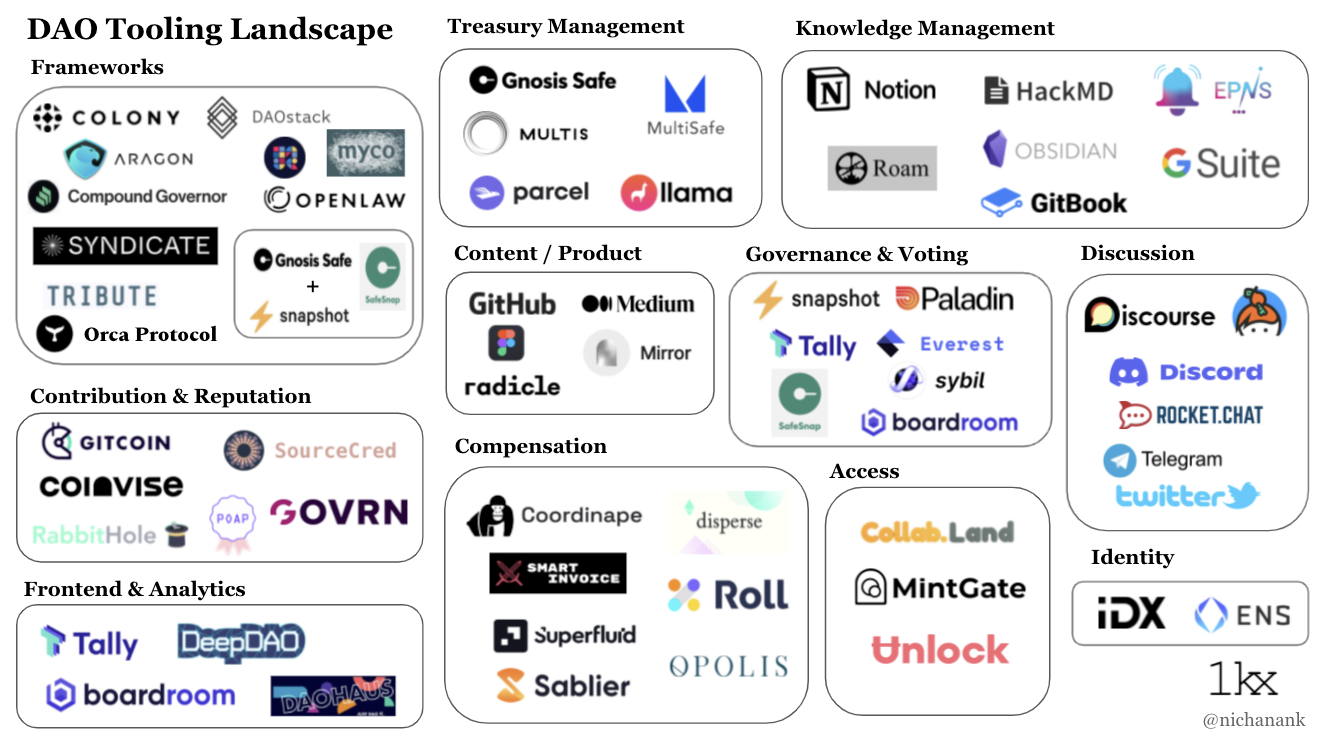
DAO Tool Landscape
Whether a DAO is building products (like Sushi), investing (like The LAO or MetaCartel Ventures), collecting NFTs (like FlamingoDAO or PleasrDAO), or providing services (like RaidGuild or LexDAO), they all face similar high-level challenges as they grow:
1. Lowering the barrier to meaningful contribution
Because contributions can come from anywhere, tools that define and quantify different types of work—such as bounties or DAO-specific metrics—help establish shared priorities and clarify how contributors are rewarded for their participation. Beyond financial compensation, DAOs can also use reputation systems to incentivize aligned participants to take on greater ownership and grow with the organization.
2. Maintaining operational efficiency while decentralizing
In the long run, decentralization shouldn't mean sacrificing efficiency. Progressive decentralization allows founding teams to find product-market fit while moving toward credible neutrality. We'll look at how DAOs achieve this—through methods like constrained delegation and working groups—as well as tools that add checks and balances to hold executors accountable to token holders.
3. Coordinating decisions at scale
Voting tools let individuals voice their opinions, fund initiatives they support, and delegate authority to trusted representatives who share their views. Access to relevant, easily digestible information is crucial for these decisions. Analytics tools and data aggregators make DAOs more transparent by extracting meaningful insights from raw on-chain and off-chain data.
In this article, I explore these challenges through the lens of organizational design and the growing suite of web3-native tools built to tackle them. After examining each category—contribution management, compensation, decision-making, finance, analytics, and DAO frameworks—we get a snapshot of today's DAO ecosystem. While many components are more developed than a year ago, this landscape only hints at what's to come.
Organizational Design
Within a given community, the structure often starts organically—perhaps as a simple group chat—and evolves into dedicated working groups or functional committees. Members of these groups take ownership of specific goals and milestones.
While names and specifics vary from DAO to DAO, these groups can generally be categorized by their core functions.
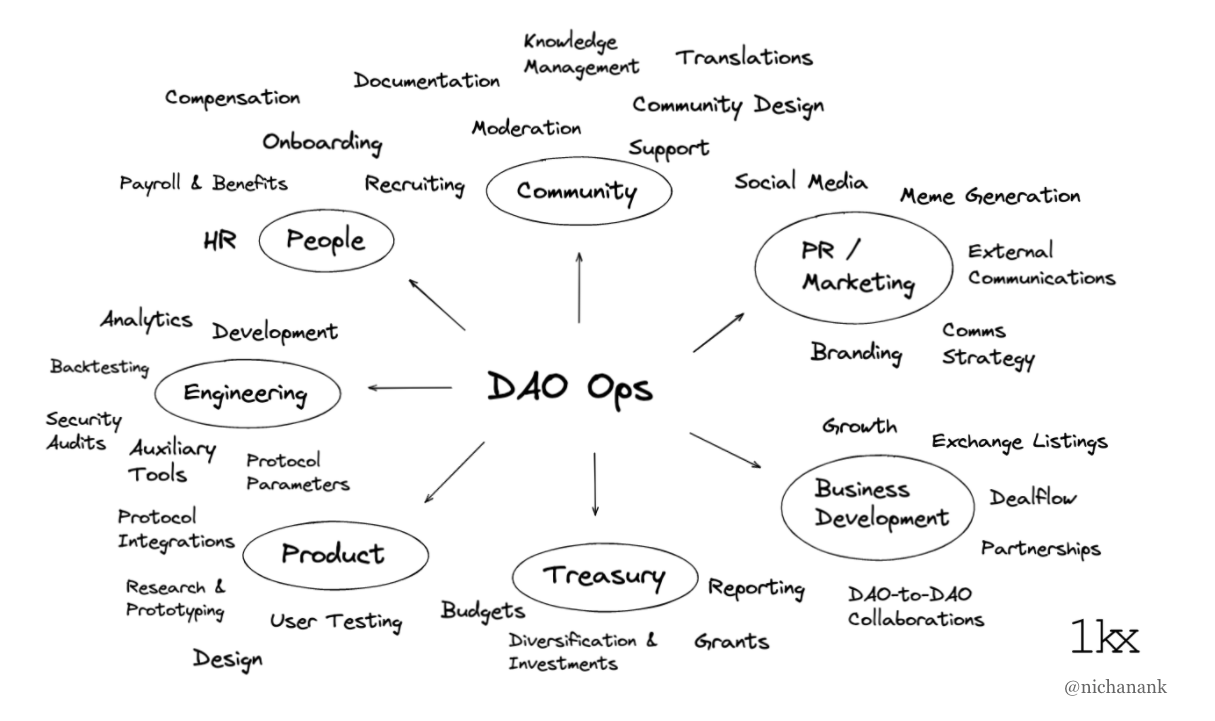
To balance efficiency with decentralization, DAOs often adopt models of distributed, constrained delegation. Token holders delegate execution authority to active contributor groups within specific domains.
This constrained delegation empowers individuals with deep expertise and context to work autonomously while remaining accountable to the broader DAO. Working group leads are typically nominated or elected and can be removed by a community vote.

Examples of functional committees include yearn (“yTeams”), Nexus Mutual (“Hubs”), and Index Coop (“Working Groups”).
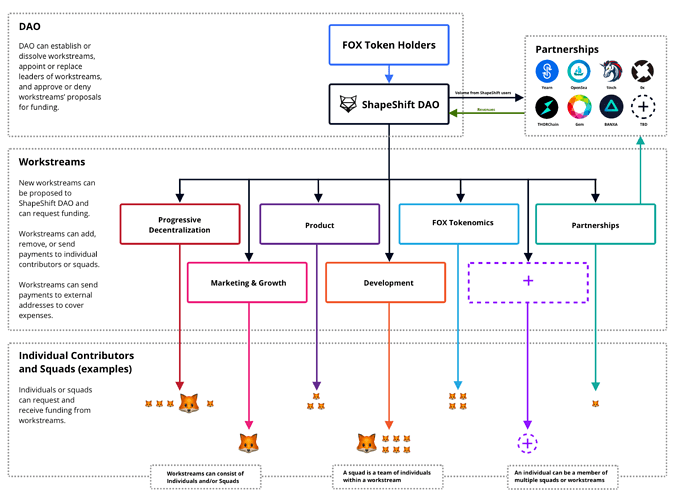
ShapeShift DAO's functional committees, called “Workflows,” provide another example.
While many responsibilities mirror those in traditional organizations, the core difference—and key value proposition—is that contribution opportunities are open to all. Anyone can take the initiative to propose ideas, launch new working groups, or suggest changes to existing processes.
Unlike traditional companies, where employees and users wait for decisions made behind closed doors, any DAO stakeholder can participate and advocate for change. DAOs open their planning to the broader community through proposals and requests for feedback. The purpose, required resources, key stakeholders, success metrics, and outcomes of initiatives are all transparent, fostering accountability and social checks-and-balances.
Decentralization doesn't mean a lack of leadership; it means more people have the authority to act toward a shared goal—the DAO's North Star. Well-maintained documentation outlining the DAO's structure and each group's scope is invaluable, helping potential contributors see where their skills meet the DAO's needs. Of course, the motivation to contribute must come first—that's where the contributor journey begins.
Contribution Management
The contributor journey maps an individual's path from first hearing about a DAO, to following its social channels (like Twitter or Discord), connecting with members, and eventually making their first contribution.
Ideally, this journey fosters a growing sense of ownership and belonging, motivating individuals to grow with the community and have a greater impact on its vision.
Designing this journey is fundamentally a process challenge, but it also involves deciding which tools to use and how to deploy them effectively. The right tools can help address major hurdles, such as:
How to deliver the right opportunities and information to the right people at the right time.
How to measure, incentivize, and fairly reward contributions
How to build trust through roles and reputation systems
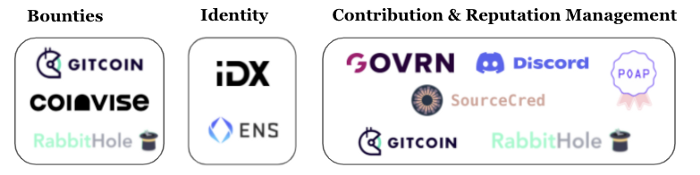
Tasks and bounties are bite-sized assignments that help members "level up" within a DAO. While they're often just the first step for new contributors, bounties make for excellent "good first issues" because their scope and deliverables are clearly defined. For on-chain tasks (like those on Rabbit Hole), completion can be verified automatically or assessed by the DAO members holding the bounty (as seen on Gitcoin or Coinvise).
Yearn, for example, maintains a dashboard that aggregates open issues across its code repositories, along with a dedicated Telegram group that highlights relevant tasks for interested participants.

Bounties can be as simple as a Telegram group—but they need a dedicated facilitator to match the right people with the right opportunities.
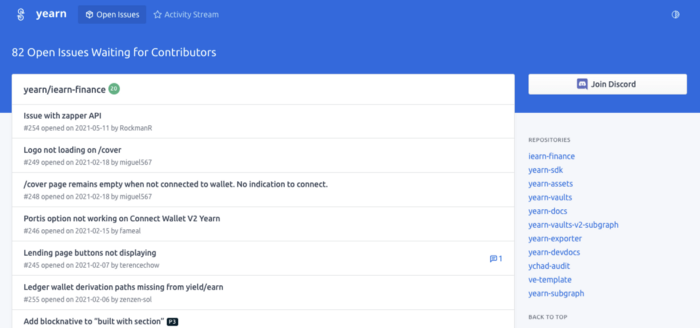
A platform aggregating open issues across Yearn repositories
As any gamer knows, that "quest complete" moment delivers a powerful feeling—one that can become intrinsic motivation in itself. However, bounties alone aren't enough to encourage people to take on greater ownership.
Over time, members can build their reputation within a DAO by earning "XP" and trust with each contribution. Spend a few hours browsing a DAO's Discord or Discourse forum, and you'll quickly spot its most influential members. Some are founders, but many others have risen from the ranks by actively driving the DAO's success.
A member's progress along the contributor journey can be reflected in Discord roles, which—when used effectively—act as proxies for trust. For instance, if the community agrees that "Gold" members have contributed over 500 hours to the DAO, their input should naturally carry more weight than someone without a badge.
Reputation, as a trust proxy, helps people decide where to focus their attention within the DAO. It also signals to outsiders who to contact for support or collaboration.
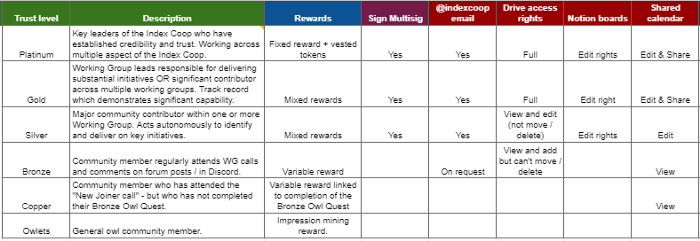
Contributor tiers at Index Coop, linked to access rights and rewards
If people or tools become bottlenecks, it's up to the community or a dedicated working group to clear them. When running smoothly, the contributor journey should be the path of least resistance for community members—from zero to one and beyond.
The contributor journey doesn't end when someone goes from a Discord lurker to a working group lead. Web3 allows individuals to carry their identity and reputation across applications and communities. Because DAO affiliations are far more diverse and interconnected than traditional employer relationships, DAOs become powerful tools for people to build and communicate a complete picture of who they are—and what they care about.
Compensation
The infrastructure for distributing payments is more mature than tooling in other areas of DAO operations. DAOs can stream payments to contributors using Sablier or Superfluid, batch-distribute tokens via Roll or disperse.app, fund grants through Gnosis Safe multisigs, and track everything with treasury management tools like Parcel and Multis.
They can even create something similar to an Employee Stock Option Plan (ESOP) by locking tokens into options contracts and streaming call options to contributors over a vesting period.
However, figuring out how to reward different *types* of contributions is less straightforward. Tools like SourceCred quantify and allocate "cred" for activities like GitHub issues, PR commits, and Discourse posts. Building on this idea, Govrn takes it a step further by working directly with DAOs to create custom "motion models," where communities assign weights to different contribution types based on their own priorities.

Meta Gamma Delta’s motion model on Govrn
This approach standardizes value creation within a DAO's context. The community itself defines what counts as a contribution and how much each type is worth, and can update these definitions at any time through proposals.
Motion models can vary drastically from one DAO to another. Communities shouldn't force themselves to fit external metrics. These bottom-up models can incorporate novel voting mechanisms for reward allocation, bounty creation, and quadratic trust.
Since contribution opportunities are open, a DAO might not even be aware of a need until community members voluntarily build solutions. This makes it easy for a "compensation committee" or the core governance body to overlook contributions happening at the network's edges.
Coordinape is a peer-based compensation tool built on the idea that those within a working group know best who creates the most value. Since contributions often start at the periphery, so does the knowledge about each contributor's impact. At the end of a work period, Coordinape lets group members collectively decide how to allocate rewards among themselves—eliminating the need for a centralized authority to make potentially inaccurate, granular judgments about value creation.
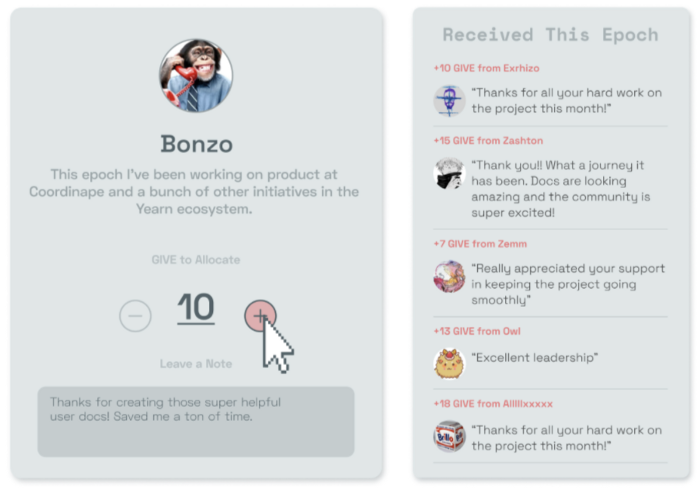
Coordinape: a tool for closely collaborating peers to allocate rewards among themselves
Human resources is one of the most overlooked areas for DAO contributors. For projects, offering web3-native solutions for real-world benefits—like health insurance, 401(k)s, IRAs, and tax compliance—represents a massive opportunity.
Today, these benefits are tied to employers, not employees, who are stuck with the vendors and plans chosen by their company's HR department. If they leave the job, they lose the benefits. This is a flawed system and a particular pain point for freelancers. Beyond receiving crypto salaries, this remains a fundamental barrier to going "full-time DAO."
Opolis is one of the first digital employment cooperatives designed for independent workers in web3. It acts as an employer-agnostic shared services layer, providing members with employment benefits, payroll, and tax compliance. By decoupling benefits from a specific employer and attaching them to the individual, Opolis gives people the freedom to earn from multiple DAOs while retaining HR benefits traditionally associated with conventional jobs.
Opolis currently partners with individuals from projects like MakerDAO, Gitcoin, BadgerDAO, and recently ShapeShift, though membership is currently limited to those based in the U.S. It remains a standout platform bridging the stability of web2 with the autonomy of web3.

Decision-Making
Early DAO frameworks like Moloch featured built-in governance tools that tightly coupled voting with on-chain execution. Members earned shares through contributions and voted on proposals; a successful vote would automatically trigger actions like transferring funds from the treasury to a grant recipient.
Integrated DAO frameworks with built-in voting
Over the past year, rising gas fees have pushed the ecosystem to decouple voting from on-chain execution. Basic polling now often happens off-chain via Discord, Discourse, Telegram polls, or token-based signaling votes on platforms like Snapshot. While this captures community sentiment, the final execution authority typically remains with a small group of multisig administrators.
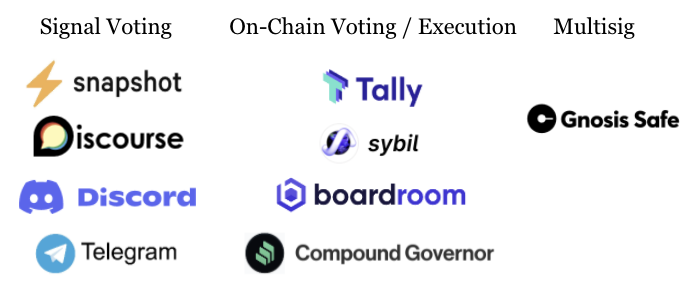
Modular voting tools
DAOs like Uniswap and Radicle use a proposal lifecycle that refines ideas through initial signaling votes. Only after details are finalized does on-chain voting occur. This makes votes more meaningful, as they directly change on-chain state (e.g., protocol parameters). However, the entire process can be slow, requiring ample time for community discussion and voting.
Next-generation governance tools aim to bridge this gap, adding a layer of checks and balances to ensure execution—even by multisigs—accurately reflects off-chain voting outcomes.
Gnosis SafeSnap is a plugin that uses oracles to verify a community decision via signaling votes before a multisig can execute a transaction. This requirement prevents multisig signers from acting against the community's will, as any transaction must first pass an off-chain vote.

Gnosis SafeSnap verifies multisig transactions against Snapshot votes
Recently, the Gnosis team announced Zodiac and its Reality module, making this concept framework-agnostic. Not only can Snapshot votes be converted into safe transactions, but any off-chain event reportable to an oracle can trigger on-chain execution within a DAO.
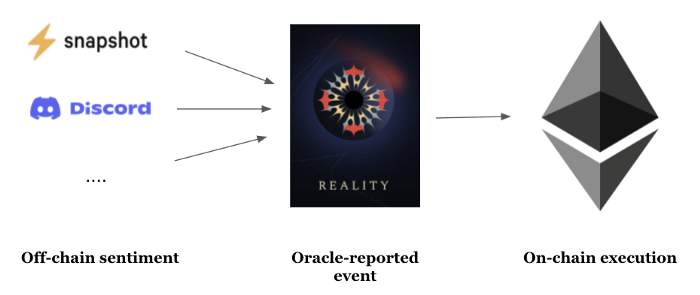
Judicial infrastructure adds another layer of checks and balances, allowing working groups to execute optimistically while giving the community the power to "challenge" decisions—ensuring accountability. Kleros Court acts as a DAO's "Supreme Court," assessing if proposals align with the DAO's values or if budgets were spent as specified. If signers act improperly, tools like Tally’s SafeGuard allow a threshold of token holders to revoke multisig transactions or reclaim funds.

DAO judicial tools
Comprehensive DAO frameworks incorporate unique features to reinforce checks and balances. For example, all Moloch proposals enter a grace period where members can exit if they disagree with an approved decision. Colony uses a reputation system: if the community finds a member's actions against the DAO's interests, that member's reputation is reduced.
Treasury Management
A DAO's treasury is its lifeblood, which explains why multisigs and finance committees are so common. Many DAO frameworks come with built-in treasury management tools—like Moloch's Guild Bank or DAO Stack's Avatar—while Gnosis Safe has emerged as the preferred multisig solution for DAOs wanting something more lightweight. Beyond these basics, DAOs can tap into the broader stablecoin and DeFi ecosystem to diversify their holdings, make risk-adjusted investments, and generate yield.
A major challenge in DAO treasury management is achieving greater transparency around asset allocation and spending to properly assess performance and financial health. Tools like Llama address this by categorizing inflows and outflows and directly linking expenditures to their corresponding governance proposals.
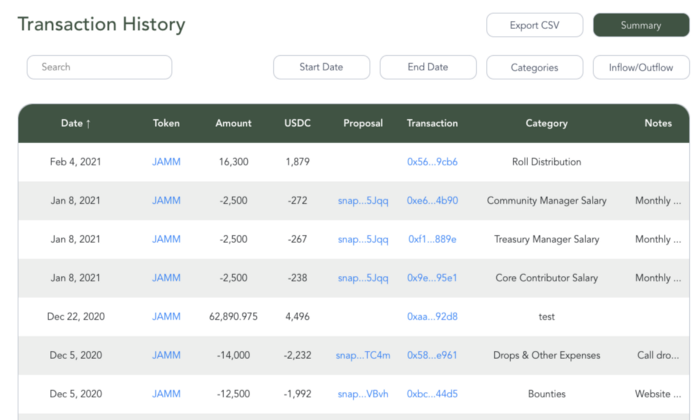
JAMM Community Transaction Summary on Llama
Other solutions, such as Parcel and MultiSafe, streamline operations with features like one-click bulk payments in ETH or ERC-20 tokens via CSV import, recurring payments, member expense limits, and dashboards that provide a clear overview of current asset allocations.
Frontends & Analytics
Block explorers like Etherscan are indispensable infrastructure for crypto networks. They let us analyze network traffic, characterize on-chain activity, and even serve as basic frontends for interacting with smart contracts.
As DAOs proliferate, so does the demand for human-readable insights into their activity. An "Etherscan for DAOs" would be a data aggregator and visualization tool offering a window into governance, spending, and recent discussions—highlighting major funding proposals or heated debates on how to vote in other protocols.
DAO Governance Frontend & Analytics Platforms
Platforms like Tally and Boardroom serve as governance frontends where members can vote on proposals and review voter profiles and activity. The ultimate goal is a comprehensive "Etherscan for governance" that surfaces meaningful insights—such as voter delegation patterns, qualitative context behind votes, and overall community sentiment on specific proposals.
These delegation relationships reveal a DAO's underlying social and political dynamics. For instance, a VC-backed DAO where voting power is concentrated among corporate entities operates very differently from one where individual members delegate their votes to trusted community leaders.
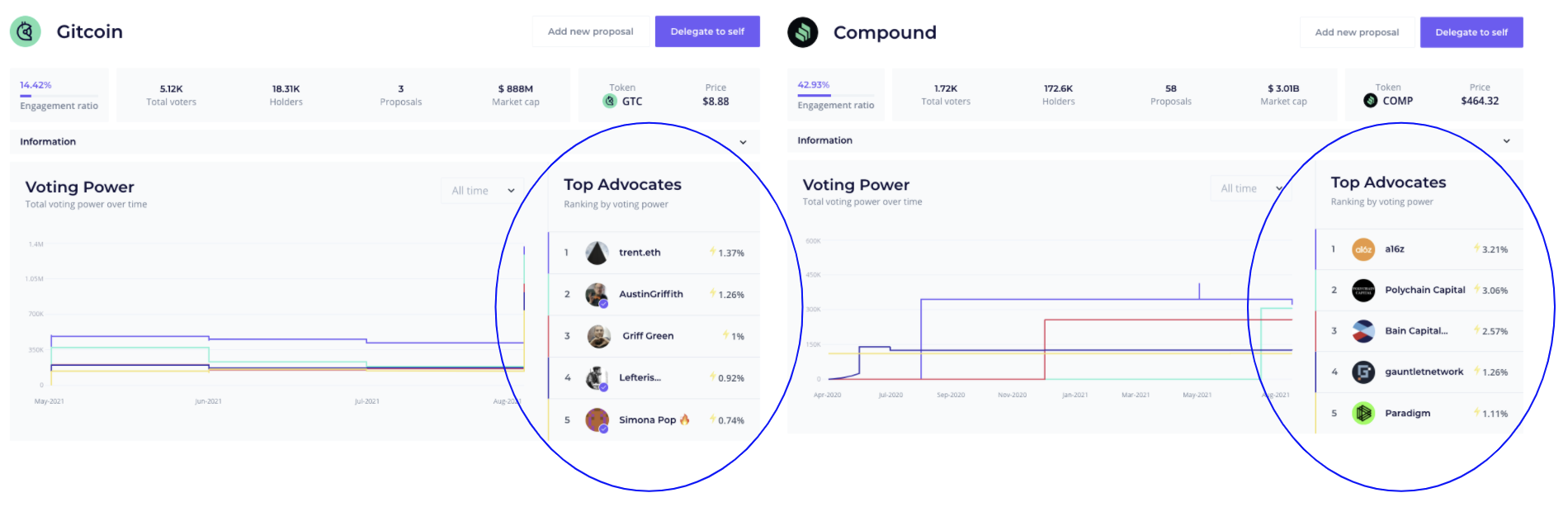
Top Voters in Gitcoin vs. Compound
DeepDAO is a DAO analytics platform that ranks DAOs based on metrics like voter participation, membership size, and treasury holdings. It also profiles individual DAO members, highlighting the most active participants based on their membership status, proposals submitted, and voting history.
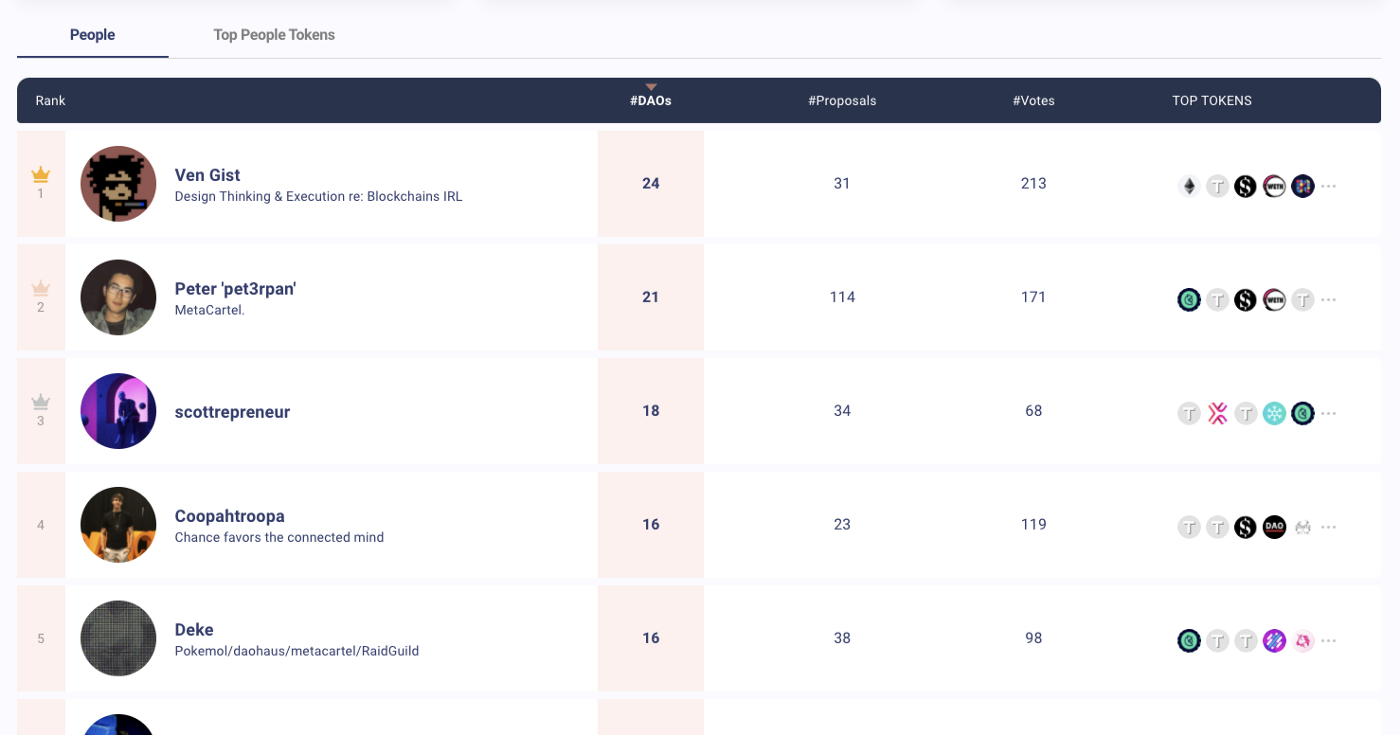
Top-ranked governance participants on DeepDAO
Aggregated "DAO scores" like these provide valuable data for "protocol politicians" aiming for leadership roles. Potential delegates can review candidate profiles to see their past votes, initiatives they've led, and other communities where they wield influence.
Frameworks
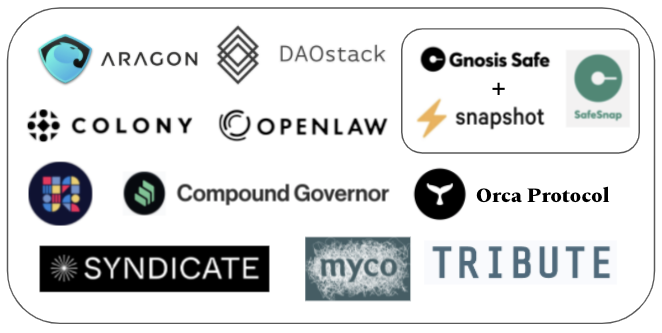
DAO frameworks are suites of smart contracts and interfaces that let users launch and manage an on-chain organization with just a few clicks. They provide out-of-the-box core functionality like fund management, membership control, and voting.
DAO frameworks
Using these frameworks, DAO creators can configure parameters like vote duration, quorum requirements for proposals, and initial members with their respective shares. Examples of frameworks—and the DAOs built on them—include DAOStack (dxDAO, dOrg), Colony (ShapeShift), Aragon (BrightID, PieDAO), and Moloch (LAO, MetaCartel).
Given the diverse needs of DAOs, there's no one-size-fits-all management solution. With limited options initially, early DAOs often had to adapt to rigid templates instead of freely assembling the tool stack that best fit their specific goals.
While the toolkit ecosystem is expanding rapidly, integrating new tools with older frameworks can be challenging. This forces communities to either put up with friction or coordinate a significant migration to newer systems. Acknowledging these limitations, next-generation DAO frameworks—including updated versions of earlier ones—prioritize modularity, flexibility, and scalability.
The Orca Protocol is built around "pods," another term for working groups. Pods essentially function as sub-DAOs, each with its own membership and governance rules; a single pod can also act as a "member" of a larger parent DAO.
Tribute DAO is a scalable iteration of the Moloch framework. Its core contracts support upgradable adapters and extensions that a DAO can add or remove as needed.
Over the past year, DAOHaus has been the main driver behind the surge of Moloch-based DAOs. More than just a frontend for deploying DAOs and voting on proposals, the platform offers a suite of plug-ins that integrate DAO activity into external applications—like Discord, Discourse, and even Gnosis Safe for executing arbitrary contract calls via proposals.
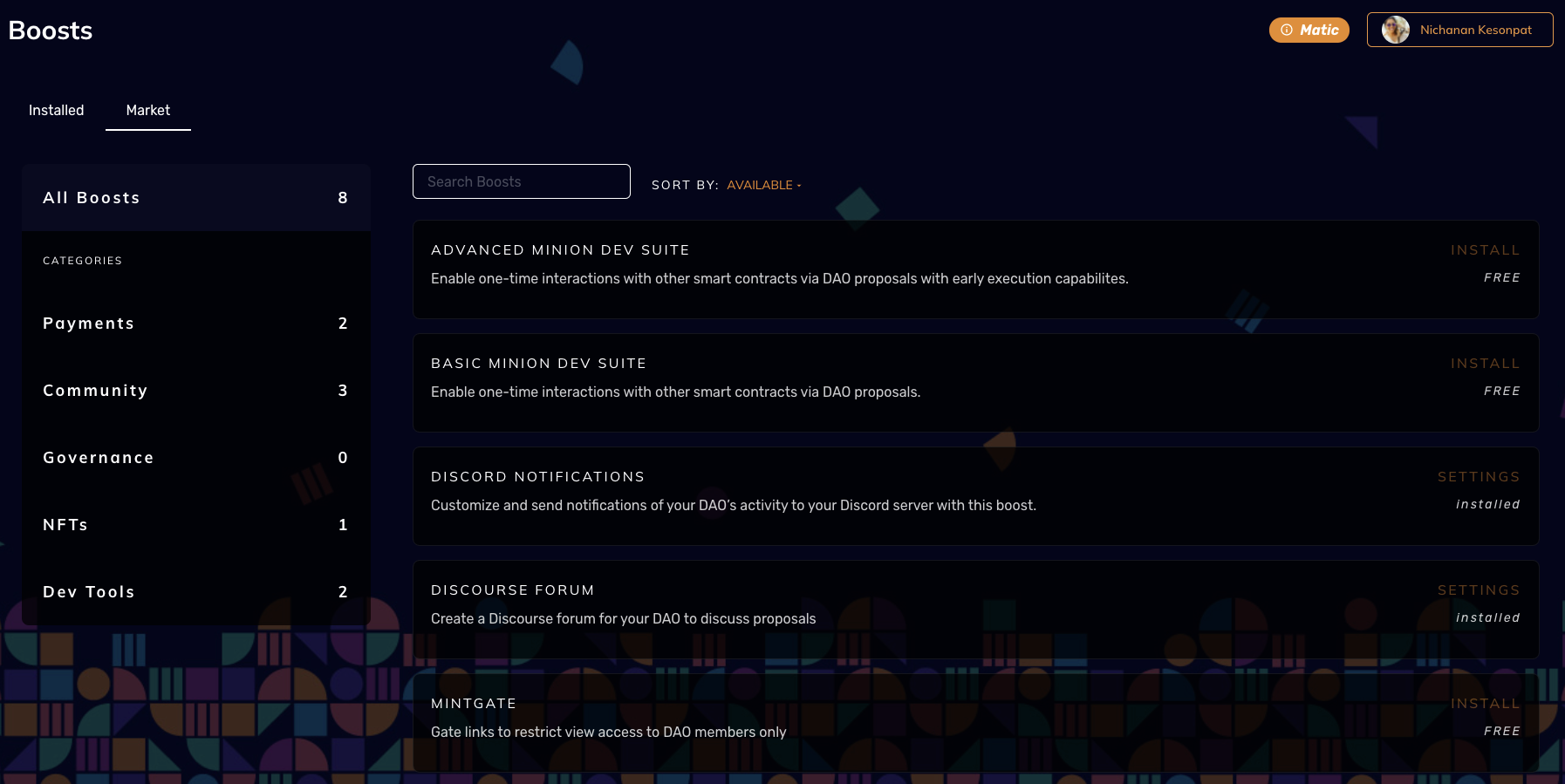
Markets facilitated on DAOHaus, enabling members to integrate on-chain activity with external services
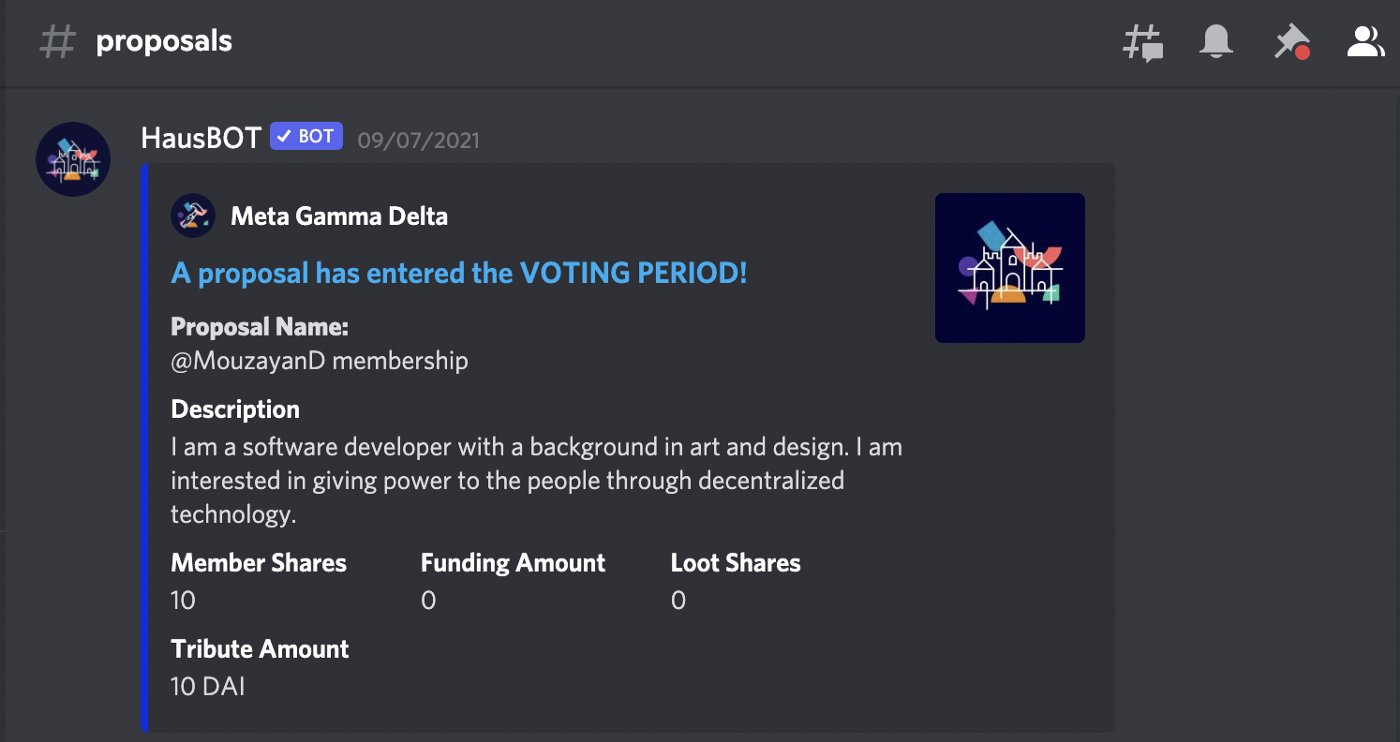
The DAOHaus Discord plugin automatically alerts channels whenever there's new activity on proposals.
Unlike the rigid, single-purpose frameworks of the first generation, today's modular and composable tools are designed to adapt to a community's evolving needs.
This modular approach lets DAOs install plugins—like DAOHaus Boosts or Gnosis's Zodiac suite—without having to predict every future requirement at launch. Open standards empower anyone to build custom "extension packs" for their communities as needs arise, as long as the code follows shared interfaces. In this paradigm, the DAO plugin ecosystem will grow much like open-source software package ecosystems. Adding a new tool could be as simple as a few clicks on a frontend interface.
We are at the dawn of the DAO era, similar to the early days of DeFi and NFTs. Once the core building blocks are solidified, innovation in decentralized organization will surge forward.
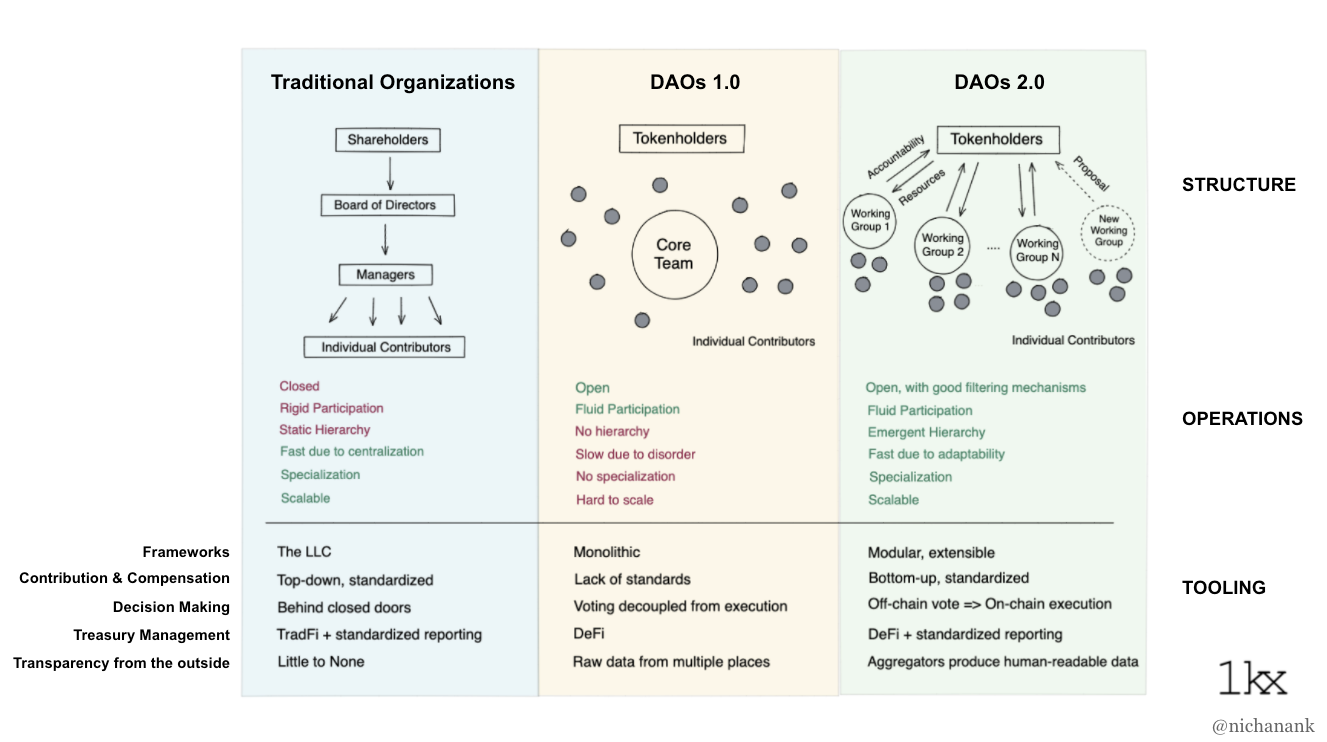
A summary comparison of DAO structures and tools versus traditional organizations
While DAO tools enable us to redesign organizations from the ground up, we're still iterating on best practices through experimentation. Many of our current mental models for organizational design are holdovers from 20th-century, assembly-line workplaces. DAO innovation will challenge and discard outdated assumptions about human coordination. We must be careful not to blindly import elements from traditional organizations and force them into the new ecosystems we're building.
Unlike its predecessors, the web3 organizational tool stack is being built for many-to-many relationships, fluid participation, and meaningful ownership.
We'll see more people allocating their time across multiple DAOs, applying diverse skills to different causes they care about. A DeFi protocol strategist might use her expertise to forecast portfolio value for an NFT collector DAO, while also supporting emerging artists through a grants DAO. She'll be able to carry her (pseudo)identity and reputation across applications, showcasing the value she creates for the broader ecosystem.
Pioneers, builders, and a fortunate few are already living in this future. The projects mentioned here are lowering the barriers every day, making DAOs a viable path for millions around the world who currently lack access to opportunities reserved for a select few.