

2023 saw two pivotal upgrades for Ethereum. The first was the Shanghai upgrade on April 13, which enabled staking withdrawals from the Beacon Chain. This completed Ethereum's formal transition from Proof-of-Work (PoW) to Proof-of-Stake (PoS), a landmark moment in its roadmap. Next up is the Cancun upgrade, focused on enhancing data storage to reduce costs and boost efficiency for Layer 2 (L2) solutions. It's expected to increase L2 throughput by 10–100x while slashing transaction fees. According to the latest core developer meeting, Cancun is scheduled to go live by year's end.
How will Cancun accelerate Ethereum's scalability, and what new opportunities will it create for Layer 2? At R3PO, we believe the upgrade will allow L2 solutions to integrate more seamlessly into the Ethereum ecosystem, offering users faster and cheaper transactions. Both Optimistic Rollup and ZK-Rollup will benefit, collectively driving the ecosystem forward.
I. The Clear Path Forward: Layer 2
In his recent article "The Three Transitions," Ethereum co-founder Vitalik Buterin outlines the network's key challenges: (1) scaling through Layer 2, with a shift to Rollups; (2) improving wallet security via smart contract wallets; and (3) enabling privacy for confidential payments.
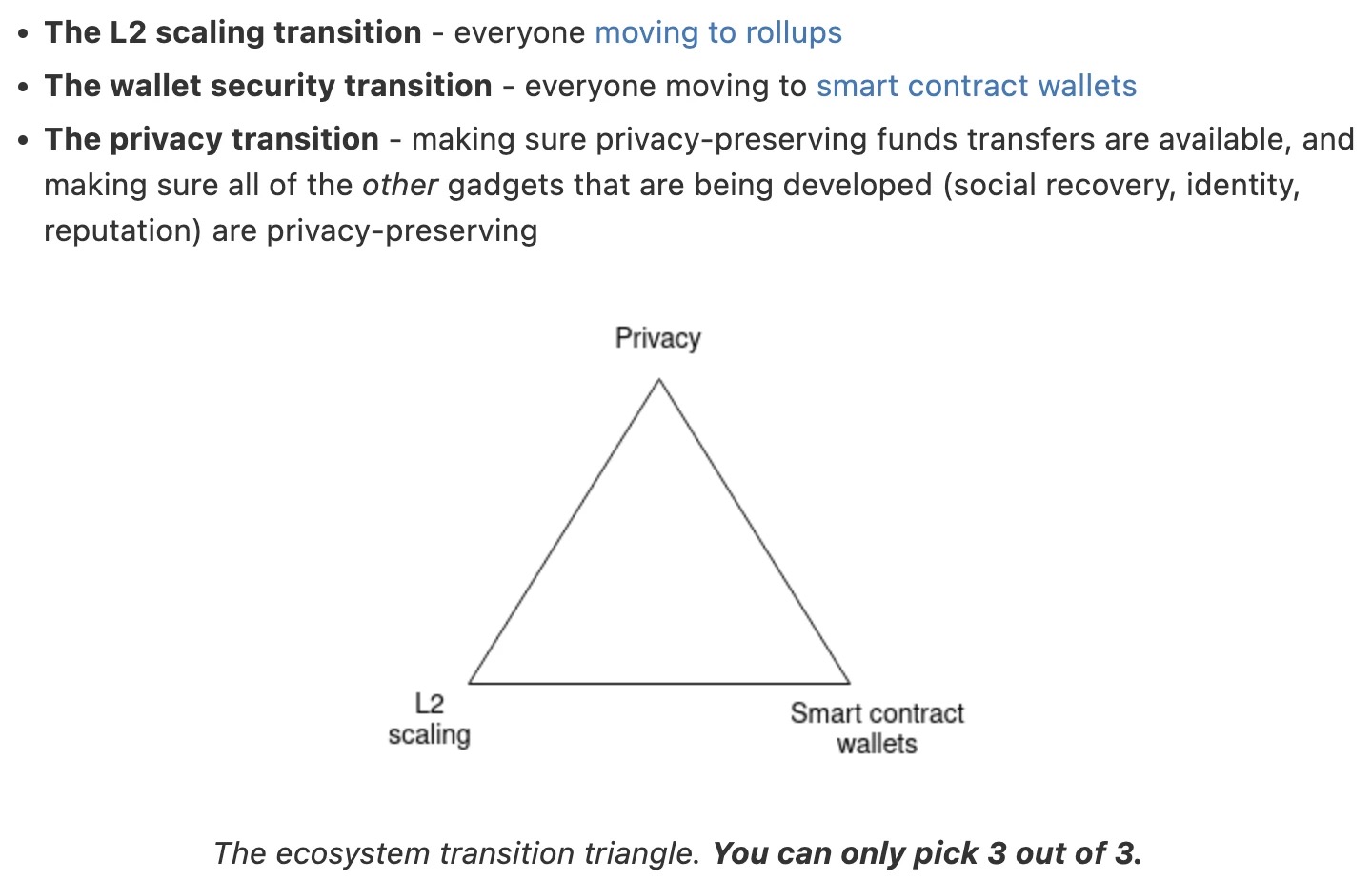
The piece highlights the critical role of Layer 2 and Rollups. Vitalik argues that without Layer 2, Ethereum would fail due to unsustainable fees. Compared to payment networks like Visa, which handles tens of thousands of transactions per second, Ethereum's current ~15 TPS is inadequate for mainstream use. An average fee of $3.75 per transaction also prices out many everyday users.
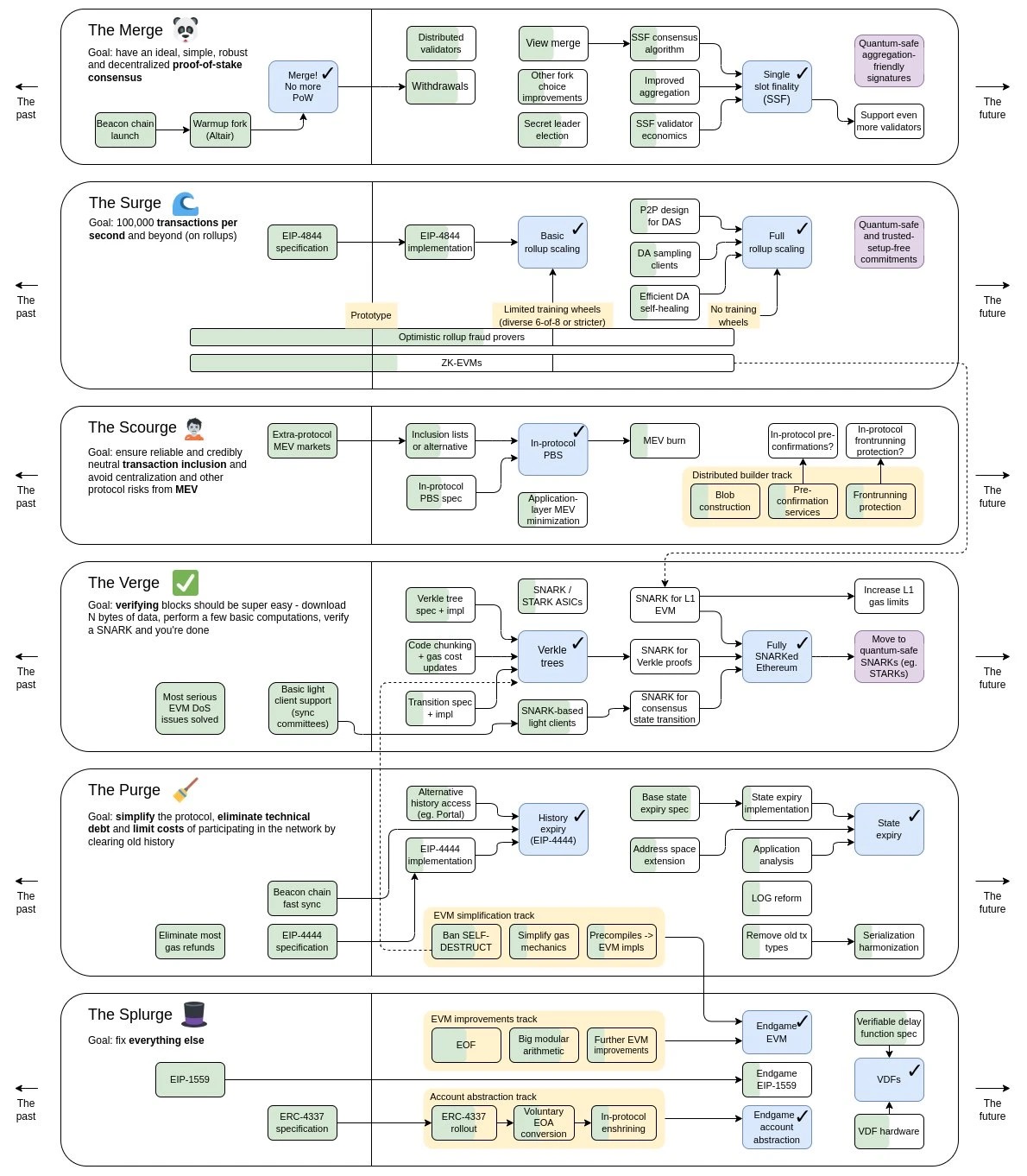
Ethereum already supports massive daily transaction volume. But as the ecosystem grows, limited block space fuels competition, leading to network congestion. High fees and slow speeds on Layer 1 have become a pressing issue, making cost reduction and performance improvement urgent priorities.
Scaling Ethereum has long been a top focus for developers. According to Vitalik's published roadmap, after Shanghai addressed consensus, the focus shifted squarely to scalability—with a goal of exceeding 100,000 transactions per second.
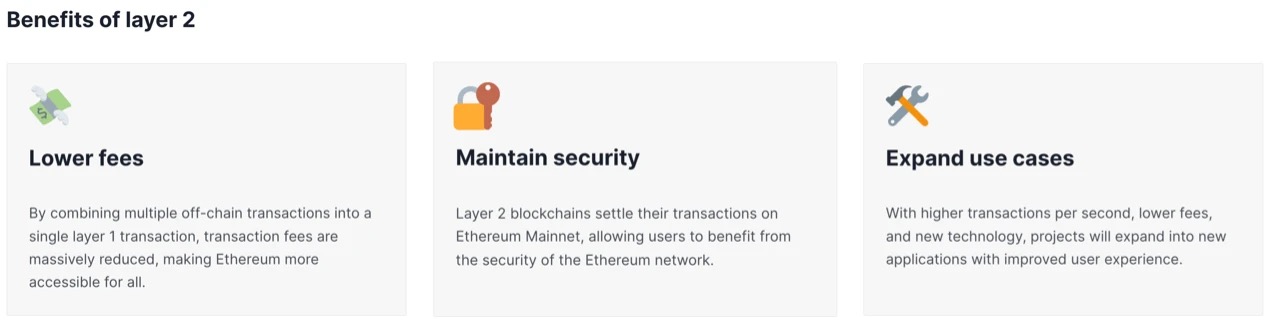
Currently, two main scaling approaches exist: Layer 2 and Sharding. Layer 2 is an off-chain solution built on top of the base blockchain (Layer 1). It works by executing transactions off-chain, then verifying their final validity with minimal on-chain transactions. The dominant Layer 2 solution today is Rollup. Rollups bundle hundreds of transactions into a single summary (or "rollup"), submitting only that summary to Ethereum. Instead of full on-chain computation and storage, Ethereum stores just the summary—achieving scalability while inheriting Ethereum's security.
II. Optimistic Rollup vs. ZK-Rollup
Rollups come in two main flavors: Optimistic Rollup and ZK-Rollup (Zero-Knowledge Rollup).
Optimistic Rollup uses a fraud-proof mechanism. It assumes transactions are valid by default, skipping immediate verification in favor of a waiting period. During this period, any node can challenge a transaction by providing evidence of fraud. If challenged, the transaction is reverted. If not, it's confirmed and finalized after the period ends. This fraud-proof approach avoids large-scale verification, saving computational resources while ensuring correctness. Leading examples include Arbitrum and Optimism.
ZK-Rollup relies on zero-knowledge validity proofs. It generates a cryptographic proof that all bundled transactions are valid, submitting only the final state changes and this proof to Ethereum. Unlike Optimistic Rollup, ZK-Rollup doesn't need to upload compressed transaction details—just the proof and state changes. Major projects include zkSync, Starkware, and Scroll.
Optimistic Rollup: Pros and Cons
Advantages:
Compatibility: Optimistic Rollup easily supports general-purpose smart contracts and maintains EVM compatibility, allowing developers to build and migrate applications with minimal friction.
Disadvantages:
Withdrawal Delays: In case of disputes or fraud, Optimistic Rollup imposes a long withdrawal period—typically one week—which can lock user funds.
Network Stalls: Disputes can halt the entire network, pausing transaction processing until the issue is resolved and verified.
ZK-Rollup: Pros and Cons
Advantages:
Privacy: Using zero-knowledge proofs, ZK-Rollup validates transactions without revealing details, offering stronger privacy guarantees.
Security: Verification relies on mathematical proofs, providing robust security assurances without exposing underlying data.
Disadvantages:
Computational Cost: Generating and verifying zero-knowledge proofs requires significant resources, leading to higher overhead, potentially longer processing times, and increased operational costs.
Limited Smart Contract Support: Focused on transaction optimization, ZK-Rollup has constrained support for complex smart contracts; some advanced applications may not be directly deployable.
Thanks to earlier launches and lower development barriers, the OP ecosystem currently commands over 90% of total value locked (TVL), while the ZK ecosystem holds a smaller share. To compete for user growth, the ZK ecosystem must accelerate infrastructure and ecosystem development. As the Layer 2 landscape matures post-Cancun, with fees expected to drop significantly, user adoption and ecosystem building will become the decisive battleground between ZK and OP.
III. The Future of Layer 2: Opportunities After Cancun
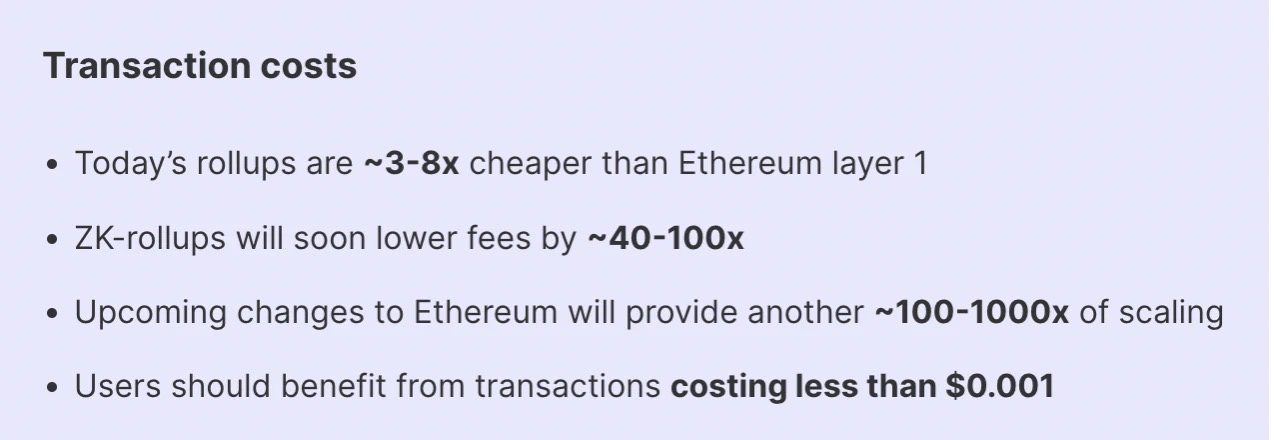
We've compared Optimistic and ZK-Rollups as Layer 2 scaling solutions. With the upcoming Cancun upgrade, Layer 2 is poised for new growth. Cancun is a critical milestone for Ethereum, designed to boost scalability and performance. It will enable Layer 2 solutions to integrate more deeply into the ecosystem, delivering faster and cheaper transactions for users. Both Rollup types will benefit. Post-Cancun, Ethereum Layer 2 throughput is projected to increase 10–100x while fees drop substantially. We can confidently expect widespread Layer 2 adoption across Ethereum, unlocking new possibilities for high-throughput, low-cost decentralized applications.
1. Main Content
The Cancun upgrade bundles five EIPs focused on boosting data storage capacity and slashing fees. At its heart is EIP-4844, supported by four other proposals: EIP-1153, EIP-4788, EIP-5656, and EIP-6780. While a precise launch date hasn't been set, the upgrade is slated for completion by the end of 2023.
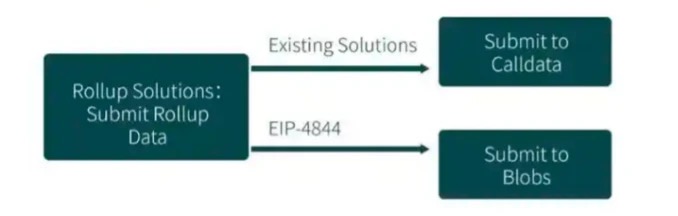
EIP-4844: The centerpiece of Cancun, EIP-4844 (Proto-Danksharding) is a rollup-centric scaling solution that marks Ethereum's first major step toward scaling. Previously, rollup data was stored permanently on-chain, leading to exorbitant storage costs that made up roughly 90% of a user's rollup transaction fees. EIP-4844 tackles this by introducing a new transaction type—Blob Transactions—which temporarily stores data in "blobs" for about a month before deletion. Long-term storage will be handled by third-party services as needed. By integrating blobs into the protocol via Proto-Danksharding, each Ethereum block can carry more data, dramatically boosting throughput (by over 100x) and driving down transaction costs.
The other selected EIPs are:
EIP-1153: Lowers on-chain data storage costs to improve block space efficiency.
EIP-4788: Improves the design of cross-chain bridges and staking pools.
EIP-5656: Makes minor code modifications to the Ethereum Virtual Machine (EVM).
EIP-6780: Removes the self-destruct function from smart contracts.
2. Which Opportunities Are Worth Watching?
(1) The Layer 2 Narrative
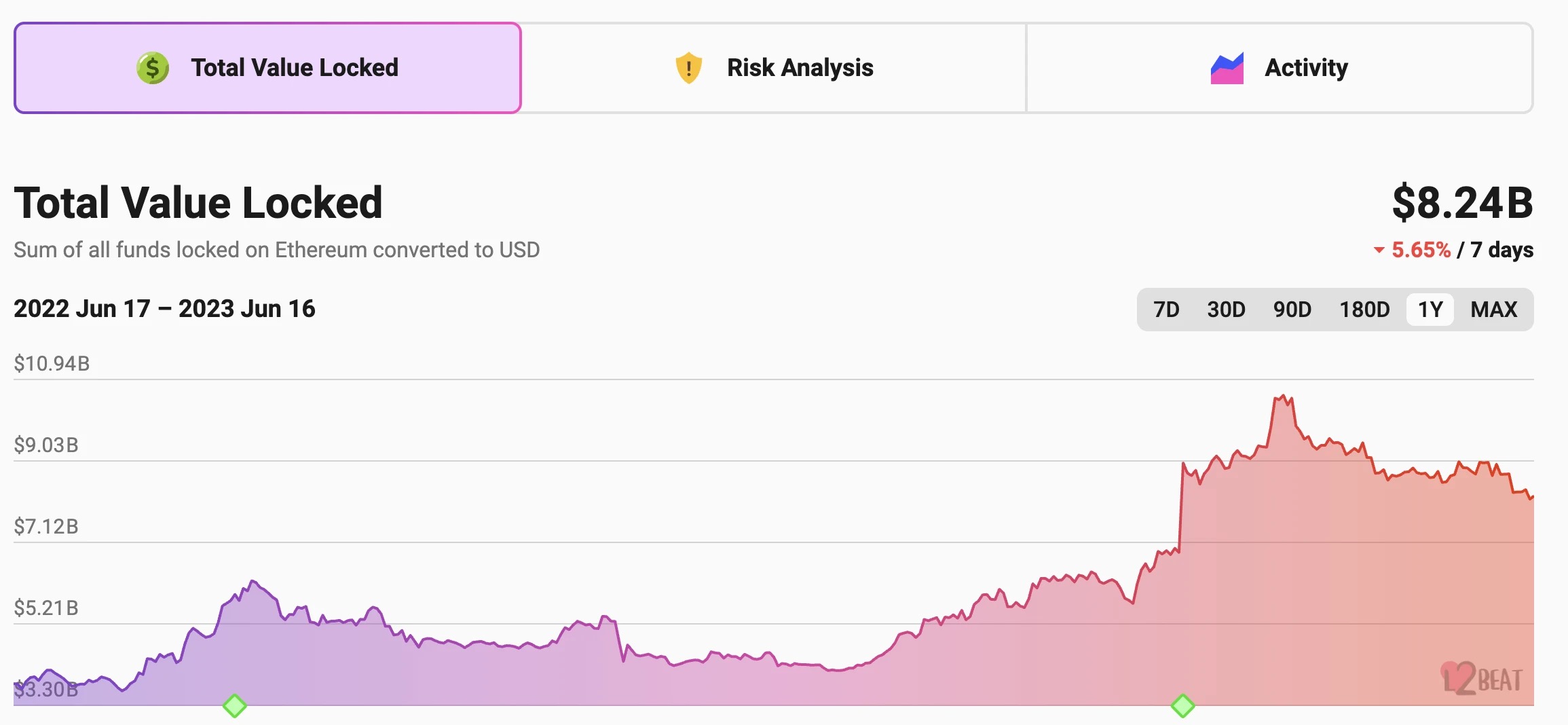
Ethereum's chronic network congestion has fueled its most compelling growth story. The Total Value Locked (TVL) across L2 ecosystems has more than doubled since the start of the year, reaching around $8 billion.
As the first milestone in Ethereum's scaling roadmap, the Cancun upgrade will make Layer 2 solutions up to 10–100 times faster and cheaper. EIP-4844's scalability and cost-efficiency will benefit the entire L2 landscape: the OP ecosystem will diversify further; ZK ecosystems will gain better data availability and usability; and high-cost, standalone L2s will see accelerated growth. Lower on-chain fees will enrich the L2 ecosystem and attract a broader user base.
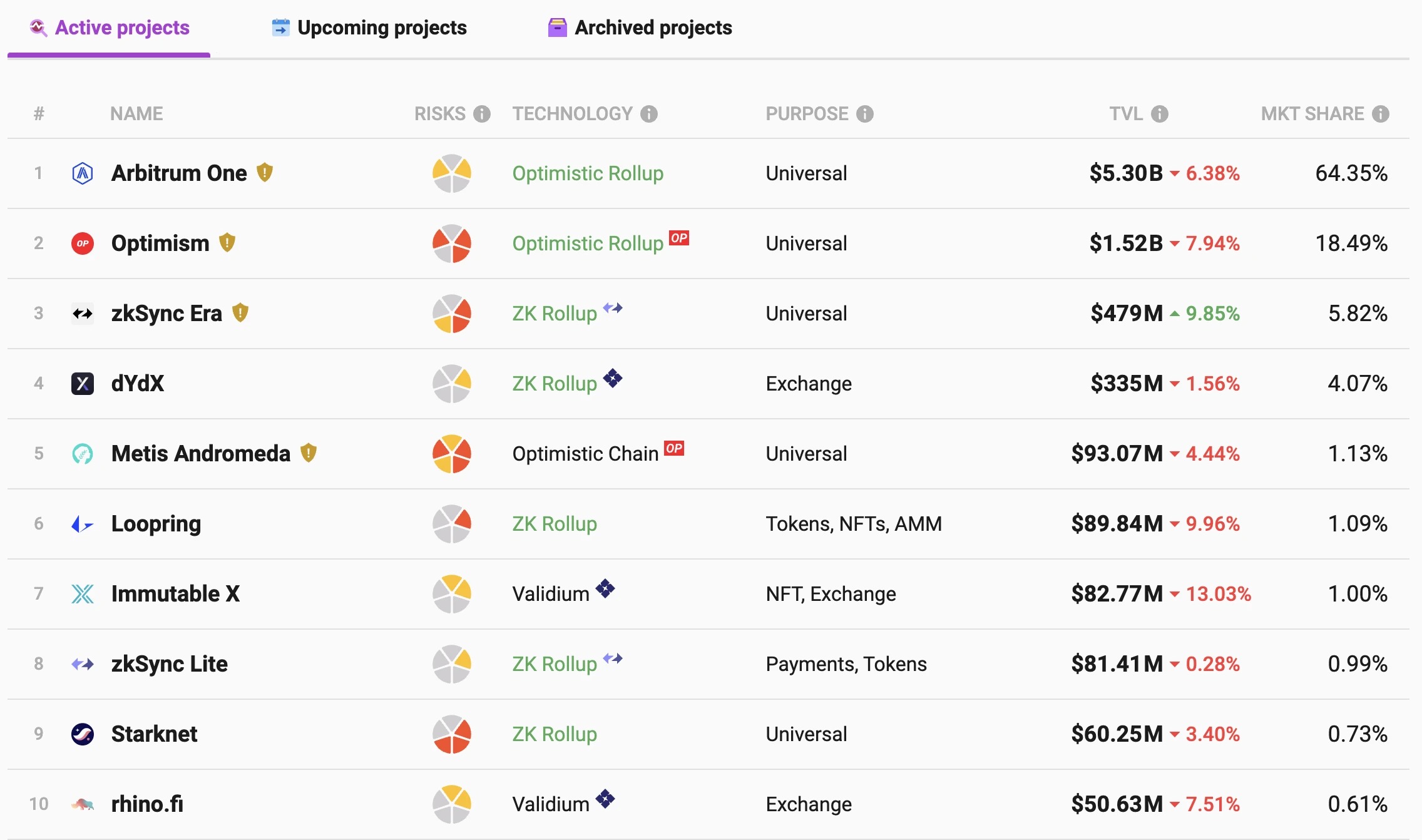
Among live projects, Arbitrum, Optimism (OP), emerging ZK protocols like zkSync, and established apps like dYdX currently command roughly half of the L2 market share. Leaders in popular sectors are well-positioned for significant growth post-Cancun.
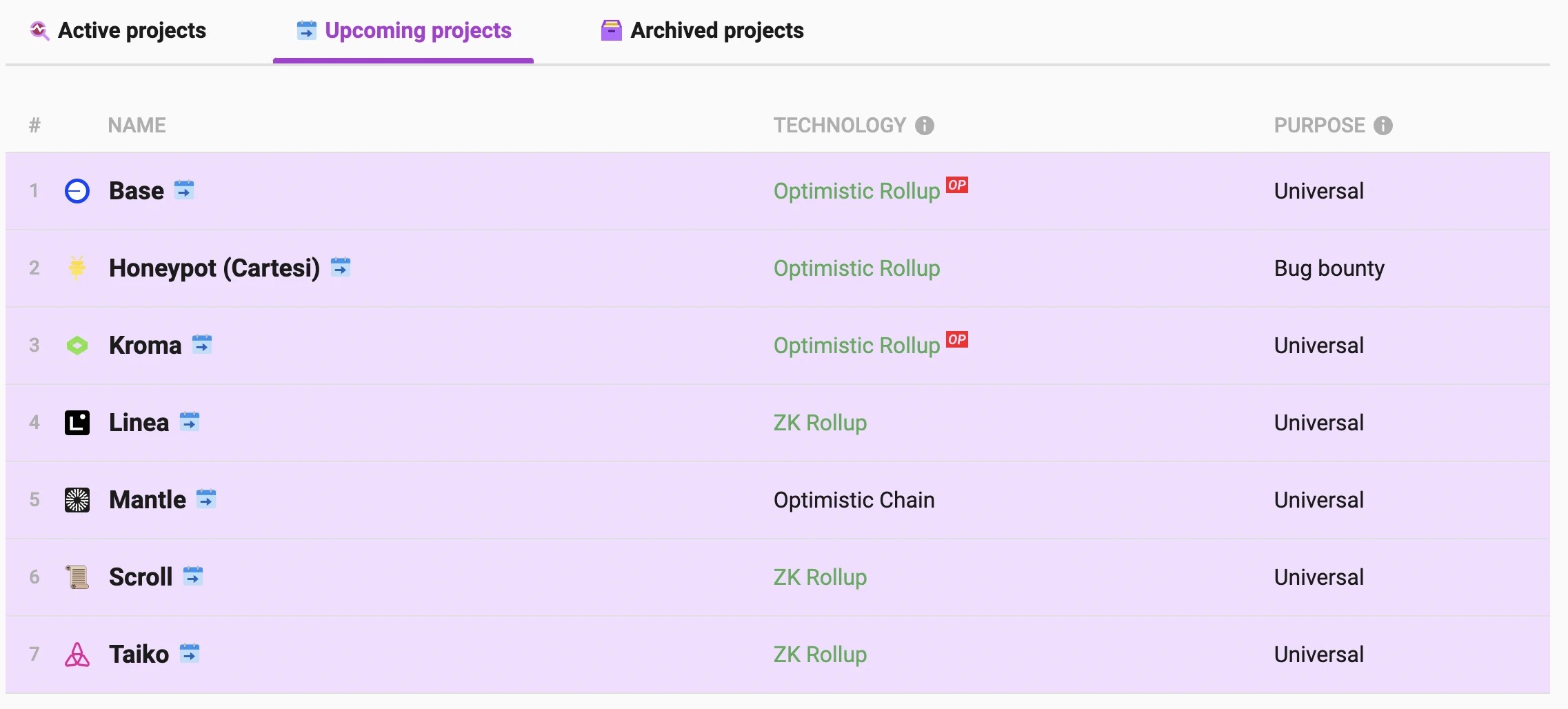
Beyond existing projects, upcoming mainnet launches—including Scroll, Linea, and Taiko—are also worth watching closely.
Furthermore, faster speeds and lower fees on L2s will catalyze a new wave of native project innovation. On-chain derivatives like futures and options, traditionally hampered by Ethereum's low TPS, will see major improvements, benefiting high-speed protocols like GMX and GNS and unlocking new growth avenues.
(2) The Data Availability (DA) Layer Sector: Since blob data is stored only temporarily, retrieving historical data presents a challenge. This creates demand for decentralized storage solutions, as L2 scaling architectures inherently depend on robust data availability layers. The Cancun upgrade will also boost L1 storage expansion networks—such as EthStorage, Arweave, and Filecoin—that serve as Ethereum's DA layer.
3. Where Is Layer 2 Headed?
In the near future, the Cancun upgrade will kickstart Ethereum's scaling journey, making higher throughput and lower fees a reality. This will enable Layer 2 applications to handle far more transactions and offer users faster, near-instant confirmations. Whether for financial settlements, gaming, or NFT interactions, L2's enhanced performance will deliver smoother, more efficient user experiences.
However, technology alone won't drive adoption. For L2 to truly thrive, innovative applications are essential. According to L2beat, 29 Layer 2 solutions are currently live or in development. Among them, Arbitrum One, Optimism, zkSync Era, and dYdX hold a combined 92.75% market share, leaving just 6.25% for all other L2s.
This is akin to building numerous highways with too few cars—a challenge most L2s face. Without compelling applications, L2's potential remains untapped. Arbitrum's vibrant ecosystem, for example, grew largely from the success of DeFi apps like GMX. To capture attention and users, L2s need to foster convenient, innovative, and practical applications that address real needs. This requires developers and entrepreneurs to experiment boldly on Layer 2, leveraging its strengths to create unique and engaging use cases. Only then can L2 become integral to users' daily lives. Thus, beyond technical progress, user migration and application adoption will be critical to Layer 2's future success.
Reference
1. https://vitalik.eth.limo/general/2023/06/09/three_transitions.html
2. https://ethereum-magicians.org/t/a-rollup-centric-ethereum-roadmap/4698
https://www.datawallet.com/crypto/zk-rollups-vs-optimistic-rollups
3. https://www.coindesk.com/tech/2023/06/08/ethereum-developers-cement-final-lineup-of-changes-in-dencun-upgrade/
4. https://l2beat.com/scaling/tvl#upcoming
5. https://ethereum.org/zh/layer-2/
6. https://medium.com/bitcoin-news-today-gambling-news/ethereums-cancun-deneb-upgrade-everything-you-need-to-know-3e67439a036